

Audio By Carbonatix
The Economic Governance Platform (EGP), a coalition of civil society organisations, which focus on economic issues, is advocating for a national conversation on sustainable debt management as the country strives for economic recovery.
It said the cyclical International Monetary Fund (IMF) bailouts over the years would continue to persist if managers of the economy do not adopt pragmatic measures geared towards ending the over-reliance on borrowing to manage the economy.
Mr. Abdul Karim Mohammed, Coordinator of EGP, said Ghana’s subscription to IMF programmes over the years were driven by a debt crisis and stressed the need for a broader stakeholder consultation to end the perennial unsustainable debt levels.
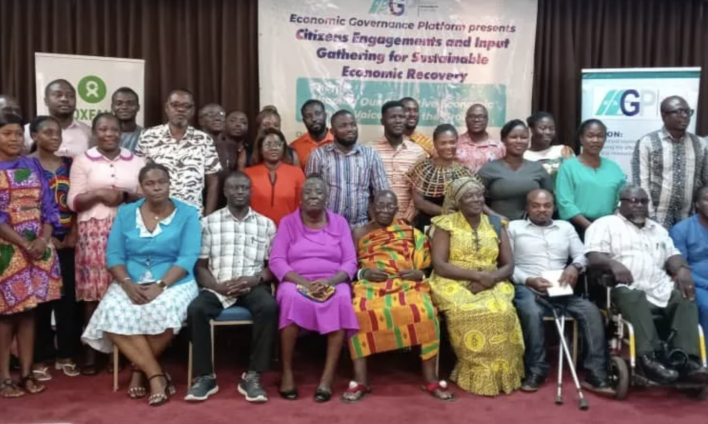
He was speaking at a citizens’ engagement and input gathering for economic recovery in Kumasi ahead of a national forum to discuss how to end the cyclical IMF bailouts as a country.
The goal was to collate inputs from participants drawn from local civil society organisations, the private sector, organised youth groups, students, and the media.
Participants were exposed to a comprehensive overview of the current IMF programme and its implications on national development, especially in the development sectors.
“We need to have a conversation as a nation on sustainable debt management.
“If you look at the number of times that we have been to the IMF, it has mostly been influenced by a debt crisis,” Mr. Mohammed said.
Seeking bailouts from the IMF 18 times as a country, according to him, is a cause for worry and called for prudent economic policies that would minimise borrowing, which had been the cause of the numerous IMF bailouts.
“We need to borrow for productive activities that will give us returns to enable us to pay our debt. But if we don’t do that and we borrow for recurrent expenditure or for other purposes for which we are unable to repay the interest, the ordinary citizen will have to pay taxes to defray the debt,” he pointed out.
He said monies spent on servicing debt compared to what was allocated for the delivery of important social services, emphasising the need to do things differently to save the economy from further decline.
“It has been established by both government and the IMF that the solutions that will take us out of the current economic crisis lie far beyond what we are getting from this IMF bailout,” he indicated.
Mr Mohammed said the IMF programme was not a panacea to the challenges facing the Ghanaian economy and that more needed to be done to holistically address the problem.
It is for this reason that the EGP is breaking down the IMF programme to the understanding of citizens and also collating their views on how best to manage the national debt to prevent a return to the IMF in future.
Latest Stories
-
PRESEC, Augusco and Accra Academy battle for 2026 NSMQ crown today
3 minutes -
GH₵12 cement price increase: GPHA clarifies attribution to port congestion
4 minutes -
Pythagoras won’t balance your books
7 minutes -
Pay me by Sept. 11 or face the court – Kow Essuman demands salary, benefits from Finance Minister
25 minutes -
Bawumia’s destiny lies in the hands of God; not you – Muslim Forum for Peace and Unity replies Rev. Owusu Bempah
27 minutes -
NPP NEC meets today to discuss and approve party’s position paper on Constitution Review proposals
34 minutes -
Today’s frontpages: Thursday, September 10, 2026
41 minutes -
Ghana Garden and Flower Show returns on Sept 11 with focus on green jobs, business and wellbeing
42 minutes -
Titus-Glover camp says Mustapha Salam wasn’t pressured to withdraw from National Organiser race
44 minutes -
Ghana’s acclaimed Christian – Muslim unity bigger than Owusu Bempah’s hatred and bigotry – Muslim Forum for Peace and Unity
46 minutes -
Karpowership lights up young minds on International Literacy Day
55 minutes -
Banking sector NPLs fall to GH¢19.9bn as asset quality improves
59 minutes -
Republic Bank Ghana, UPSA sign strategic MoU to advance professional development and industry-academia collaboration
1 hour -
MTN 30th Anniversary CEO Invitational Golf Tournament set to tee off at Achimota
1 hour -
Ghana woos Australian investors into critical minerals
1 hour