

Audio By Carbonatix
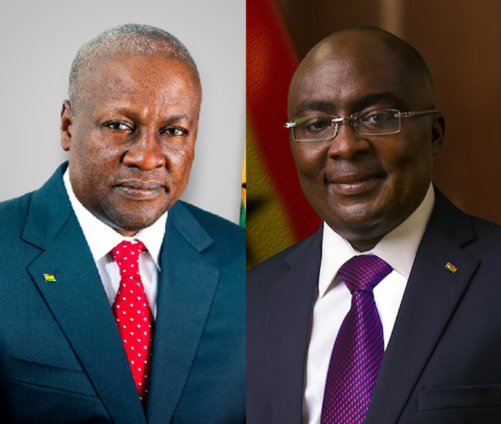
Some tax analysts have cast doubts over the ambitious tax proposals announced in the manifestos of the two major political parties, the New Patriotic Party (NPP), and the National Democratic Congress (NDC) to be rolled out under an International Monetary Fund (IMF) programme.
Both parties have promised to remove the Electronic Transaction Levy, the COVID-19 -Levy and reduce some taxes at the ports.
But Speaking to Joy Business, tax analyst Francis Timore Boi cautioned that the blanket removal of the taxes without alternative plans to boost revenue may derail the IMF programme.
He argued for example that the Covid-19 levy and the E-levy combined are projected to give the government about GH₵7.7 billion in 2025.
Mr Timore Boi expressed worry that no alternative revenue generation model has been proposed by the two major parties to make up for the shortfall that may occur as a result of the proposal to remove the taxes.
Read Also: NPP or NDC can scrap E-levy and betting tax, it won’t cost the economy much – Kwasi Peprah
He warned that this could go contrary to the IMF programme aimed at improving revenue and redirecting government expenditure to critical areas to help alleviate poverty.
“If any policy you seek to introduce may bring down revenue, the IMF may not be happy with that. You are planning to abolish the COVID-19 levy and the e-levy. COVID-19 levy alone in 2025 is estimated to bring in about GH₵5.6 billion. If you take it off, how are you going to replace it? In 2025, we are expecting E-levy to give us about GH₵2.1 billion and in 2026, it is projected to increase to about GH₵2.4 billion”.
Stressing the need to assess such tax proposals, Mr Timore Boi said the political parties must provide a workable budget that will provide a foresight of how the revenue shocks that will be created will be remedied.
“It is important because the budget has not shown us that you are going to introduce new taxes”.
He added that even though e- levy is an unpopular tax and the general sentiment is that it should go, there must be a discussion on how to fill the financial holes that will be created after its abolishment.
Latest Stories
-
ABC says intimidation by Trump’s FCC forced programming changes
2 hours -
Uber launches autonomous rides in Zagreb, its first in Europe
2 hours -
Ecuador intelligence chief and five Americans killed in Kenya helicopter crash
2 hours -
NMC reconstitutes boards of four state-owned media organisations
2 hours -
Keep abreast of new traffic regulations – Police
3 hours -
Police to prosecute commercial drivers for overcharging passengers
3 hours -
24-Hour Markets is not our responsibility – Goosie Tanoh distances Secretariat from project
3 hours -
Vaccine breakthrough stops cancer returning in trial
3 hours -
‘I was born in South Africa’, says beauty queen Chidimma Adetshina facing legal bid to deport her
3 hours -
Prince Harry and Meghan moving back to UK
4 hours -
Ghana’s output expansion largely driven by labour, capital rather than innovation – Opoku-Afari
4 hours -
Ghana is ready for nuclear power adoption – Gov’t affirms
4 hours -
GJA@77: Media-government partnership vital to Ghana’s democracy – Shamima Muslim
4 hours -
LUV FM High School Debate: Opoku Ware and St. Hubert Seminary book quarterfinal spots
4 hours -
Stronger research, industry linkages needed to build a competitive digital economy – Deloitte Technology Senior Manager
4 hours