

Audio By Carbonatix
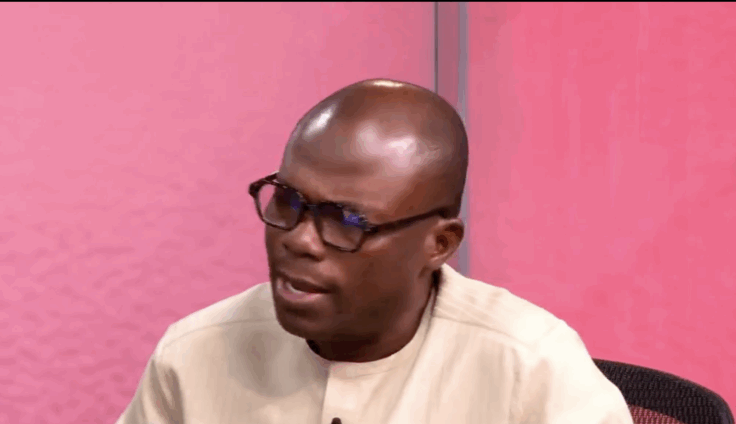
Executive Director of the Media Foundation for West Africa (MFWA), Sulemana Braimah, has raised serious concerns about the Ghana Police Service’s recent practice of arresting and detaining individuals over alleged false publications, an action he believes strays into territory meant for civil litigation.
His comments followed the arrest of blogger Samuel Amadotor of Dklassgh.net, who was picked up on Thursday, November 20, after former National Communications Authority (NCA) board chair, Okatakye Boakye Danquah Ababio II, filed a complaint accusing him of publishing fabricated allegations.
In a statement from the Criminal Investigation Department (CID), signed by Chief Inspector Brigitte Babanawo, police said Amadotor admitted to the offence and claimed he had been contracted by another individual, Chairman Michael Yeboah, to circulate the false information. The blogger remains in custody and is expected to be arraigned on Friday, November 21.
But Mr Braimah says the police are overstepping their role. In a Facebook comment posted on Friday, November 21, he questioned why officers continue to treat such matters as criminal offences when the law provides civil remedies.
“Why will the Ghana Police be arresting and detaining people for publication of ‘false news’ about private individuals or even public officials?” he asked. “Individuals cannot or should no longer sue for defamation because the police will act on their behalf? The police will now be arresting, detaining and taking people to court for defamation on behalf of individuals?”
He stressed that even under Ghana’s repealed criminal libel regime, such actions would have been unacceptable.
On a daily basis, we have people publishing false information about others. Will the police now be arresting all such persons? These acts must stop,” he added.
Mr Braimah’s comments reignite long-standing concerns about the creeping return of criminal-style sanctions for speech-related offences—an area free expression advocates consider a growing threat to media freedom and public discourse.
The debate also raises questions about clarity in the enforcement of laws relating to misinformation, the role of the police in civil disputes, and the broader implications for journalists, bloggers, and citizens who publish opinions or information online.
As the case of Amadotor proceeds to court, the MFWA Executive Director’s remarks are expected to fuel ongoing national discussions about the limits of policing, the protection of civil liberties, and the appropriate legal channels for addressing reputational harm in a democratic society.
Read Also: Blogger arrested after former NCA board chair reports alleged false publication
Latest Stories
-
Amazon raises minimum hourly pay by $1 to $20 for US operations workers
7 minutes -
Insurance cost has largely remained stable – NPA boss on transport fare pressure
18 minutes -
Multiple unions threaten strikes at Barrick’s flagship Mali gold mine, documents show
37 minutes -
Infantino invited to African summit as he faces challenge to FIFA leadership
48 minutes -
NPA boss flags ‘recalcitrant’ transport operators raising fares arbitrarily
56 minutes -
GPRTU fare hike put on ice after talks with government – NPA boss reveals
1 hour -
I’m greatly worried – NPA boss on threat of higher transport fares
2 hours -
We are largely import-dependent – NPA boss on Ghana’s fuel vulnerability
2 hours -
Ghana’s fuel market is built for turbulence – NPA’s Edudzi Tamakloe explains why
2 hours -
Postponement not an option as Kenya races to be ready for Afcon 2027
2 hours -
ICE agent shoots and wounds man in Texas as locals demand answers
3 hours -
Ed Sheeran admits ‘mistakes’ at first show since Macklemore controversy
3 hours -
We are ready for the turbulence – NPA boss on Ghana’s fuel crisis
4 hours -
Lady I wanted serious relationship with said she’s not ready – Rema
4 hours -
I’ll never discuss my finances with man, even if he’s my husband – Nancy Isime
4 hours