

Audio By Carbonatix
In the high-stakes theatre of Ghanaian politics, where the loudest drums often hollow out the quickest, there exists a rare breed of leader who understands that true power does not need to shout.
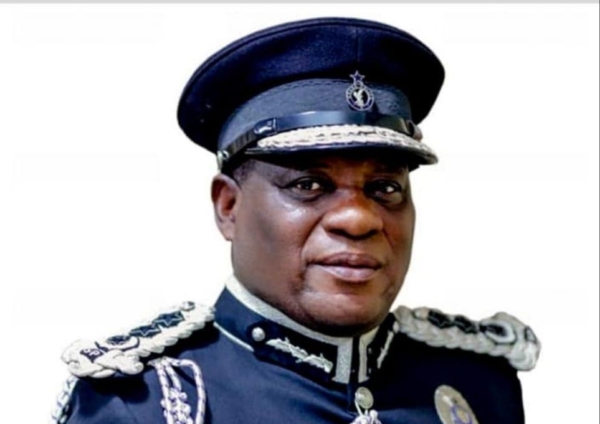
When Commissioner of Police Christian Tetteh Yohuno was handed the mantle of Inspector-General of Police on 13 March 2025, he did not arrive with the rehearsed pageantry of a media darling.
There were no choreographed walks before a phalanx of vanity cameras, nor were there microphones thrust into the faces of every passer-by to manufacture a cult of personality. He simply walked into the room, took off his cap, and went to work.
Yet, his arrival was met with a cacophony of orchestrated dissent. The peddlers of pessimism were out in full force, questioning his age, his deputy-ship, and even the very legality of his appointment. We saw the theatre of the courtroom, where suits like Emmanuel Felix Mantey v. Attorney General sought to decapitate his leadership before it had even drawn breath.
Critics, blinded by the glare of his predecessor’s PR-heavy tenure, were quick to label him a "sleeping beauty," predicting a slumbering administration while the nation’s security supposedly crumbled.
But as the saying goes, "the insults on our leaders are better than a coup," for they provide the friction necessary to polish a diamond.
Yohuno did not respond with press releases or emotional outbursts. He responded with the cold, hard currency of results. Today, those who sought to bury him are forced to watch as he builds a monument of professional excellence upon the very ground they tried to dig for his career.
The performance of IGP Christian Tetteh Yohuno has not merely justified his appointment; it has vindicated the "Ghana Reset" agenda in the most profound way possible.
He inherited a service where investigative quality was in a "disturbing downward trend," yet within a year, he had pivoted the institution toward a future of forensic precision.
By decentralising the Cybercrime Unit to all 25 regions, he took policing from the ivory towers of Accra and placed it in the hands of the ordinary Ghanaian. This wasn't a move for the cameras; it was a move for the victim of a mobile money fraud in a remote village who finally felt the state’s protection.
Furthermore, his "palace" metaphor for policing, where trust and legitimacy form the crown supported by the pillars of meritocracy and digitalisation, is a masterclass in institutional reform.
When he promoted 17 officers in January 2026 for their bravery in drug and arms operations, he sent a thunderous message that echoed through the barracks: in Yohuno’s Ghana, you don't need a "godfather" to rise; you only need results. He has replaced the "whom-you-know" culture with a "what-you-can-do" reality.
Perhaps the most stinging rebuke to his critics is his international standing. While local detractors were busy with frivolous lawsuits, the world’s most elite law enforcement agencies were taking notice.
Hosting the New York City Police Department (NYPD) in March 2026 for a high-powered collaboration was not a fluke; it was a validation. The NYPD does not waste its time with "sleeping beauties."
They partner with architects of intelligence-led policing. The proposed officer exchange programme between Accra and New York is a testament to the fact that under Yohuno, the Ghana Police Service is no longer just a local force; it is a global contender.
He has managed the intractable Bawku conflict and the Savannah displacement crisis with a quiet, steely resolve that prioritises lives over headlines. He has faced the fire of inter-ethnic violence and the frost of political opposition without losing his professional equilibrium.
Christian Tetteh Yohuno has proven that you do not need to be a media sensation to be a national saviour. He came without the noise of the microphones, but his exceptional performance has created a resonance that has pulled the entire nation toward him.
He has shown us that leadership is not about being seen; it is about being felt. His tenure is a reminder that when a man of forty years' experience decides to serve, the critics’ noise is but a passing wind against a mountain.
The choice of Yohuno was not just a political decision; it was a divine necessity for a nation in need of a reset. And for that, the nation owes him more than just applause, it owes him a profound debt of gratitude.
Latest Stories
-
Black Stars: It’s our decision to leave Kudus to recover – Queiroz
14 minutes -
Sammy Gyamfi backs Mahama’s directive to restore NACOC’s at ports
17 minutes -
Queiroz provides insight into Kudus’ decision to withdraw from Black Stars squad
28 minutes -
I’m not changing after 47 Years – Queiroz fires back at critics
37 minutes -
Nkrumah Never Dies: Celebrating the visionary who awakened a continent
2 hours -
Hassan Ayariga calls for Ghanaian ownership in strategic investment deals
2 hours -
Black Stars: Thomas-Asante receives late call-up for September-October games
3 hours -
NPP Techiman South demands immediate release of detained Nurse Salomey Awiti Baffoe
3 hours -
‘Let’s stop the politics’ — Dafeamekpor calls for united fight against drug trafficking
3 hours -
Chief Justice Baffoe-Bonnie leads new 11-member Council for Legal Education and Training Board
3 hours -
Decades of silent diplomacy: Baba Issifu Kamara at 70
3 hours -
30% transport fare hike still on the table, talks resume Tuesday – GPRTU
3 hours -
KATH marks 70th anniversary with inter-directorate games
4 hours -
Black Stars: Godwin Attram replaces Desmond Ofei as assistant coach
4 hours -
Nkrumah never dies
5 hours