

Audio By Carbonatix
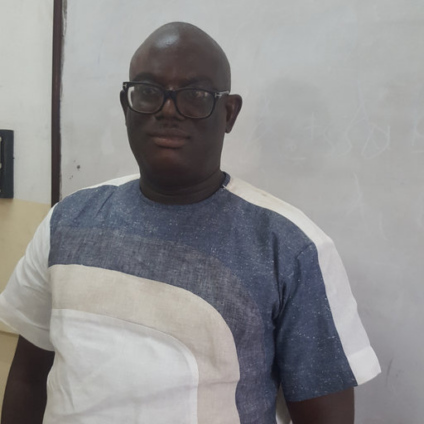
University of Ghana lecturer at the Department of Statistics and Actuarial Science, Prof Ezekiel Nortey, has described the New Patriotic Party’s current political standing as “revealing and startling,” warning that the party must go beyond surface-level explanations and confront deeper internal challenges following its electoral defeat.
Speaking on JoyNews on Monday, March 23, Prof Nortey said the scale of the party’s decline suggests that “something terribly is wrong somewhere with the NPP,” urging leadership to undertake serious introspection rather than blaming external factors.
“It looks quite revealing and startling that something terribly is wrong somewhere with the NPP,” he said, adding that the party must “diagnose the real problem and not just look at the symptoms.”
His comments follow the release of a new tracking poll by Global InfoAnalytics, which indicates a significant shift in Ghana’s political landscape.
The poll shows the opposition National Democratic Congress (NDC) gaining 46% national support, while the ruling New Patriotic Party (NPP) trails at 25%.
According to the data, the shift is driven largely by voter movement in traditional strongholds and swing regions, with many respondents citing economic challenges, including rising inflation and perceived mismanagement, as well as internal party tensions.
Prof Nortey argued that such findings should prompt a deeper internal review within the NPP. He cautioned against attributing the loss solely to campaign strategies by political opponents, insisting that the party must critically assess its own shortcomings.
“For most pundits, we expect that they should do a bit more of introspection, they shouldn’t just say the NDC campaigned against them and that is why they lost,” he noted.
He outlined several key areas the party must interrogate, including declining support within its base, possible loss of public trust, perceptions of corruption, and unfulfilled promises. He also pointed to concerns about leadership strength, internal divisions, and a growing disconnect with younger voters.
“Why are the youth now turning to NDC more than NPP? They need to look at that,” he said.
The statistics lecturer further emphasised the need for a more data-driven approach to rebuilding the party’s fortunes. He recommended the use of surveys and analytics to gather grassroots feedback, rather than relying solely on internal opinions.
In addition, he called on the party to reassess its policy direction, questioning whether its programmes had delivered meaningful transformation for citizens.
“They need to go back to the drawing board and then rebuild the trust and credibility that people perceived of the NPP sometime back,” he added.
Latest Stories
-
Atta Akyea fumes as Manhyia MP is to spend another night in EOCO custody
1 minute -
SSNIT says La Beach clearance was to protect hotel investments, beaches to remain public
53 minutes -
APSU congratulates St Augustine’s College after back-to-back National Investment Quiz wins
57 minutes -
Renewed flood intervention at Mallam Junction raises hopes among residents, businesses
2 hours -
St Augustine’s College retain National Investment Quiz title after nail-biting grand finale
2 hours -
Education infrastructure investment will drive Banda’s development – Ahmed Ibrahim
2 hours -
Teacher unions strike: Gov’t presents fresh proposals as talks end inconclusively
3 hours -
51,000 teachers’ promotion arrears to be validated for October payment – Education Minister
3 hours -
Kwabena Boamah appointed Board Chair for Impact Investing Ghana
3 hours -
Striking teacher unions to meet Fair Wages and Salaries Commission on October 6
3 hours -
EOCO working with AG to arraign Nana Baffour Awuah before weekend court
4 hours -
Duraplast reassures customers after fire, announces October 5 reopening
4 hours -
Call off strike, gov’t will not renege on promotion arrears pledge – Haruna Iddrisu to teacher unions
4 hours -
Committee set up to validate teachers eligible for 20% deprived-area allowance – Education Minister
4 hours -
Five-member committee to search for new Black Stars coach after Sports Ministry-GFA meeting
4 hours