

Audio By Carbonatix
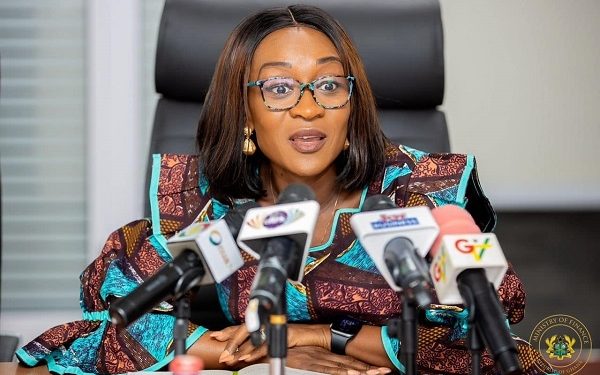
The Economic Fighters League (Fighters) has strongly criticised comments by Public Accounts Committee (PAC) Chair Abena Osei-Asare, describing her reference to fellow legislator Edem Agbana as a “young man” as dismissive and reflective of a broader culture of exclusion within Ghana’s Parliament.
In a press statement issued on March 31, the group said the remark, captured in a widely circulated video, carried “clear condescension” and undermined the spirit of inclusivity expected in the country’s highest legislative chamber.
According to the pressure group, such language reinforces perceptions that certain individuals, particularly younger politicians, do not belong in Parliament.
“It is obvious that Madam Osei-Asare may not be accustomed to seeing many young people in Parliament, but that is no reason to make them feel they do not belong. Everybody belongs,” the statement said.
The group further pointed to what it described as an irony in the situation, noting that the same exclusionary attitudes are often directed at women in politics, including Mrs Osei-Asare herself.
“It is particularly ironic that this posture reflects the same exclusionary and hierarchical attitudes that women in politics… continue to confront in their own struggle for equal recognition and participation in decision-making,” the statement added.
The Fighters used the incident to highlight what they termed deeper structural challenges within Ghana’s political system, arguing that the current electoral framework limits diversity and marginalises alternative voices.
They reiterated their long-standing advocacy for electoral reforms, particularly the adoption of a proportional representation system, which they believe would create a more inclusive and representative Parliament.
“This incident also highlights a deeper structural problem within our political system… This is precisely why we have consistently advocated for Proportional Representation,” the group stated.
The statement concluded with a call for a shift in political culture, urging leaders to prioritise respect, equality, and the fair consideration of ideas, regardless of age, gender, or status.
The controversy has sparked broader conversations about generational inclusion and decorum in Ghana’s parliamentary discourse, as calls grow for a more respectful and representative political environment.
Latest Stories
-
Infantino invited to African summit as he faces challenge to FIFA leadership
28 minutes -
NPA boss flags ‘recalcitrant’ transport operators raising fares arbitrarily
36 minutes -
GPRTU fare hike put on ice after talks with government – NPA boss reveals
58 minutes -
I’m greatly worried – NPA boss on threat of higher transport fares
1 hour -
We are largely import-dependent – NPA boss on Ghana’s fuel vulnerability
2 hours -
Ghana’s fuel market is built for turbulence – NPA’s Edudzi Tamakloe explains why
2 hours -
Postponement not an option as Kenya races to be ready for Afcon 2027
2 hours -
ICE agent shoots and wounds man in Texas as locals demand answers
2 hours -
Ed Sheeran admits ‘mistakes’ at first show since Macklemore controversy
3 hours -
We are ready for the turbulence – NPA boss on Ghana’s fuel crisis
4 hours -
Lady I wanted serious relationship with said she’s not ready – Rema
4 hours -
I’ll never discuss my finances with man, even if he’s my husband – Nancy Isime
4 hours -
Wizkid, Wande Coal advised me on how to leave school for music – Davido
4 hours -
Senegal job an ‘absolute dream’ for new boss Vieira
4 hours -
Harry and Meghan’s media treatment echoes what happened to Diana, Earl Spencer tells BBC
4 hours