

Audio By Carbonatix
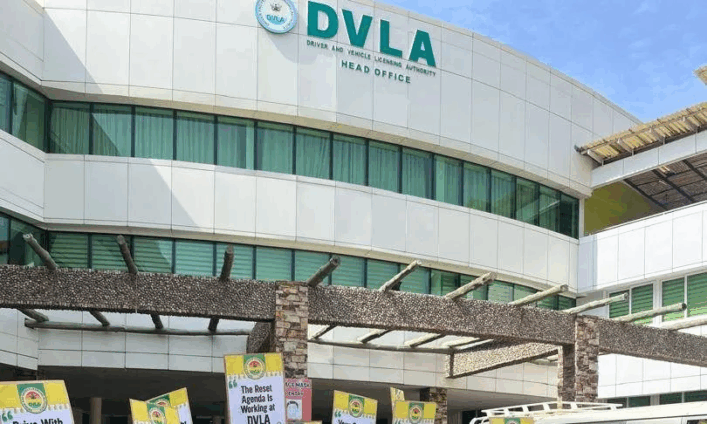
The Driver and Vehicle Licensing Authority (DVLA) has clarified that the responsibility for the commercial use of Toyota Voxy vehicles rests solely with the owners, not the Authority.
The Public Relations Officer of the DVLA, Stephen Attuh, clarified in response to questions about why the DVLA registers Toyota Voxy vans for long-distance commercial use when their operation on such routes is illegal.
In an interview on Joy FM's Middaynews on Thursday, Mr Attuh explained that the Authority’s mandate is limited to registering vehicles based on the declarations made by their owners.
“It is not DVLA that decides whether a vehicle is registered as private or commercial. That decision is made by the vehicle owner at the time of registration,” Mr Attuh said.
He stressed that having a yellow licence plate, which denotes commercial registration, does not automatically permit vehicles to operate on long-distance routes. Many commercial vehicles, such as taxis in Accra, Kumasi, and Takoradi, operate strictly within metropolitan areas despite having yellow plates. Owners must understand that a yellow plate does not mean the vehicle can travel across the country.
Mr Attuh also raised concerns about owners registering vehicles for private use but later deploying them commercially. Such actions not only violate regulations but also increase risks to passengers, he added.
“If a vehicle is registered as private but used commercially, the owner is bypassing higher registration and insurance fees, and more importantly, endangering lives,” he warned.
He noted that the DVLA has previously conducted road operations, particularly in Kumasi, to apprehend operators violating these rules, with offenders handed over to the police for prosecution.
He further explained that the Toyota Voxy is manufactured as a right-hand drive vehicle, and many undergo local conversion. Without clearly defined national standards, enforcement is difficult. Vehicles are tested at private inspection centres, and if declared roadworthy, DVLA cannot refuse registration.
Meanwhile, the Technical Working Committee of the National Road Safety Authority (NRSA) has declared the use of Toyota Voxy vehicles for commercial transport purposes illegal, warning that their widespread operation poses a serious threat to road safety and human life.
According to the committee, the importation and subsequent conversion of the vehicles are not only unlawful but often carried out by unauthorised practitioners, resulting in significant safety risks for passengers and other road users.
The DVLA is calling on the Ministry of Transport to provide policy directives to curb the unsafe or illegal use of Toyota Voxy vans. Clear guidelines could prevent the importation of inappropriate vehicles and ensure all conversions meet safety standards.
“If there is a policy that restricts certain vehicles or conversions, enforcement can begin from that point,” Mr Attuh stated.
Latest Stories
-
GPRTU wants full TRAFFITECH-GH implementation to start in 2027
18 minutes -
Mahama announces plans to import electric wheelchairs for PWDs
22 minutes -
KGL U17 Colts 2026: Western beat Prempeh Elite Academy to set up final final with Greater Accra Region
41 minutes -
Late Solanke strike salvages 10-man Spurs draw at Man United
51 minutes -
Gender Ministry to monitor welfare of Nana Akua Addo’s children amid domestic violence case
57 minutes -
Benedict Okyere Yeboah: Ghana’s football problem goes beyond sacking a coach
1 hour -
GPL 2026/27: Darkwah Wiafe’s winner sees All Blacks beat Kotoko
1 hour -
ITF World Tour : Patel Wins Boys’ Singles Final at J100 Accra
1 hour -
Ghana must pursue BRICS partnership if it brings economic benefits – Kpebu
1 hour -
Success and Wright Claims J100 Accra Girls’ Doubles Championship
1 hour -
ITF J100: America’s Wright wins J100 Accra Girls’ Singles Title
2 hours -
Expedition hopes to find aviator Amelia Earhart’s plane on remote island
2 hours -
US seeks changes to rejected $109m health compact with Ghana – Mahama
2 hours -
Nine dead in mass shooting at Pennsylvania home
2 hours -
‘Time for Ukraine to get new president,’ says Trump after Zelensky condemns diesel deal
2 hours