

Audio By Carbonatix
The Deputy Attorney-General and Deputy Minister for Justice, Justice Srem-Sai, has explained why a High Court in Accra went ahead to deliver its ruling on the prosecutorial powers of the Office of the Special Prosecutor (OSP), despite a similar matter pending before the Supreme Court.
The decision had raised questions among sections of the public, with some suggesting the High Court should have waited for the apex court’s determination.
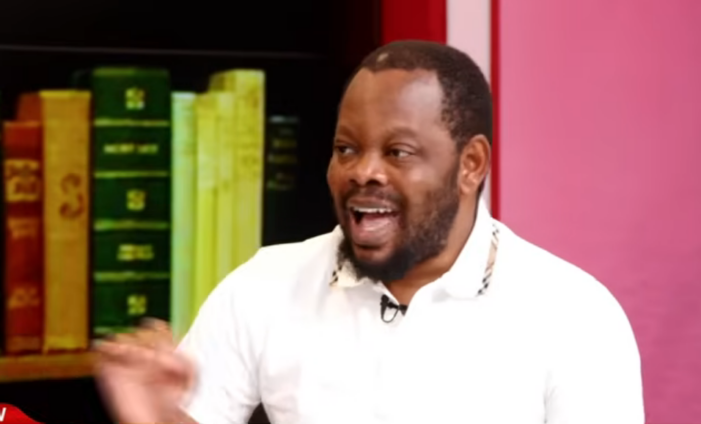
However, speaking on JoyNews’ The Law programme with Samson Lardy Anyenini, Mr Srem-Sai clarified that the trial judge initially exercised caution and paused proceedings.
According to him, the High Court had earlier stayed its proceedings to await guidance from the Supreme Court on related legal questions.
“The judge initially stayed the case for the Supreme Court to decide, which was a reasonable step,” he explained.
Mr Srem-Sai said the situation changed due to developments in the trial court where the accused person was being prosecuted by the OSP.
He explained that the same applicant had sought to halt proceedings in that court pending the Supreme Court’s decision, but the OSP opposed the request and continued with the prosecution.
This, he noted, prompted the applicant to return to the High Court to request that it also proceed with the matter rather than wait.
He said the argument was essentially about fairness—if the prosecution would not wait at the trial court, then the High Court should also not be required to wait.
Mr Srem-Sai indicated that while the Attorney-General’s office was not party to the case and was not involved in any, the orders of the High Court were directed at the office after the count found merit in the argument of the applicant and decided to move forward with the case.
“In the circumstances, the judge decided that it was fair to proceed and give a ruling,” he said.
He further explained that while it is often prudent for lower courts to await the Supreme Court on matters of constitutional interpretation, they are not strictly bound to do so in every case.
The High Court, he noted, retained the discretion to continue with proceedings, particularly where delays could prejudice one of the parties.
The Deputy Attorney-General dismissed suggestions that the judge acted improperly, maintaining that from the records of proceedings, the decision followed procedural logic based on how the case evolved.
He said this was not a situation where the court ignored the Supreme Court. It initially stayed proceedings but later proceeded due to the conduct of the parties and the need for fairness.
Latest Stories
-
Ghana, 3 others face large financing needs, debt servicing costs – World Bank warns
2 hours -
Eurobond repayment: Ghana faces US$6.4bn repayment burden between 2027 and 2030 – World Bank
3 hours -
Government to add 100 new ambulances to national fleet in 2027
3 hours -
Ex-Spurs player Vega set to run for FIFA president
3 hours -
Arteta signs new contract with champions Arsenal
3 hours -
Former Man City player Silva comes out of retirement
4 hours -
‘I have a screen in my office’ – Akandoh on real-time emergency bed tracking
4 hours -
Government begins pilot of national emergency bed management system
4 hours -
GRA forms 9-member committee to probe alleged missing containers at Tema Port
4 hours -
Foreign Minister inspects VFS Global Visa Centre, highlights commitment to service quality standards
5 hours -
Declan Rice close to agreeing new Arsenal deal
5 hours -
‘Draining’ few days for Gauff after online racist abuse
5 hours -
Media worker, journalist remanded over alleged GH¢800,000 fraud
5 hours -
PAC sends Ghana Water hearing back, demands Minister and MD appear over financial status
5 hours -
Foreign Affairs Minister inspects 20+ visa centres, demands better conditions for Ghanaian applicants
6 hours