

Audio By Carbonatix
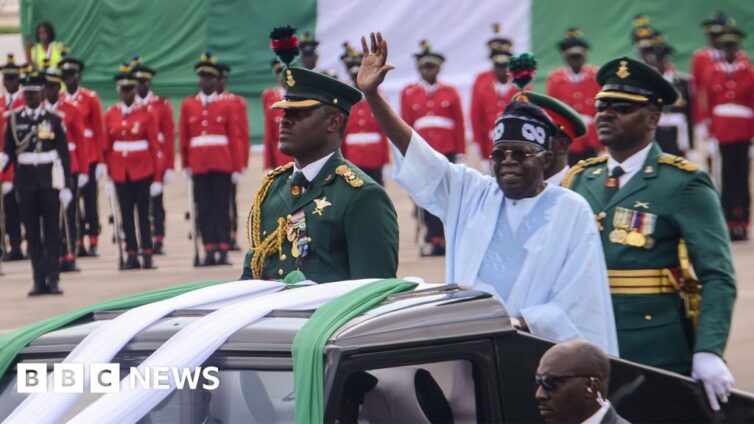
The Nigerian federal government has formally charged six individuals with treason and terrorism in connection with a purported conspiracy to oust President Bola Tinubu. The prosecution follows months of speculation regarding military stability in Africa's most populous nation. Documents filed at the Federal High Court in Abuja identify a diverse group of suspects, including a retired major general and a serving police inspector.
Legal Proceedings and the Defendants
The Attorney General filed a 13-count charge sheet naming Mohammed Ibrahim Gana, a retired major general, and Erasmus Ochegobia Victor, a retired navy captain. Other defendants include police inspector Ahmed Ibrahim and Zekeri Umoru, an electrician employed at the Presidential Villa. Bukar Kashim Goni, a civilian, and Abdulkadir Sani, an Islamic cleric, round out the list of those currently in custody.
The defendants are scheduled to appear before Justice Joyce Abdulmalik on Wednesday. According to the court documents, the suspects “conspired with one another to levy war against the state to overawe the president of the Federal Republic.” Prosecutors further allege that the group “conspired with one another to commit an act of terrorism.”
Allegations of Concealment and Financial Misconduct
The government has also named Timipre Sylva, a former governor of Bayelsa State and one-time oil minister, as a seventh suspect. Authorities accuse Sylva of helping to conceal the plot and note that he remains at large. The prosecution asserts that the defendants had prior knowledge of the “treasonable act” planned by the alleged mastermind, Colonel Mohammed Alhassan Ma’aji, but failed to inform the state.
Beyond the attempt to overthrow the government, the charges include the suppression of intelligence and money laundering. Prosecutors also allege the defendants were intent on destabilising the state and failed to disclose information that could have helped prevent terrorism. The case suggests that significant sums of money changed hands to finance the operation, with the group accused of “indirectly” but “knowingly” rendering “support” to the plotters. Under Nigerian law, treason remains a premier criminal offence carrying penalties as severe as life imprisonment.
Evolution of a Denied Conspiracy
Rumours of instability first emerged in October 2025 when the government cancelled a military parade for Nigeria's 65th Independence Anniversary. Officials initially dismissed coup speculation and cited vague security threats. In early 2025, sixteen officers were arrested for what the military called “acts of indiscipline and breaches of service regulations,” which fueled rumours of a coup plot that the government initially denied.
Despite initial denials, the government confirmed in January that several officers would stand trial for planning “to overthrow the government.” Shortly after these developments, President Tinubu reshuffled the country’s top military generals. It remains unclear if these High Court charges supplement or replace existing military tribunal proceedings.
The Regional Stakes and the ECOWAS Mandate
This internal crisis carries significant weight for the Economic Community of West African States (ECOWAS). As the regional powerhouse, Nigeria’s stability is viewed by neighbours like Ghana as the cornerstone of West African security. Just months ago, in December 2025, President Tinubu took a decisive lead in deploying forces to successfully thwart a coup attempt in Benin. The discovery of a plot within his own borders underscores the persistent threat of "coup contagion" that has already seen Mali, Niger, and Burkina Faso exit the bloc to form their own military alliance.
Regional Instability and Democratic Resilience
This legal battle unfolds against a backdrop of democratic fragility across West and Central Africa. Recent years have seen a surge in military takeovers, including successful or attempted coups in Benin and Guinea-Bissau. Analysts suggest these “military takeovers, experts say, follow a pattern of disputed elections, constitutional upheaval, security crises and youth discontent.”
Nigeria holds a unique position in this volatile landscape. While the nation experienced five coups in the 20th century, it has maintained unbroken civilian rule since 1999. The armed forces have consistently stressed their loyalty to civilian authority, often issuing public statements reaffirming their commitment to democracy. This trial now serves as a pivotal test for the administration’s ability to maintain internal security while upholding the judicial transparency expected of Africa's largest democracy. For the region, the outcome of this case will likely signal whether West Africa's democratic heavyweight can remain insulated from the wave of constitutional upheaval sweeping its neighbours.
Latest Stories
-
GRIDCo restores power nationwide after August 20 blackout, says grid strengthening measures ongoing
6 minutes -
Journalism must prioritise public interest over attention — Kwesi Pratt
43 minutes -
Ghana Mineworkers Union demand suspension of contract mining directive, threaten industrial action
1 hour -
ADB Ghana Medicals constructing and equipping new Cardiothoracic Centre at Komfo Anokye
1 hour -
AFREIKH Summer School challenges Africa to harness critical minerals
1 hour -
Government plans 2,000-acre pharmaceutical innovation park in Osudoku to boost local drug production
1 hour -
Partey undergoes medical ahead of Al Shabab move in Saudi Arabia
1 hour -
Today’s front pages: Friday, August 21, 2026
2 hours -
Power outages could drive up cost of digital services — NITA
2 hours -
Patients face basic sanitation gaps in West African health facilities — WHO / UNICEF
2 hours -
Competence has no age; let’s stop punishing new businesses
2 hours -
JoyNews Republic Bank Habitat Fair 2026 opens today at Achimota Mall
2 hours -
What Is Wrong With Us: The roads that keep counting our dead
2 hours -
MTN condemns recent xenophobic attacks on Ghanaians in South Africa
2 hours -
Philip Nai: What happens at your front desk can make or break your brand
3 hours