

Audio By Carbonatix
Ghana is under no legal obligation to implement policy recommendations from multilateral institutions such as the International Monetary Fund (IMF) and the World Bank, despite their continued engagement with the country’s economic reform agenda.
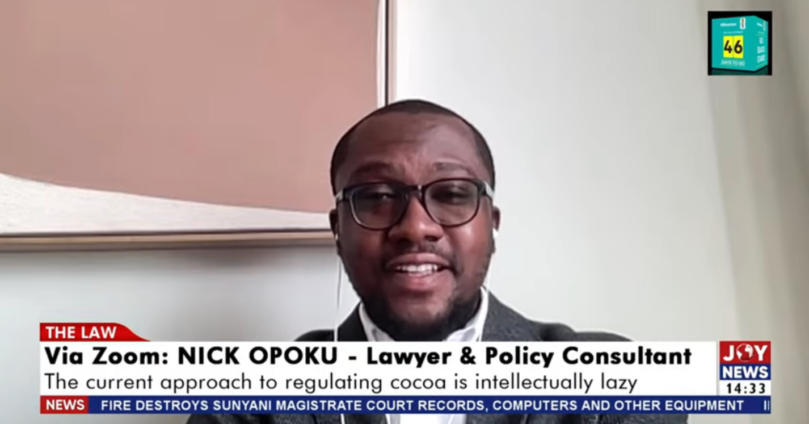
This is according to lawyer and policy consultant Nick Opoku, who has reiterated the importance of national sovereignty in decision-making.
Speaking on JoyNews’ The Law programme on Sunday, 26 April, Mr Opoku stressed that while such institutions often provide guidance on structural reforms, their advice does not carry binding force.
“Multilateral organisations like the IMF and the World Bank can provide recommendations and advice, but that advice, as lawyers will say, is not binding,” he noted. “We are a sovereign nation.”
According to Mr Opoku, the IMF has suggested that Ghana consider reforms that would make cocoa farming more attractive and economically viable for farmers.
These include introducing incentives to boost productivity and discourage the sale of cocoa farms, particularly when farmers perceive declining returns.
“The IMF can recommend reforms so that farmers are incentivised to be more productive,” he explained.
“They can also be encouraged not to sell their cocoa farms when they feel the sector is no longer profitable, especially when small-scale mining offers quick money.”
However, he emphasised that the government of Ghana retains full discretion in determining whether to adopt such proposals.
“The government can decide whether to abide by these recommendations or not,” he said, reinforcing the notion that international advice must be weighed against domestic priorities and conditions.
Mr Opoku also drew attention to historical efforts to reform the cocoa sector, revealing that similar IMF recommendations were made in the 1990s.
He indicated that those proposals underwent thorough domestic processes before any decisions were taken.
“In the 1990s, the IMF made a recommendation to the government of Ghana that the sector must be reformed in the manner we have been discussing,” he said. “There were wide consultations with industry players, farmers and other stakeholders, and the Cabinet even approved it.”
Latest Stories
-
Energy Minister to address public on developments in electricity sector on April 27
11 seconds -
Armwrestling: Africa’s best pullers converge in Accra for a Super Showdown
4 minutes -
Ashanti ECG leadership hit by major shake-up amid intermittent power cuts
42 minutes -
Ghana’s new AI strategy: Bold vision, effective implementation holds the Key
44 minutes -
Energy Minister orders GRIDCo CEO to step aside pending probe into Akosombo substation fire
58 minutes -
Water crisis deepens in Savelugu as changing weather patterns worsen shortages
2 hours -
Mineworkers Union rejects reported contract mining directive for Newmont, AngloGold, Zijin
2 hours -
Cocoa farmers’ average 61% share of world price inadequate — Policy consultant
3 hours -
Ghana not obliged to implement IMF advice on cocoa sector reforms – Nick Opoku
3 hours -
East Mamprusi MCE to engage Gbintri stakeholders over market revenue collection suspension
3 hours -
14 honoured for excellence in weather and climate leadership Across Africa
3 hours -
African meteorological community celebrates launch of new continental journal
3 hours -
ECOWAS condemns terrorist attacks in Mali, calls for regional unity
3 hours -
Kalibi festival blends Sankana’s history of resistance with renewed push for development
3 hours -
Old Tafo begins 15 mechanised boreholes, 39 more left to reach 54-borehole target
3 hours