

Audio By Carbonatix
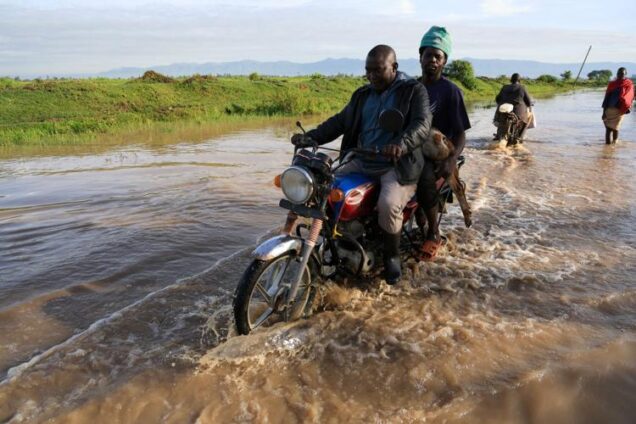
Torrential rains and devastating landslides have killed at least 18 people across multiple regions of Kenya over the past week, the National Police Service confirmed on Sunday. Most fatalities were attributed to drowning as the seasonal March-to-May downpours reached a lethal peak, triggering mudslides in Tharaka Nithi, Elgeyo-Marakwet, and Kiambu counties. While authorities urged extreme caution amid the escalating weather crisis, the Ministry of Interior and National Administration reported that the Eastern region has been the hardest hit, accounting for nine of the total fatalities. Other deaths were confirmed in the Central, Coast, and Rift Valley regions, as well as the capital city of Nairobi.
Displacement and Infrastructure Damage
More than 54,000 households across the country now face the impact of the rising waters. In Nairobi alone, approximately 6,000 families have been affected by the deluge, particularly in low-lying areas and informal settlements. The flooding has submerged dozens of schools and hospitals while cutting off 17 major roads. Landslides have devastated communities in Tharaka Nithi, Elgeyo-Marakwet, and Kiambu counties. The police confirmed that these mudslides are impacting “multiple families, displacing households, and causing significant damage to property and infrastructure.” These geological shifts forced many residents to flee their homes, and while the exact number of displaced individuals remains unclear, the destruction to livelihoods is vast.
Civil Unrest and Health Warnings
The flooding has sparked localised civil unrest in the capital. Traders in Nairobi’s Makongeni and Ruai neighbourhoods staged protests on Sunday over the deteriorating state of roads, which they claim has crippled local commerce. As cars and pedestrians struggle to wade through overflowing streets, weather authorities have issued a stark warning: the stagnant waters pose immediate health risks, including waterborne diseases. Furthermore, officials cautioned that the sustained downpours will likely result in widespread damage to crops and farmland across the country.
Rising Risks at National Dams
Authorities issued urgent warnings to residents living downstream of the Tana and Athi rivers. Water levels in the nation’s hydroelectric dams continue to rise at an alarming rate. The government has mapped 59 flood-prone areas in Tana River County to identify the highest-risk zones. Officials noted that river levels along the Seven Forks Dam system remain a primary concern for the Ministry of Interior and National Administration, prompting calls for immediate evacuation to higher ground.
Emergency Response and Public Safety
Search and rescue operations are currently active across the most impacted regions. The National Police Service released a statement through its social media account, emphasising the severity of the situation. "The National Police Service has confirmed the loss of 18 lives as a result of these incidents, underscoring the grave danger posed by the ongoing weather conditions," the police said. Authorities are providing emergency aid but continue to urge citizens to take extreme precautions. The police emphasised that "constant cooperation between citizens and response agencies will be essential to prevent more victims and ensure the safety of the community."
Extended Forecast Predicts Further Hardship
The Kenya Meteorological Department warned that enhanced rainfall and thunderstorms will likely persist through the first two weeks of May. Forecasts indicate wind gusts reaching 46 kilometres per hour in various regions, including the Lake Victoria basin and the northeast. This current wave follows a period of extreme weather starting in March that has already left a trail of destruction. In that month alone, floodwaters killed at least 37 people in Nairobi, marking the start of a particularly lethal seasonal cycle.
Humanitarian Outlook and Climate Resilience
As the death toll continues to climb, the focus of the national government is shifting toward long-term recovery. Fruzsina Straus, head of Disaster Risk Reduction for the United Nations Environment Programme (UNEP), noted the broader continental struggle in a recent brief. “Across African cities, water extremes—too much during intense rains and too little during droughts—are driving increasingly severe impacts,” Straus said, adding that “cities must adapt rapidly to this new water volatility.” The recurring nature of these floods underscores a growing challenge for the region as it balances immediate emergency response with the need for resilient urban planning.
Shared African Challenges and Urban Vulnerability
The tragedy in Kenya mirrors a growing pattern of extreme weather events across the continent, from the Sahel to the Gulf of Guinea. For audiences across West Africa, and particularly in Ghana, these scenes of submerged neighbourhoods and saturated drainage systems are increasingly familiar. The crisis highlights a shared continental struggle with rapid urbanisation and the lagging development of climate-resilient infrastructure. As African nations navigate these "new normals," the situation in Kenya serves as a sobering reminder of the urgent need for unified regional strategies to mitigate the impact of unpredictable seasonal shifts and protect vulnerable populations in burgeoning metropolitan centres.
Latest Stories
-
Ghana needs a law to sustain constitutional reforms – CDD-Ghana
2 hours -
COVID fumigation audit: Auditor-General has a lot of questions to answer – Akwatia MP
2 hours -
Stranded Ghanaian medical graduates in Cuba appeal to Mahama for immediate return
2 hours -
GNFS contains fire outbreak at Teshie Lekma Road near Lekma Hospital
8 hours -
Samia Nkrumah rejects the narrative that Ghanaians were happy after Nkrumah’s overthrow
10 hours -
A Mother’s pain: Tribute by Ivan Baidoo’s mother
10 hours -
‘Forgive us for staying away’ — Samia Nkrumah leads family back to Nkroful, pledges to preserve Nkrumah’s legacy
10 hours -
Ernest Nuamah scores twice as Lyon beat Rennes
10 hours -
‘My dear Ivan’ – A father’s tribute to a son tragically killed
10 hours -
GNPC Explorco advances Voltaian Basin drilling preparations with 13.5km access road
10 hours -
Cabinet approves facility manager for Borteyman Sports Complex – Kofi Adams
11 hours -
Sanitation is improving; critics may be ‘living in another world’ – Salaga South MP replies Bekwai MP
11 hours -
Government must do more to tackle sanitation crisis – Bekwai MP
11 hours -
World Cleanup Day: GFF begins sanitation education in local communities
12 hours -
EU Ambassador, IGP discuss stronger cooperation on policing and security
12 hours