

Audio By Carbonatix
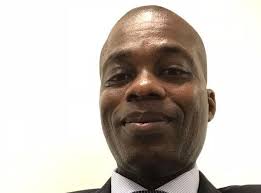
Public health expert and Democracy and Development Fellow at the Centre for Democratic Development (CDD-Ghana), Kwame Sarpong Asiedu, has backed the Health Minister’s directive to fully implement recommendations from the investigation into the death of Charles Amissah.
He described it as necessary to address both systemic and human failures within Ghana’s healthcare system.
Speaking on Joy FM’s Super Morning Show on Thursday, May 7, Mr Asiedu said the ministerial directive should not only be viewed as a punishment mechanism, but also as an opportunity to confront deep-rooted problems within the health sector.
“For me, I see the ministerial directive not only as a means to punish, but a means to understand the attitudinal problems there that cause these things to happen,” he said.
“Because without understanding the attitudinal problems there in, it will be very difficult to fix the people problem as well,” he added.
Mr Asiedu said the committee report into the circumstances surrounding Mr Amissah’s death exposed “a number of failures”, which he grouped into “system failures largely and people failures” as well as “technical failures”.
According to him, the breakdown in care began from the moment the patient first needed emergency support.
“When you have an emergency, the journey starts from the first person who comes across you,” he explained.
Referring to concerns raised in the report, he said that many ordinary citizens are unable to provide basic life support in emergencies.
However, he said that the more troubling issue was that even ambulance personnel reportedly lacked the necessary emergency response skills.
“The technicians who came with the ambulance couldn’t do that either. Neither could they offer advanced support,” he said.
Mr Asiedu recalled earlier concerns he had raised years ago about Ghana’s ambulance system, saying that many ambulances function mainly as transport vehicles rather than fully equipped emergency response units.
“I had this conversation when the One Ambulance, One District policy came, that the ambulance itself would be a vehicle of transport if, one, the equipment; two, the personnel; and number three, there’s no system in place like a dashboard directing the ambulance to say there’s a bed here or there,” he stated.
“We had this conversation six and a half years ago… the pigeons have come back to roost.”
He said the committee report indicated that the patient was already losing blood during the delays experienced at the emergency response stage.
Mr Asiedu further criticised the handling of the patient at the hospitals involved in the case, particularly the refusal by health workers at the first hospital to attend to the patient because there was no available bed space.
“When they got to the first hospital, they were told that there’s no bed. The health professional then refuses to see the patient. That’s another system failure,” he said.
He questioned whether standard operating procedures existed in the facilities involved and whether the conduct of the health workers met accepted professional standards.
“As health professionals, we have what we call the Bolam test, which is the behaviour of a health professional in any situation,” he explained.
“The first question you are asked is the actions you took, would they be in consonance with the actions of a competent health professional with the same skills as you have?”
He said that if proper emergency protocols existed and were ignored, then the competence of the professionals involved must be questioned. On the other hand, he said, the absence of such procedures would itself amount to institutional failure.
Mr Asiedu said that the same pattern reportedly repeated itself across several hospitals visited by the patient, raising broader concerns about emergency healthcare systems in the country.
He warned that the findings should alarm all Ghanaians, especially because the incident happened in the Greater Accra Region, where healthcare resources are expected to be among the best in the country.
“This was Greater Accra Region, where the national capital resides,” he said.
“So if technicians have these defects, what are the skills gaps across the country?”
According to him, health professionals and specialised expertise are already concentrated in major urban areas, making the revelations even more worrying.
“You expect that in the national capital you would have the best people with the best skills,” he said.
Mr Asiedu welcomed the Health Minister’s assurance that the committee’s recommendations would be fully implemented, describing the move as overdue but necessary.
“When the minister says that the report will be implemented to the letter, I’m like, good grief. Go ahead, Godspeed and implement it,” he said.
“And it shouldn’t just be across Greater Accra. This has to be a national drive because this is just scary.”
He pointed to the report’s conclusion that the patient died as a result of “medical neglect”, describing the finding as particularly significant.
“It says the patient died from medical neglect. That is very technical,” he stated.
“The entire medical space over 118 minutes neglected the patient. That was the cause of death.”
During the discussion, host Winston Amoah referenced Ghana’s 2011 Policy Guidelines for Hospital Accident and Emergency Services, which already outlines requirements for emergency units, including triage areas, resuscitation spaces and 24-hour emergency services.
Mr Asiedu agreed that the problem was not a lack of policy documents, but rather the failure to enforce them.
“It’s not like we’re reinventing the wheel. All the documents exist,” he said.
“The gaps were identified in the health facilities assessment report as well in 2023. It’s not like we don’t know these things.”
He insisted that both system reforms and behavioural changes among health workers must happen simultaneously.
“When a system fails, you need to identify all the points of failure and fix them, including the personnel question,” he said.
“For me, people may have the conversation around the chicken and egg situation… do you fix the system before you fix the people’s attitude or the attitude before you fix the system? The answer is both have to happen,” he said.
Latest Stories
-
Health Minister to brief media on Free Primary Healthcare programme on Monday
11 minutes -
‘It was inappropriate to make that comparison’ – Dr Pumpuni Asante on CJ’s SOE comment
24 minutes -
Photos: Final-day shopping continues at Joy FM Back-to-School Discount Fair
53 minutes -
Darkey and Frimpong set up J30 Accra boys’ doubles final
55 minutes -
When war takes more than territory: The human cost of conflict
57 minutes -
Review SHS placement policy to give more BECE candidates access – Kwesi Kwarteng
1 hour -
Tano South Municipal Assembly moves to curb road carnage with speed ramps
1 hour -
Duvor Klu, Gakpo win J30 Accra girls’ doubles title
1 hour -
ITF Juniors Tournament: Duvor Klu claims with straight-sets victory over Gakpo
1 hour -
‘Decision to retire has been tough’ – Isaac Dogboe
2 hours -
Domelevo backs OSP probe into alleged GH¢70,000 payment to Appiagyei
2 hours -
Crowds swell as families make final shopping at Joy FM Back-to-School Fair
2 hours -
‘Apologise if you accept you erred’ – Political analyst tells Chief Justice
3 hours -
Mahama’s board shake-up should not be linked to indiscipline – Akwatia MP
3 hours -
‘My Police, Your Police, Our Police’: the Aboso fire and a lesson in Policing together
3 hours