

Audio By Carbonatix
When Ghana arrives in North America for the 2026 FIFA World Cup, the margins between success and disappointment could come down to one decision: profile selection.
Talent alone rarely wins tournament football. Balance, tactical flexibility and players capable of solving specific problems in high-pressure moments shape it. For Black Stars head coach Carlos Queiroz, assembling the right mix will be just as important as selecting the biggest names.
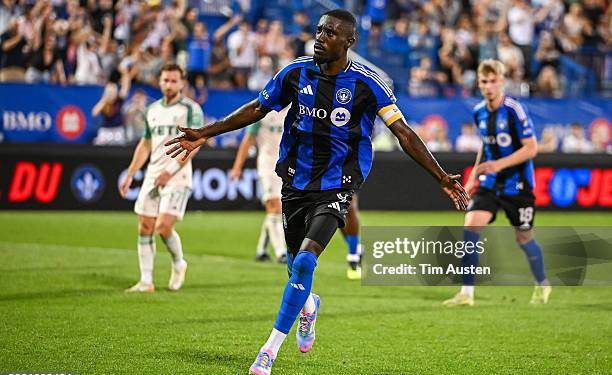
That is where Prince-Osei Owusu enters the conversation. The 29-year-old striker may not dominate headlines in Ghana, but his performances for CF Montréal have quietly built a compelling argument, one rooted in form, leadership and a tactical profile the Black Stars may desperately need.
1. Elite form at the right time
World Cup selection often rewards players peaking at precisely the right moment.
Owusu is enjoying arguably the best spell of his career. The striker was recently named CF Montréal’s Player of the Month for April after an explosive start to the 2026 MLS season.
Across the opening 11 league matches, he has recorded six goals and five assists, a remarkable return of 11 direct goal involvements, averaging one contribution per game. For Ghana, whose attack has occasionally struggled for consistency in recent tournaments, bringing a striker in this type of form could prove invaluable.
International football is often decided by confidence, and few Ghanaian forwards currently appear more confident than Owusu.
2. Leadership Ghana can benefit from
Ahead of the 2026 season, Owusu was entrusted with the captaincy at Montréal — a responsibility that speaks volumes about his character. Leading a top-flight club requires more than technical ability. It demands emotional intelligence, accountability, consistency and the respect of teammates.
Ghana’s most successful tournament teams have historically relied on strong personalities within the dressing room, leaders capable of navigating pressure and maintaining unity through difficult moments.
Owusu offers exactly that type of maturity. At 29, he combines experience with hunger, an important balance in a tournament environment where mentality often matters as much as quality.
3. A profile Ghana’s attack has been missing
For years, Ghana has lacked a reliable physical reference point in attack. At 1.91 metres (6ft 3in), Owusu provides something tactically different: a genuine No. 9 capable of occupying defenders, winning aerial duels and creating space for runners around him. He is a classic target man, but with the mobility and technical awareness required in the modern game.
His hold-up play allows midfielders to advance, his aerial presence creates problems against deep defensive blocks, and his ability to combine with wide players makes him particularly useful in transition.
Against elite opposition — where Ghana may spend long periods without possession — a striker capable of relieving pressure becomes increasingly valuable. Owusu’s profile offers precisely that.
4. Valuable experience in Europe and North America
International tournaments often reward familiarity. Having developed in the academy of VfB Stuttgart and spent years competing across Germany’s lower divisions, Owusu arrives with a strong European football education. But there is another advantage that should not be overlooked.
The 2026 World Cup will be played across the United States, Canada and Mexico, environments Owusu already knows intimately after multiple seasons in MLS.
From travel logistics to climate adaptation, stadium conditions and scheduling demands, his experience in North America could offer Ghana a subtle but meaningful edge. While many European-based players will still be adjusting to unfamiliar surroundings, Owusu would already feel at home.
5. A striker built for modern pressing football
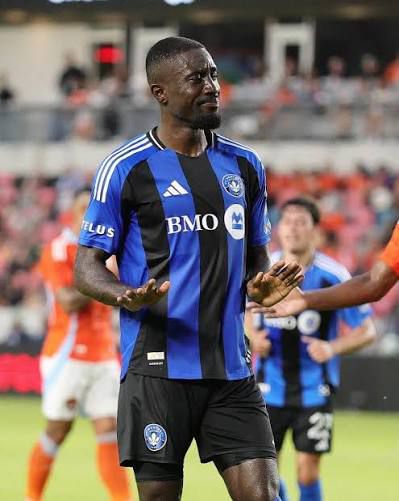
Modern football is increasingly defined by what teams do without possession. The best international sides defend aggressively from the front, using strikers as the first line of pressure.
That is an area where Owusu excels. At Montréal, he is more than a goalscorer. His relentless pressing, defensive work rate and willingness to harass centre-backs make him integral to the team’s structure.
He frequently initiates defensive pressure, forcing mistakes and helping his side recover possession in dangerous areas. For a coach like Queiroz, who values tactical discipline and compact team organisation , that attribute could prove especially attractive.
A forward who presses with intensity while still offering goals and physicality is a rare combination.
Latest Stories
-
GNFS contains fire outbreak at Teshie Lekma Road near Lekma Hospital
4 hours -
Samia Nkrumah rejects the narrative that Ghanaians were happy after Nkrumah’s overthrow
6 hours -
A Mother’s pain: Tribute by Ivan Baidoo’s mother
6 hours -
‘Forgive us for staying away’ — Samia Nkrumah leads family back to Nkroful, pledges to preserve Nkrumah’s legacy
6 hours -
Ernest Nuamah scores twice as Lyon beat Rennes
6 hours -
‘My dear Ivan’ – A father’s tribute to a son tragically killed
6 hours -
GNPC Explorco advances Voltaian Basin drilling preparations with 13.5km access road
6 hours -
Cabinet approves facility manager for Borteyman Sports Complex – Kofi Adams
7 hours -
Sanitation is improving; critics may be ‘living in another world’ – Salaga South MP replies Bekwai MP
7 hours -
Government must do more to tackle sanitation crisis – Bekwai MP
7 hours -
World Cleanup Day: GFF begins sanitation education in local communities
7 hours -
EU Ambassador, IGP discuss stronger cooperation on policing and security
8 hours -
Africa Nations Volleyball Championship: Ghana set up quarterfinal clash with Cameroon after beating Chad
8 hours -
Meet Dr Benjamin Appiah Osei — Ghana’s three-time tourism awards winner
8 hours -
UEFA & CONCACAF demand Fifa pays $10m to all 211 members
8 hours