

Audio By Carbonatix
When Ghana arrives in North America for the 2026 FIFA World Cup, the margins between success and disappointment could come down to one decision: profile selection.
Talent alone rarely wins tournament football. Balance, tactical flexibility and players capable of solving specific problems in high-pressure moments shape it. For Black Stars head coach Carlos Queiroz, assembling the right mix will be just as important as selecting the biggest names.
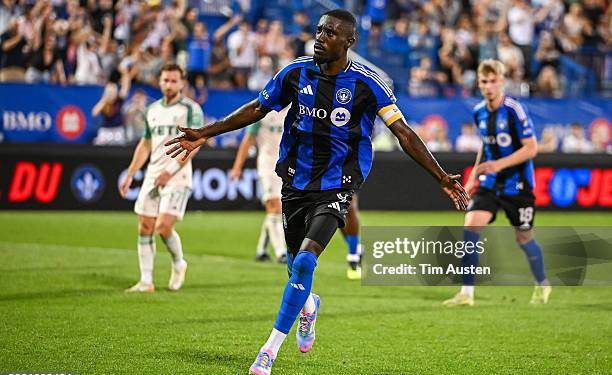
That is where Prince-Osei Owusu enters the conversation. The 29-year-old striker may not dominate headlines in Ghana, but his performances for CF Montréal have quietly built a compelling argument, one rooted in form, leadership and a tactical profile the Black Stars may desperately need.
1. Elite form at the right time
World Cup selection often rewards players peaking at precisely the right moment.
Owusu is enjoying arguably the best spell of his career. The striker was recently named CF Montréal’s Player of the Month for April after an explosive start to the 2026 MLS season.
Across the opening 11 league matches, he has recorded six goals and five assists, a remarkable return of 11 direct goal involvements, averaging one contribution per game. For Ghana, whose attack has occasionally struggled for consistency in recent tournaments, bringing a striker in this type of form could prove invaluable.
International football is often decided by confidence, and few Ghanaian forwards currently appear more confident than Owusu.
2. Leadership Ghana can benefit from
Ahead of the 2026 season, Owusu was entrusted with the captaincy at Montréal — a responsibility that speaks volumes about his character. Leading a top-flight club requires more than technical ability. It demands emotional intelligence, accountability, consistency and the respect of teammates.
Ghana’s most successful tournament teams have historically relied on strong personalities within the dressing room, leaders capable of navigating pressure and maintaining unity through difficult moments.
Owusu offers exactly that type of maturity. At 29, he combines experience with hunger, an important balance in a tournament environment where mentality often matters as much as quality.
3. A profile Ghana’s attack has been missing
For years, Ghana has lacked a reliable physical reference point in attack. At 1.91 metres (6ft 3in), Owusu provides something tactically different: a genuine No. 9 capable of occupying defenders, winning aerial duels and creating space for runners around him. He is a classic target man, but with the mobility and technical awareness required in the modern game.
His hold-up play allows midfielders to advance, his aerial presence creates problems against deep defensive blocks, and his ability to combine with wide players makes him particularly useful in transition.
Against elite opposition — where Ghana may spend long periods without possession — a striker capable of relieving pressure becomes increasingly valuable. Owusu’s profile offers precisely that.
4. Valuable experience in Europe and North America
International tournaments often reward familiarity. Having developed in the academy of VfB Stuttgart and spent years competing across Germany’s lower divisions, Owusu arrives with a strong European football education. But there is another advantage that should not be overlooked.
The 2026 World Cup will be played across the United States, Canada and Mexico, environments Owusu already knows intimately after multiple seasons in MLS.
From travel logistics to climate adaptation, stadium conditions and scheduling demands, his experience in North America could offer Ghana a subtle but meaningful edge. While many European-based players will still be adjusting to unfamiliar surroundings, Owusu would already feel at home.
5. A striker built for modern pressing football
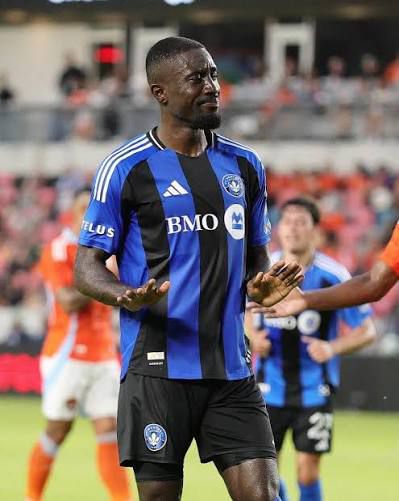
Modern football is increasingly defined by what teams do without possession. The best international sides defend aggressively from the front, using strikers as the first line of pressure.
That is an area where Owusu excels. At Montréal, he is more than a goalscorer. His relentless pressing, defensive work rate and willingness to harass centre-backs make him integral to the team’s structure.
He frequently initiates defensive pressure, forcing mistakes and helping his side recover possession in dangerous areas. For a coach like Queiroz, who values tactical discipline and compact team organisation , that attribute could prove especially attractive.
A forward who presses with intensity while still offering goals and physicality is a rare combination.
Latest Stories
-
Government procures over 2,000 transformers as Ghana’s electricity access hits 89.13% – Energy Minister
26 minutes -
UTAG-UG threatens strike on October 19 over unpaid allowance
34 minutes -
Let The Constitution direct Chieftaincy to deliver “All Development Is Local”
2 hours -
John Jinapor outlines renewable energy, nuclear power priorities for 2027
2 hours -
Ghana explores centre of excellence for hearing, communication and cochlear implant care
3 hours -
Schizophrenia-related disorders lead mental health cases recorded in Ghana
4 hours -
Dutch authorities enlist Ghana in hunt for fugitive drug lord Bolle Jos
4 hours -
Ghana housing finance conference adopts communiqué to improve affordable housing access
8 hours -
Special Initiatives Minister urges Wa Technical Institute to enrol more girls as EU-backed solar training lab opens
9 hours -
In the matter of my first year at the Bar
9 hours -
ActionAid Ghana calls for an end to child marriage, greater investment in girls’ rights
9 hours -
Newsfile to tackle World Cup visa scandal, beach demolitions, education strikes, BRICS bid
9 hours -
UK-Ghana Trade & Investment Summit: Trade Resource Centre to help businesses maximise UK-Ghana trade opportunities
10 hours -
Embassy of Denmark celebrates World Maritime Day
10 hours -
Linking LEAP to productive inclusion could cut extreme poverty by 2030 – UNICEF
11 hours