

Audio By Carbonatix
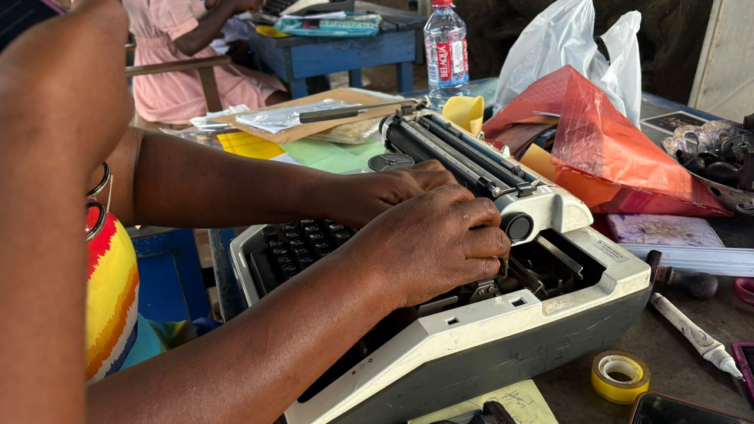
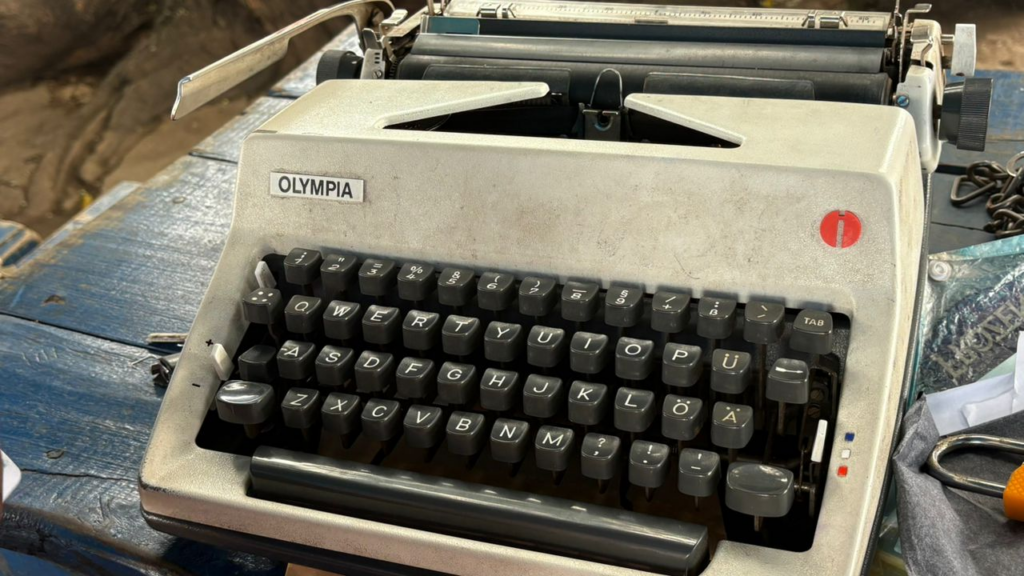
In an era where laptops hum louder than typewriter keyboards, and printers spit out documents within seconds, a small but determined group of typists in Kumasi continues to keep an old craft alive.
Beneath the shade of old buildings around Manhyia, the rhythmic tapping of typewriter keys still tells stories of legality, trust and survival.
While technology has changed the face of business across the world, the typewriting business in Kumasi refuses to fade quietly into history.
At places such as the Manhyia enclave, the Kumasi Central Prisons enclave and the Births and Deaths Registry environs, typewriters remain part of daily life, serving customers who still believe in the authenticity and reliability of manually prepared documents.
Among the familiar faces behind the typewriters is Eunice Asante Mensah, popularly known as “Celebrity Typist.” Her fingers dance across the machine with speed and confidence built from nearly two decades of experience.
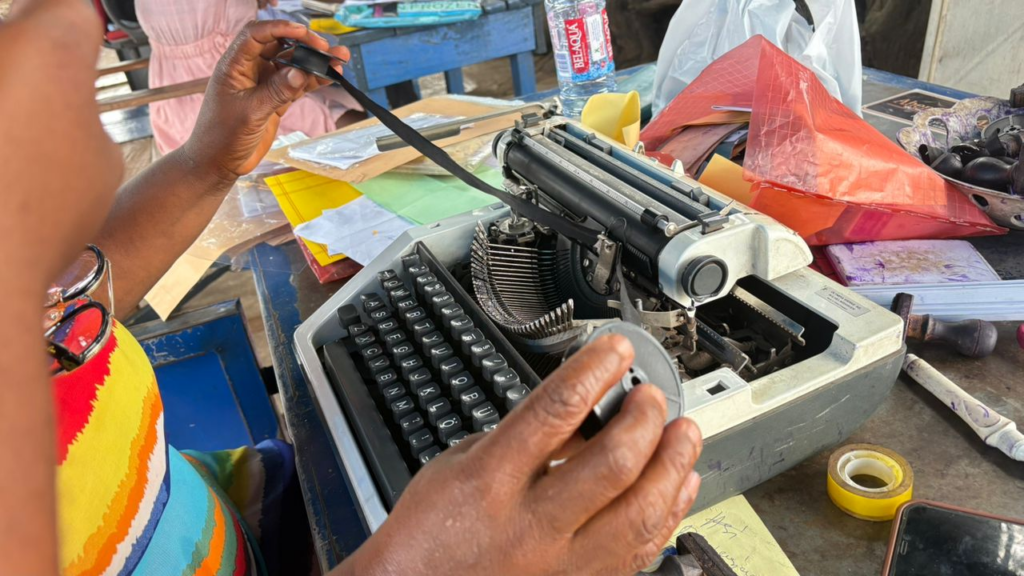
The loud clicking sound of her typewriter has not only earned her customers but also pushed her into the spotlight on national television.
Mrs. Mensah said her journey into typewriting began in 2007 after she completed a Secretariat course at Joy Professional Institute and undertook attachment work at the Ghana Ports. Later, her elder sister introduced her to typewriting as a profession, a path she says has transformed her life.
According to her, one of the turning points in her career came unexpectedly when an online influencer visited her to prepare some documents.
Impressed by the speed and accuracy with which she typed, the influencer shared her work on social media. The video quickly attracted attention and later earned her an invitation onto a national television show.
What appeared to many as an outdated profession has, for these typists, become a business deeply rooted in trust and legality. Unlike ordinary printing presses, commissioners for oaths who operate typewriting businesses are authorised to prepare and witness legal documents.
Mrs. Mensah explained that their work includes preparing affidavits, declarations, change of name documents, age declarations, property agreements and other legal paperwork.
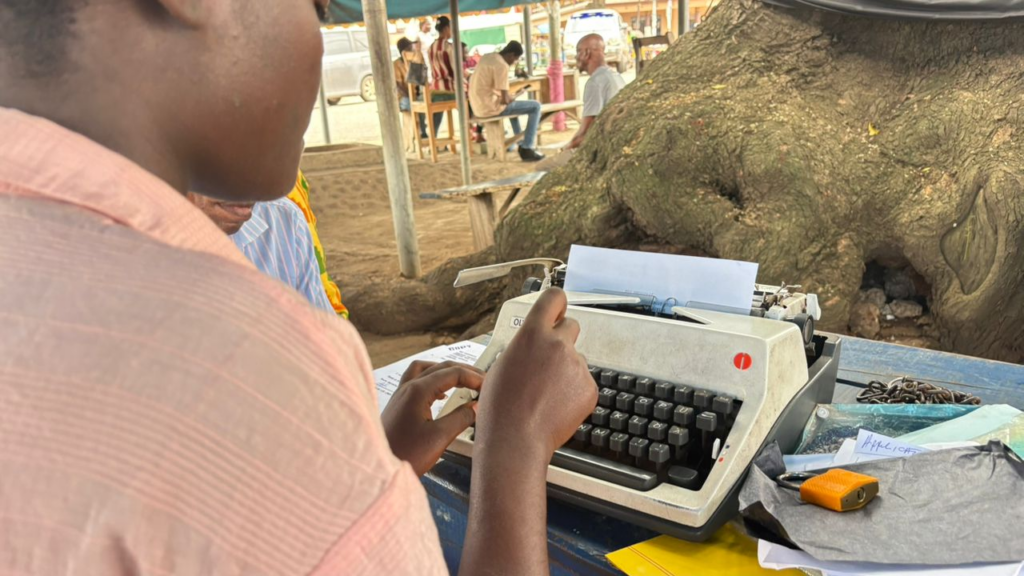
She stressed that they operate under licenses issued by the Kumasi Metropolitan Assembly (KMA), a process which involves background checks to ensure applicants do not have criminal records.
“Before you do this job, you have to write an application letter to the Kumasi Metropolitan Assembly (KMA) to gain the right, and they will check if you don’t have any criminal records.
Then, you’ll be given the license. This work of ours, we’re not lawyers, but we walk in the footsteps of lawyers,” she said.
According to her, the authority granted to them through the commission of oaths allows them to use official stamps and seals while also standing as witnesses to documents prepared for clients. In some situations, she noted, they are even called upon when disputes involving customers reach the courts.
When modernity gives way to tradition
Despite the rise of smartphones, laptops and modern printing shops, the market for typewriters continues to survive. Mrs. Asante Mensah revealed that many customers still arrive with documents saved on their phones or computers but insist on having them typed officially by commissioners for oaths.
To her, this continued demand proves that typewriting remains respected and trusted among many residents in Kumasi.
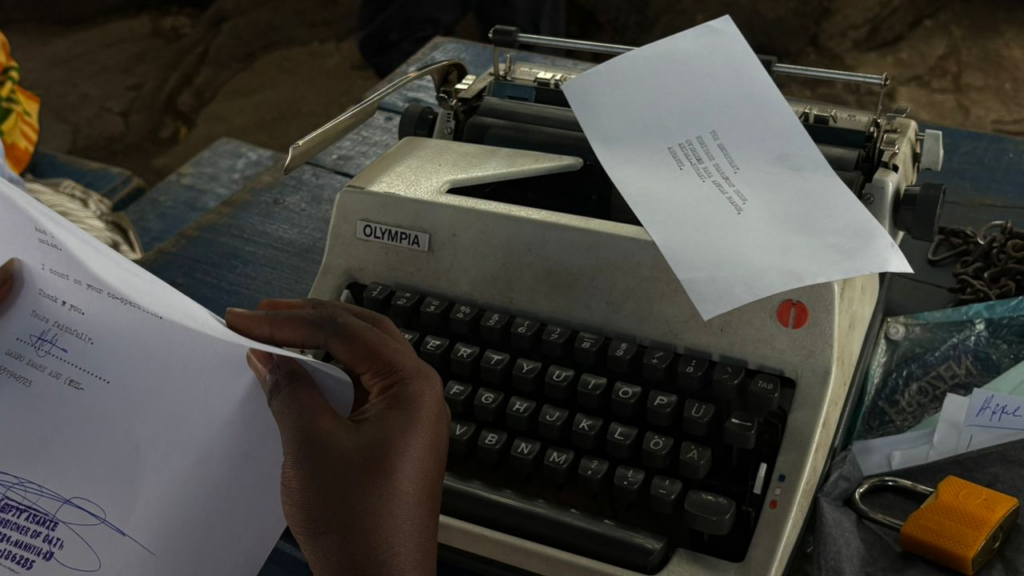
“If you do a good job, your work takes you places. It’s left with a year, and I’ll get twenty years working as a typewriter. We have never had a problem with our customers and our work or ever been taken to court over poor service. If the work wasn’t good, I wouldn’t have been here,” she added.
Another commissioner for oaths, Gifty Asante, also shared how the business has sustained her family for decades. Sitting beside stacks of papers and stamps worn from years of use, she reflected on how typewriting became the foundation upon which she raised her children.
Mrs. Asante said she entered the profession before the birth of her last child, who is now twenty-one years old. Through the income from typewriting, she has been able to support all three of her children through school, with some already graduates and another currently studying at the Kwame Nkrumah University of Science and Technology.
For her, the business is more than typing documents. It is a source of dignity, stability and education.
She explained that she first worked as a letter writer before becoming a commissioner for oaths in 2013. Over the years, she gradually obtained the required stamps, seals and licenses needed for the work.
“We have from GH¢20 upwards services, but some are GH¢10, which is for small typing. If it is an affidavit, that one costs GH¢ 70. And with the stamp, you get to do one for yourself to use after you’ve gotten the license from the Kumasi Metropolitan Assembly,” she asserted.
She further disclosed that even some lawyers apply to the KMA for licenses to operate within the field.
Beyond the sound of keys hitting paper, the typewriting business in Kumasi represents something deeper a bridge between tradition and modern business life.
Though technology continues to dominate offices and institutions, these typists remain symbols of authenticity in a fast-changing world.
In corners of Kumasi where history still breathes through old buildings and crowded streets, typewriters continue to hold their ground.
Their ink may not move as fast as modern printers, but to many residents, the machines still carry authority, trust and a human touch that technology has not been able to replace.
Latest Stories
-
UHAS celebrates 2026 International Day
42 minutes -
NSMQ 2026 : St. Louis SHS returns to nationals after thrilling comeback in Ashanti region qualifiers
3 hours -
“Data is the new gold” – Prof. Kwofie leads charge for AI-driven, equitable Africa
3 hours -
Lights for Life Movement urges fixing of faulty traffic lights to save lives
3 hours -
Doctor uses cash reward of GH¢20,000 to equip Paga Hospital
3 hours -
Free but expensive education in Ghana – Free SHS in retrospect
3 hours -
Justice must heal a nation, not become a qeapon of revenge
3 hours -
Six students injured as fire destroys House Master’s apartment at Leklebi SHS
4 hours -
Mid-Year Budget Review: What happened to the GH¢40m promise to Ghana’s creative industry?
4 hours -
Tafo Government Hospital children’s ward 85% complete ahead of my 45th birthday – Nana B
5 hours -
Kessben FM yanks DJ K.A. ‘off air’ over intimate video circulated online; Investigation underway
5 hours -
Ghana, Nigeria commit to stronger trade cooperation under AfCFTA
5 hours -
Ghana to evacuate about 1,000 citizens from South Africa amid renewed xenophobic attacks
5 hours -
Climate change: Floods hit my home while I was defending Ghana’s forests in Germany
6 hours -
First person gets new experimental vaccine for Ebola
6 hours