

Audio By Carbonatix
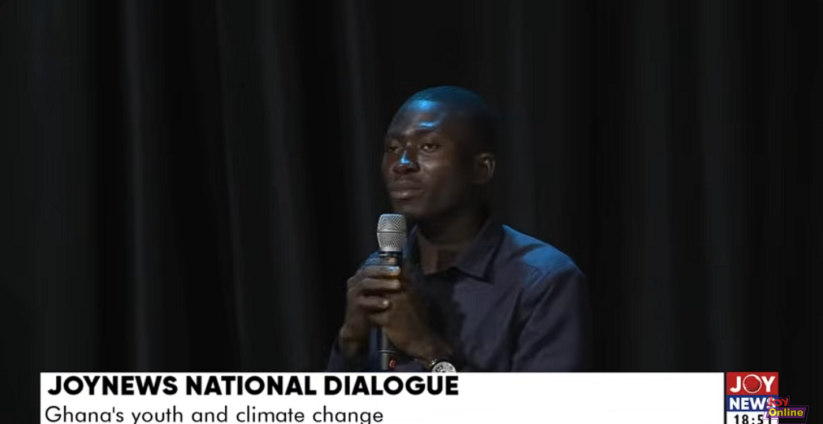
The Executive Director of the youth-led organisation African Students for Interfaith Tolerance, Issa Toha Shamsoo, has called for a shift in how climate change is understood and addressed.
He urged policymakers to treat it not only as an environmental challenge but also as a pressing peace and security issue.
“Climate change is not just about the environment. We need to look at the intersection between climate, peace, and security. It is increasingly becoming a national security concern,” he said.
He further noted that climate-related disasters, such as flooding in some farming communities, destroy homes and livelihoods, leaving affected populations with limited options for survival.
In such conditions, he argued, competition for resources can intensify and increase the risk of conflict.
He called for stronger policy attention to the climate–security nexus, emphasising the need for long-term solutions that address both environmental degradation and the socio-economic drivers of instability.
Mr Toha Shamsoo further noted that climate impacts are increasingly driving tensions between communities, particularly in northern Ghana, explaining that rising temperatures in the Sahel are altering traditional grazing patterns, pushing cattle herders southwards into Ghana earlier than usual in search of pasture.
This seasonal shift, he noted, often brings herders into contact with farming communities whose crops are still in the field, leading to frequent destruction of farmlands and heightened tensions.
“These interactions between farmers and herders are becoming more frequent due to climate pressures, and they often escalate into conflict situations,” he said.
Beyond farmer–herder tensions, he also highlighted the impact of climate change on agriculture, which remains the main source of livelihood for many young people in northern Ghana.
According to him, worsening weather patterns and increasing pest outbreaks are making farming more difficult and less productive.
As a result, many young people are being forced to migrate to the southern parts of the country in search of alternative livelihoods. He warned that this rural-urban migration is placing additional pressure on social infrastructure and contributing to broader social challenges.
Latest Stories
-
Salomey Baffoe detention is a facade to divert attention from cocaine scandal – Weija-Gbawe MP
14 minutes -
Francis-Xavier Sosu is doing well after GIMPA incident – Office
19 minutes -
Deputy Minority Leader appeals to First Lady, Vice President over Salomey Baffoe’s detention
23 minutes -
Ecobank Group commits US$2.6bn to women-led businesses and agribusinesses across Africa
35 minutes -
Ghana to host high-level conference on scaling education initiatives in emergencies
59 minutes -
Democracy must not be for sale: Who pays for Ghana’s politics, and how do we confront money, influence and accountability?
1 hour -
Aburi Amanfrom landowners appeal for government support for Atwapim development project
1 hour -
Cargill Ghana and International Cocoa Initiative celebrate 111 young graduates building skills for the future
2 hours -
Video: Madina MP Francis-Xavier Sosu collapses while addressing students at GIMPA
2 hours -
Hunnyboy reveals how social media landed him Shatta Wale feature
2 hours -
I am a perfectionist – Actor William Lamptey
2 hours -
No room for another false start as Ghana begin AFCON qualifying campaign
2 hours -
“We are grateful for what you have achieved” – AGI President tells Finance Minister
2 hours -
“No Nation is Inferior”: Mahama champions human dignity and security council reform at the UN
3 hours -
Manhyia South residents, NPP executives fume over botched EOCO arrest of MP
3 hours