

Audio By Carbonatix
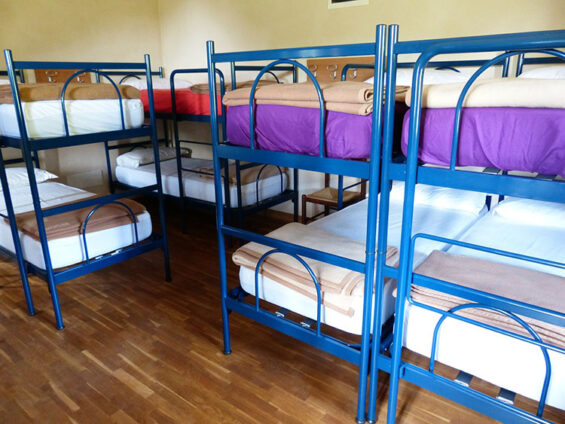
Since the late 1990s when increasing enrolment numbers started to exceed the capacity of existing halls of residence on the various campuses, Ghanaian Universities have struggled to provide residential accommodation for students.
This challenge has persisted despite the substantial investments made by private investors in the student accommodation sector in and around university campuses over the years amidst constant requests by university authorities to private sector players to take advantage of the unmet demand.
The recent accusation by the acting Rent Commissioner of exploitation on the part of some hostel owners has brought the enduring problem of inadequate student residential accommodation on our campuses into public discourse.
The discussions have elevated the student accommodation challenge into the public’s consciousness, and this can potentially instigate a policy response from the government. However, the accusatory tone used by the acting Rent Commissioner and the oversimplification of a very complex economic and social problem have not helped the nation to have a dispassionate discussion of the issues.
The root cause of the current student accommodation challenges is the State’s inability over the past decades to expand infrastructure on our campuses to keep pace with increasing enrolment numbers. At the University of Ghana, for instance, total student enrolment on the main Legon campus increased from approximately 23,000 in 2012 to about 59,000 in 2024.
At the same time, the State has virtually added no extra beds to the existing traditional halls of residence. Much of the recent additions to the stock of hostels on campus have been funded by private capital. Unlike public funds, private capital is attracted to investments that provide sufficient returns to compensate the owners for deferring consumption and exposing their funds to possible losses.
It is vital to recognise this and the high cost of constructing hostels in any discussions about the levels of hostel rents and whether there is exploitation in the hostel market. Data from the Ghana Statistical Service indicates that construction costs have risen higher than general levels of inflation over the past two decades, underscoring the steep costs investors face in developing such projects.
It is evident that the era of State provision of free or cheap residential accommodation for tertiary students has effectively ended. The new reality of private sector-led provision of student accommodation is here to stay and while matters of affordability are essential, any discussions on this subject must be balanced and guided by sound economic principles.
It is understandable for the Rent Control Department to be concerned about unaffordable hostel rents and to raise issues of exploitation if this is proven by the facts. But seeking to engineer affordability through price controls or any coercive force of the State has been proven to be counterproductive. In a market-oriented economy like ours, demand and supply interact to set prices of goods and services. Any attempt to move prices below levels that do not reflect current demand and supply dynamics will distort the market and have negative consequences.
The evidence around the world indicates that while price controls can lower rents in the short term, they lead to market shortages driven by cutbacks in supply, reductions in quality accommodation and the emergence of black markets. Ultimately, the negative effects of rent control policies will fall on students for whom the policy may have been intended to protect.
Our universities campuses should not become the battleground for unnecessary experiment of policies that have been demonstrated to be ineffective. Clearly, there is insufficient hostel accommodation for students on all university campuses across the country and we need to move the discussion to how to expand supply. Doing this will require substantial investment of private capital over the coming years and threats of rent controls at this time will only drive away investors.
There are ideas that can be pursued to lower hostel rents through expansion in the supply at a reduced cost that ensures sufficient return on investment. For instance, the government can offer tax waivers at the different stages of hostel construction value chain while university authorities can also reduce the cost of land. In return, hostel investors who benefit from these incentives would undertake to keep hostel rents at agreed rates including future increases.
It is hoped that the storm unleashed over the past few weeks will pass quickly so the country can dispassionately discuss the strategies and interventions required to find sustainable solutions to the accommodation challenges on our campuses.
The Ministry of Education, the Ghana Tertiary Education Commission (GTEC), GETFund, university authorities, private sector players and civil society organisations can work collaboratively to address not just the hostel accommodation challenges but the broader education infrastructure deficits on university campuses around the country.
The author is a Senior Lecturer in the Department of Land Economy, Kwame Nkrumah University of Science and Technology. redfgyx@gmail.com; fgyamfi-yeboah.cabe@knust.edu.gh
Latest Stories
-
‘I don’t hire coaches, and I don’t fire coaches’ – Kofi Adams
57 minutes -
NPP sets up 31 voting centres to speed up national executive elections
1 hour -
Demolition begins at La Pleasure Beach amid heavy security presence
2 hours -
Senyocue: Highlife will dominate global music in the next 20 years
2 hours -
Innovare Limited congratulates Ahantaman Community Bank PLC on ISO/IEC 27001:2022 certification urges others to follow suit
2 hours -
Today’s front pages: Friday, October 2, 2026
2 hours -
GPL 2026/27: Opoku Agyemang strike sends Kotoko third after Karela win
3 hours -
Government ‘cannot dissolve’ GFA – Sports Minister Kofi Adams
3 hours -
“Every genre we create doesn’t have to be ‘Afro’ something” – M.anifest
3 hours -
GMTF marks first anniversary with lifesaving equipment for 9 more hospitals
4 hours -
NAIMOS seizes 10 excavators in raid on illegal mining sites blocking River Pra’s flow
4 hours -
Pump prices may stay unchanged as government holds TOR, Sentuo prices
4 hours -
Akra Reads! 2026: Ladé Wosornu poetry contest expands to JHS
4 hours -
K9 dog sniffs out 72lbs of prohibited Ghanaian food items at JFK
4 hours -
If family planning is our choice, why isn’t it in our budget?
4 hours