

Audio By Carbonatix
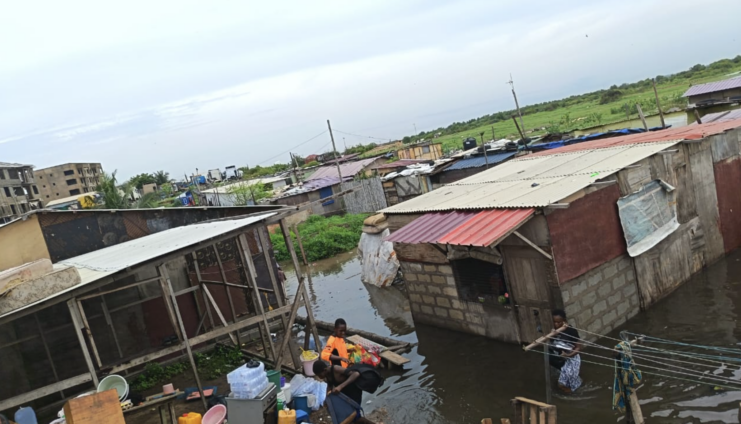
Kwaku Adjei Baah, Head of the Hydrometeorological and Geological Unit at the National Disaster Management Organisation (NADMO), has attributed recent severe flooding in the Tema West Municipality to improper waste disposal, unauthorised construction along waterways, and illegal development in protected zones.
Speaking to the Ghana News Agency (GNA) on the impact of days of heavy rainfall that left hundreds of homes submerged, Mr Baah stressed that building directly in natural water channels remains the main cause of the flooding crisis.
He disclosed that about 99% of structures blocking watercourses had no approved town planning permits.
Mr Baah cited the Church Village area in Community 5 and surrounding communities as a clear example of unsafe development.
He explained that the area was never intended for residential use but was originally designated as a buffer and retention zone to contain stormwater flowing from higher areas such as Akuapem and Adenta.
“Because people had built houses there, the entire area has been heavily flooded,” he said.
He listed several severely affected areas, including Communities 16 to 20, Community 19 Annex, Community 22, Lashibi, Klagon, Borteyman, and Adjei Kojo. He also noted that low-lying structures near the lagoon in Sakumono Village were badly impacted.
Mr Baah further linked the worsening floods to poor sanitation, explaining that clogged drains were unable to channel the heavy rainfall effectively.
He said excessive littering remains a major national challenge, with drainage systems choked by refuse, silt, and sand.
He also raised concerns about ongoing development within the Sakumono Ramsar Site, stressing that it is a protected ecological wetland where construction should not occur.
According to him, some local chiefs have continued to sell portions of these vulnerable lands to unsuspecting buyers.
He added that some illegal structures were demolished last month and that authorities are preparing another demolition exercise to remove the remaining buildings obstructing water flow.
Mr Baah noted that this year’s April-to-June rainy season has already recorded higher rainfall than last year, warning that even heavier downpours are expected.
He, therefore, urged residents to comply with warnings, stop resisting official directives, and relocate immediately from low-lying, high-risk areas to safer, elevated locations.
Latest Stories
-
President Mahama ends Resetting Ghana tour of Ahafo Region
48 minutes -
African negotiators seek delivery of climate commitments at COP31
49 minutes -
BoG develops AI rules for financial sector
52 minutes -
‘Big Push’: Government assures contractors of prompt payments
56 minutes -
Court fines miner for breaking into gold buying shop
1 hour -
Tarkwa court jails labourer for three years over GH¢123,000 theft
2 hours -
GAEC must retain nuclear scientists for Ghana’s nuclear ambitions – Minister
3 hours -
Man reportedly mistaken for game and shot by hunter dead in forest
3 hours -
19-year-old mason jailed 15 years for defiling seven-year-old pupil
3 hours -
Ghana’s banking sector assets rise 20.47% to GH¢500.2bn – BoG Governor
3 hours -
22 injured as Sprinter bus overturns at Sege after tyre burst
3 hours -
UN housing expert urges Ghana to strengthen Rent Control Department amid housing affordability concerns
3 hours -
Delta-BCI partnership reaches 166,000 people with breast cancer education
3 hours -
Power restoration fault suspected in Kumasi Central Market fire
8 hours -
The 7-foot giant of Ngleshie Amanfro: Seven-foot Ghanaian Ephraim Saawa dreams of joining the national basketball team
9 hours