

Audio By Carbonatix
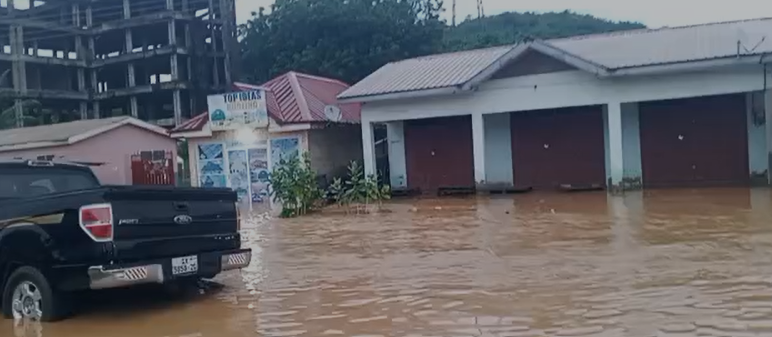
Torrential rains have unleashed chaos across the Central Region, leaving significant parts of the Cape Coast Metropolis, the Abura-Aseibu-Kwamankese District, and the Komenda-Edina-Eguafo-Abirem (KEEA) Municipality submerged.
The downpour, which has exacerbated the region’s perennial drainage challenges, has brought socio-economic activities to a grinding halt, with major transport arteries heavily impacted.
The deluge, consistent with the Ghana Meteorological Agency’s (GMet) June forecast of "predominantly wet conditions" across the coastal zone, has left key institutions vulnerable.
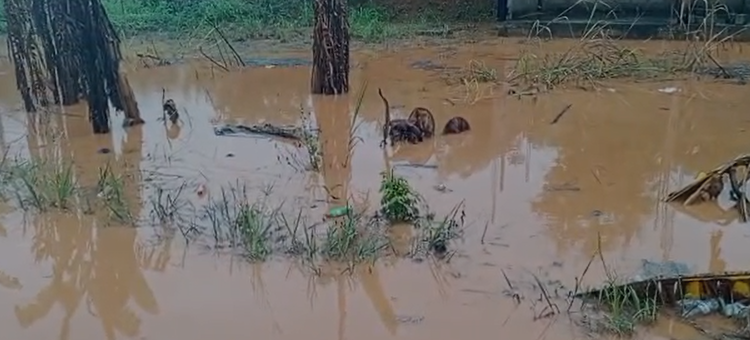
Among those severely affected are the Ankaful Communicable Diseases Prison and the Doribabs School Complex near Moree Junction.
The N1 Highway, a critical economic corridor, faced intense pressure as floodwaters swallowed sections of the Cape Coast-Takoradi stretch. Motorists and passengers were trapped for hours in a massive gridlock that stretched from Yamoransa Junction to the Aggrey Memorial Senior High School.
Many frustrated commuters, forced to abandon their vehicles, were seen navigating the murky floodwaters on foot to reach their destinations.
The situation took a perilous turn in Moree, where a taxi and its two occupants were caught in the path of ferocious floodwaters. The vehicle was completely submerged; however, prompt intervention by local residents ensured the driver and passenger were pulled to safety before the situation turned fatal.
Residents in the affected communities have voiced deep frustration, noting that the floods continue to threaten lives, destroy property and disrupt economic activities whenever there is heavy rainfall.
The consensus among the local populace is that emergency measures are no longer sufficient to address the recurring disaster.
They have intensified their appeals for the government and municipal authorities to prioritise long-term flood mitigation, particularly the expansion and modernisation of drainage infrastructure.
This latest disaster follows a series of warnings issued by GMet, which had advised residents in flood-prone areas to remain vigilant as thunderstorms and rainfall could trigger localised flooding.
As the region continues to experience wet conditions, the threat to life and property remains high, underscoring the urgent need for a more sustainable approach to climate resilience and urban planning in the Central Region.
Latest Stories
-
We will vet Mahama Ayariga fearlessly – Minority Leader
15 minutes -
Ayitey Powers arrested over alleged death threat against NSA Director-General
42 minutes -
Oppong Nkrumah heads back to Supreme Court over legal vacation ruling
52 minutes -
Thousands gather at OVO Arena Wembley for MOGmusic’s ‘Back to Basics’ worship
58 minutes -
23 lives lost to abandoned illegal mining pits in Ashanti Region – Regional Minister
1 hour -
Catholic priest suspended after abandoning parish, Diocese says
1 hour -
Bagbin to admit Minority’s GoldBod motion but says debate must wait until after recall
1 hour -
Speaker refers two ministerial nominees to Appointments Committee
1 hour -
We’re seeking investigation, not conviction of Afenyo-Markin – Appiah Danquah defends ‘extortion’ petition
1 hour -
Ghana Institution of Surveyors, Roads Ministry agree to strengthen compensation process
2 hours -
‘While GoldBod cannot account for GH¢22bn, mining communities are paying with their kidneys and lungs’ – Afenyo-Markin
2 hours -
24-hour market: Who is actually in charge?
2 hours -
OSP’s swift response to extortion allegation doesn’t mean selective investigations – Senanu
2 hours -
Maradona’s ‘Hand of God’ ball sells for £2.5m
2 hours -
WAFU B WCLQ: Ampem Darkoa Ladies beat ASEC Mimosas in Group B opener
2 hours