

Audio By Carbonatix
Ghana is not yet facing a digital trust crisis, but the country risks getting there if rising concerns around fraud are not addressed urgently, Chief Executive Officer of the Ghana Association of Banks (GAB), John Awuah, has warned.
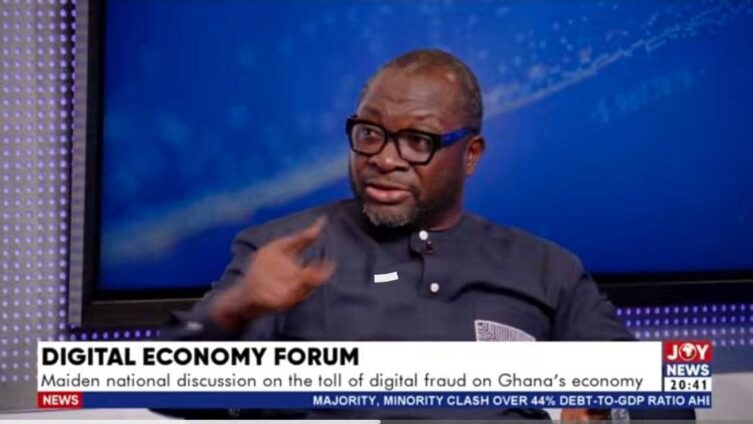
Speaking at the maiden edition of the JoyNews' Digital Economy Forum on Wednesday, July 22, Mr Awuah said signs of declining confidence are already emerging as some consumers begin to question digital transactions and payment processes they previously trusted.
According to him, the trust challenge is not measured only by the amount of money lost through fraud but by the increasing number of incidents that influence public perception of the safety of digital platforms.
“We are not there yet. But are we heading there? I would say yes,” he said.
Mr Awuah explained that trust begins to decline when people start questioning basic aspects of transactions because of previous experiences with fraud.
He cited an encounter where an individual was hesitant to share a bank account number for a direct transfer, despite the fact that an account number alone does not compromise a person’s funds.
“Bank account number should never be a problem. Somebody having your bank account number alone should never be a problem. But because of the history and the experiences that they have gone through, even giving a bank account number for me to do a transaction transfer became an issue,” he said.
He cautioned that if stakeholders fail to address the concerns early, Ghana could reach a point where consumers gradually withdraw from digital platforms, making it difficult to rebuild confidence.
Mr Awuah stressed that while Ghana’s digital payments ecosystem has recorded significant growth, maintaining trust will be critical to sustaining that progress.
According to him, Ghana processes about 10 billion transactions valued at GH¢4.5 trillion, with reported fraud cases numbering around 20,000 and losses estimated at about GH¢100 million.
However, he said the banking sector focuses more on the frequency and spread of fraud incidents rather than only the financial losses recorded.
“The loss is important, but our emphasis is on the incident because the incidents attest to pervasiveness — whether fraud is becoming widespread,” he explained.
Mr Awuah said a single major fraud incident could trigger public anxiety, but the real concern is when fraud becomes common enough to influence how people interact with digital financial services.
He called for stronger collaboration among regulators, financial institutions, technology companies and consumers to prevent fraud from undermining Ghana’s digital transformation.
Latest Stories
-
Prof. Kwofie urges publishers to use indigenous knowledge systems to decolonise AI
5 hours -
NDC’s two years of economic gains not enough to establish stability – Alan Kyerematen
5 hours -
AFCON 2027Q: Nine new call-up for Cote, The Gambia matches
5 hours -
Ghana’s MSMEs: Burdened by regulation and overtaxed; why the system isn’t working
6 hours -
Patience Akyianu, former Barclays Bank Ghana MD and Hollard Group CEO, reported dead
6 hours -
Mahama pushes ‘health sovereignty’ agenda, says Global South needs control over resources
6 hours -
Mahama: We are reforming systems, fighting corruption and improving use of public funds
6 hours -
Catholic Bishops welcome task force to tackle drug menace, acknowledge inter-agency efforts
6 hours -
Ghana Catholic Bishops demand urgent action against drug trafficking
6 hours -
Tamale: 5 arrested over suspected drug activities; police seize pistols, narcotics
6 hours -
We have lost a great developer – Mankranso residents pay tribute to late DCE
6 hours -
Ghana Law Society sets September 30 for maiden Bar Conference on legal reforms
7 hours -
GPL Week 3: Port City’s Gyetuah bags a brace as 9 outstanding players named NASCO Players of the Match
7 hours -
Visibility without substance is just noise; I don’t seek popularity—Dr Oppong-Fosu
7 hours -
The late Abubakar Sedik was an exceptional DCE – Ashanti Regional Minister
7 hours