

Audio By Carbonatix
Vice President and Chair of the Public Accountability Committee of the Ghana Institution of Engineering (GhIE), Ing. Dr. Patrick Amoah Bekoe, has attributed the deterioration of Ghana’s road infrastructure to poor funding, inadequate maintenance and weak asset management.
He said the country’s road infrastructure had declined from a D3 rating in 2016 to E1 in the latest 2026 Ghana infrastructure scorecard, placing the sector in the poor category and signalling the need for urgent action.
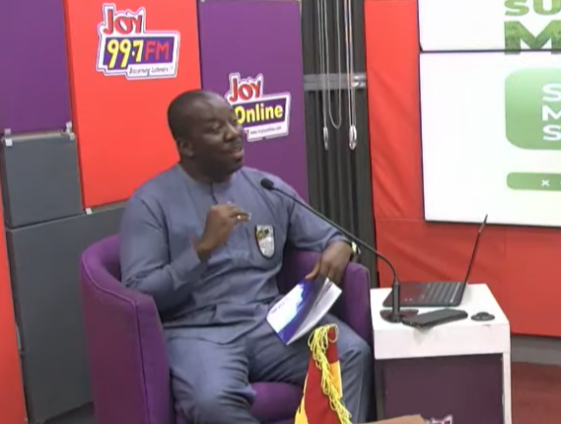
Speaking on the Joy FM Super Morning Show on Thursday, August 13, as part of Joy Sustainability Month, Ing. Dr. Amoah Bekoe said Ghana’s approach to road infrastructure had focused too heavily on new construction while neglecting the maintenance of existing roads.
“Our leaders are much more interested in what I call 'ribbon-cutting projects' to show that I’ve done this kilometres of road, but not in preserving the assets that we have,” he said.
He said the situation had been worsened by funding challenges, including significant arrears owed to road contractors.
“What we saw from the data is that as at the end of 2014, we had over 17 billion arrears for our contractors,” he said.
According to him, the unpaid arrears had affected the ability of contractors to continue work on projects, with some roads left without contractors on site for extended periods.
Ing. Dr. Amoah Bekoe said the problem was not simply about building more roads but about ensuring that existing infrastructure was properly maintained to protect public investment.
“The road fund is supposed to be used for road maintenance,” he said, adding that “most often than not” the money had been used for major rehabilitation instead.
He said Ghana needed to change that approach because allowing roads to deteriorate before undertaking major rehabilitation was more costly and less effective than regular maintenance.
“We are interested in new roads instead of preserving what we have. And so we wait for the new ones to deteriorate, and then we’ll do new construction,” he said.
He also blamed overloaded vehicles for accelerating the deterioration of the road network.
“When we have these overloaded trucks, it aggravates the loading on our roads and deterioration of our roads,” he said.
“If we are not able to manage that as a country, I think we are basically destroying the investment that you and I, the taxpayers, have made on our roads,” he added.
The engineer said the deterioration of road infrastructure had a direct impact on ordinary Ghanaians, including through longer travel times and reduced productivity.
“When you are coming to work, because of the nature of the roads, instead of spending 45 minutes, you spend two hours,” he said.
“That is the meaning – that your infrastructure, the road infrastructure that is supposed to help you be more productive, is delaying you.”
He said such delays represented hidden costs that citizens continued to bear because of inefficient infrastructure.
Ing. Dr. Amoah Bekoe urged the media and the public to change the way they assess governments’ performance on roads, saying greater attention should be given to maintenance rather than only new projects.
“We want the media to help us,” he said.
“We want you to help us with that,” he added, urging journalists to ask political leaders not only about the new roads they planned to construct but also how they had preserved existing infrastructure.
He welcomed the restructuring of the Road Fund into a Road Maintenance Trust Fund, saying the move could help improve the situation if the new approach were properly implemented.
“We are happy that the current minister and the current government is actually looking towards that direction,” he said.
“They have restructured the road fund to a road maintenance trust fund, and they are doing things differently. So we hope that we will have a different trajectory going from now.”
Ing Dr Amoah Bekoe said the latest infrastructure assessment was not intended to target any particular political administration but to examine the state of Ghana’s infrastructure and the systems used to manage it.
“This is not an assessment of any government; it’s an assessment of the state; it’s an assessment of the way we have done things,” he said.
The Joy Sustainability Month is proudly sponsored by MTN and MoMo.
Latest Stories
-
Haruna Iddrisu calls for limits on annual university accommodation fee increases
11 minutes -
Today’s front pages: Tuesday, October 13, 2026
58 minutes -
Wealth Over Water: How Galamsey Is Threatening Ghana’s Water Security
2 hours -
LA 2028: Black Queens pumped up for second leg of Mauritius tie
2 hours -
LA 2028: Black Queens hold final training session ahead of second leg against Mauritius
2 hours -
Standards are not Seasonal: What the EC appointments teach both sides
2 hours -
King Mohammed VI urges private sector to create youth jobs and spread benefits of growth
2 hours -
KGL U17 Colts 2026: Greater Accra win title after penalties win over Western Region
2 hours -
UK Investment Roadshow opens in London to advance UK-Ghana growth partnership
3 hours -
Assemblies of God requires pastors to resign before entering partisan politics – Rev. Wengam
3 hours -
Ghana targets 20% annual reduction in maternal deaths – Health Minister
3 hours -
Cyber attacks in Africa grow faster than global rate, report finds
3 hours -
Ghana signs UAE deal to create 5,000 overseas jobs
3 hours -
One Million Coders Programme targets 100,000 digital jobs in two years – Sam George
3 hours -
John Jinapor, Italian Ambassador explore opportunities for energy sector investment
3 hours