

Audio By Carbonatix
Ghana begin their quest for qualification to the 2027 Africa Cup of Nations with a familiar face at the helm.
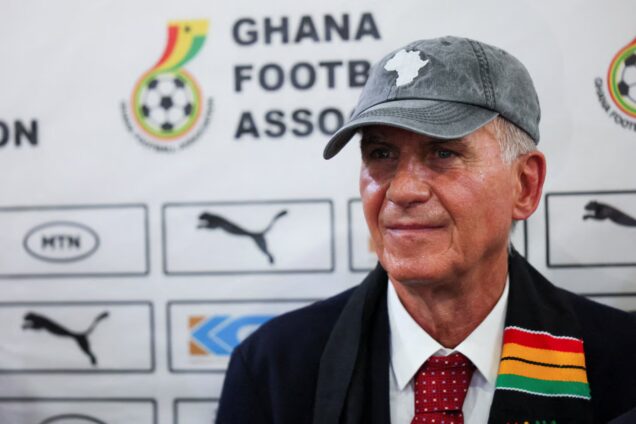
Carlos Queiroz is back as Black Stars head coach after guiding Ghana to the round of 32 at the 2026 FIFA World Cup in North America. His reappointment has generated mixed reactions, particularly among those who would prefer a more expansive and attacking approach. But when the bigger picture is considered, the decision to retain Queiroz could prove to be a masterstroke.
Before Queiroz took charge, Ghana were in the middle of a serious crisis.
The Black Stars had lost four consecutive matches, conceding 10 goals and scoring just twice. Looking further back, Ghana had lost 10 of their previous 25 games, winning only eight in that period. Most alarmingly, they had failed to qualify for the AFCON for the first time in 22 years.
There was clearly a problem that required immediate attention.
Queiroz walked into that situation with almost no time to prepare. In fact, he had just one friendly against Wales in Cardiff before the World Cup.
The draw against Wales produced a much-improved performance, but it did little to convince a sceptical fanbase that Ghana were ready for the challenge ahead. The Black Stars had been placed in a difficult World Cup group alongside England, Croatia and a dangerous Panama side.
Yet, somehow, Queiroz got the job done.
Ghana collected four points from their three group matches and progressed to the knockout stage. One of the biggest highlights was an impressive goalless draw against eventual third-place finishers England, the only team in the tournament that England failed to score against.
For a Ghana side that entered the competition among the lowest-ranked teams, that was no small achievement.
Queiroz also delivered something the Black Stars had lacked for some time: defensive structure. Ghana kept consecutive clean sheets at a World Cup for the first time, providing clear evidence of the Portuguese coach’s conservative but effective philosophy.
And therein lies the biggest debate surrounding Queiroz.
The question of style has dominated discussions about the Black Stars. Many believe Ghana have enough attacking talent to play a more progressive brand of football and that a more offensive-minded coach could unlock the full potential of the squad.
In theory, that argument is difficult to dispute.
Even the Ghana Football Association’s national football philosophy document places considerable emphasis on an attacking and proactive style of play.
But philosophy and implementation are two different things.
If Ghana genuinely want to establish a sustained attacking identity, that process cannot begin with the senior national team alone. It must start at the grassroots, filter through the youth national teams and eventually become embedded at senior level. That has been the tried-and-tested approach of some of the world’s football powerhouses.
Germany, Spain and England, for example, have invested heavily in developing a clear footballing identity from the foundation, ensuring that the principles taught at youth level eventually feed into the senior national team.
Until that happens, the Black Stars have to deal with the reality in front of them - and that reality is that they need results.
Few coaches are better equipped for that kind of survival football than Queiroz.
Ghana’s 2027 AFCON qualifying group, featuring Côte d’Ivoire, Somalia and Gambia, could prove more challenging than the previous qualification campaign, which ended with the Black Stars missing out on the tournament altogether.
The priority, therefore, should be restoring consistency, confidence and competitiveness.
The evidence from the World Cup suggests Queiroz has already begun that process.
Yes, Ghana have talented attacking players who have struggled to reproduce their club form on the international stage. Yes, there is a legitimate argument that some players could be better utilised in a more attacking system.
But should the priority be making individual players shine or achieving the collective objective?
Take Ghana’s goalless draw against England as an example.
The Black Stars managed just one shot on target in 90 minutes. Their attacking players spent considerable portions of the game defending rather than attacking. By conventional standards, it was hardly an attractive performance.
But it was effective.
That point secured the draw that ultimately helped Ghana progress to the knockout stage.
Football is ultimately about winning, qualifying, and competing. Style matters, but it should never matter more than results, especially for a Ghanaian football public starved of major silverware for more than four decades.
The Black Stars currently need stability more than they need reinvention.
There is nothing wrong with aspiring to a more attractive and attacking style of football. That should remain the long-term objective. But while Ghana works towards building that identity from the grassroots up, the senior team must first become competitive and dependable.
And based on what we saw at the World Cup, Queiroz appears to be the man capable of providing that structure.
His job now is not simply to make Ghana difficult to beat. It is to complete the stabilisation process, qualify for the 2027 AFCON and then build from that foundation.
For now, the results should come first.
The style can follow.
Latest Stories
-
The small lessons changing how Ghana’s restoration champions plant trees
8 minutes -
Government must not perpetrate galamsey, it campaigned against – GBA President
18 minutes -
PRIMER must ensure women return home safely with their babies – Vice President
18 minutes -
LEAP payments begin nationwide as government targets 450,000 households
20 minutes -
Results before style: Why sticking with Carlos Queiroz is a great decision
21 minutes -
Mahama convenes high-level meeting to strengthen border security and narcotics control
34 minutes -
Thara Mills Simmonds named 2026 Forty Under 40 Achiever in Education
38 minutes -
Ghana deepens diaspora diplomacy: Embassy pledges enhanced consular support for Ohio communities in Columbus
46 minutes -
Ghana’s maternal health success story at risk without rural incentives – UNFPA
46 minutes -
Gaps in suicide data affect prevention interventions in Ghana – Accra Psychiatric Hospital MD
47 minutes -
Ghana Armed Forces to participate in Accra-Kumasi Expressway construction – Mahama
48 minutes -
Use chiefs to stop disputes from flooding Ghana’s courts – Deputy AG to governing council of ADR
1 hour -
Four arrested as police bust alleged kidnapping, torture and extortion syndicate
1 hour -
NPA increases price floor from September 16; petrol to sell at GH¢16, diesel at GH¢16.77
1 hour -
OMJ fufils BECEPIP schorlaship promise, awards 12 learners
1 hour