

Audio By Carbonatix
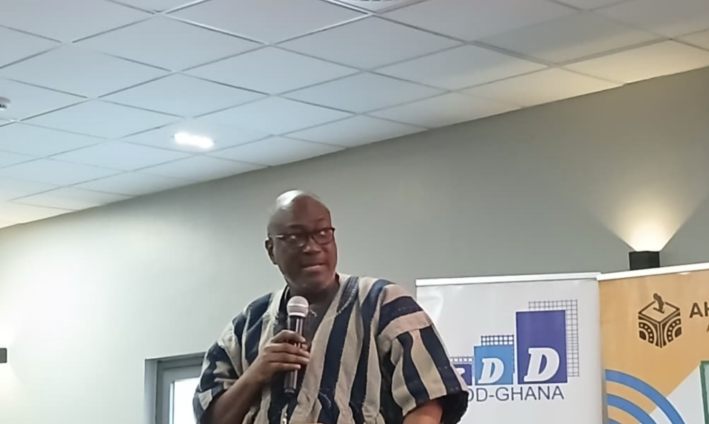
African states must strengthen safeguards around artificial intelligence (AI) and digital technologies to protect electoral integrity from disinformation, deepfakes and coordinated manipulation, Professor Henry Kwasi Prempeh, Executive Director of the Ghana Center for Democratic Development (CDD-Ghana), has said.
He said while technology had helped make elections across the continent more transparent, the same tools were increasingly being exploited to undermine public trust and manipulate electoral narratives.
“The question is not whether we embrace these technologies but under what safeguards and who is accountable when they cause harm,” Prof. Prempeh said.
Prof. Prempeh made the call at the opening of the Third Electoral Integrity Summit in Accra, on Wednesday, organised by the African Election Observers Network (AfEONet) in partnership with CDD-Ghana and the West Africa Election Observers Network (WAEON).
The summit, on the theme: “Money, Technology and Civic Rights: Defending Electoral Integrity in Africa,” brought together election observers, civil society organisations, and democracy experts from across Africa to examine emerging threats to credible elections and explore practical solutions.
Prof. Prempeh said the growing cost of political competition and lack of transparency in campaign financing were also creating barriers to political participation and accountability.
He said estimates on the cost of political campaigns had become outdated, with political actors indicating that actual expenditure could be significantly higher than figures captured by research.
“Money in politics has become a really big problem, not just in Ghana but across the continent,” he said.
Prof. Prempeh also linked electoral financing and technological manipulation to the protection of civic space, warning that restrictions on journalists, election observers and civil society organisations could prevent abuses from being exposed.
“Africa’s electoral integrity is only as strong then as the civic space in which it is contested,” he said.
The CDD-Ghana Executive Director also called for stronger political finance transparency and regulation, safeguards for AI and information integrity, and improved protection and accreditation for media practitioners and citizen observers.
He urged participants to approach money, technology, and civic rights as interconnected challenges rather than isolated issues, saying weaknesses in one area could reinforce problems in the others.
He stressed that defending electoral integrity was a shared African responsibility requiring cooperation among states, civil society, and democratic institutions.
Reverend James Lahai, Chairperson, West Africa Election Observers Network (WAEON), said credible elections required more than technological innovation, stressing the need to protect citizens’ rights and civic space.
“Political trust cannot be built on technology alone,” he said, adding that transparency, accountability and meaningful public engagement were essential to building confidence in electoral systems.
He said the right to observe elections was particularly important because independent scrutiny helped strengthen transparency and public confidence.
Rev. Lahai called for stronger partnerships among electoral management bodies and citizen observers, while expressing concern about what he described as the shrinking space for election observation in some African countries.
He also urged stakeholders to “defend civic and democratic rights” and ensure that election observation recommendations translated into meaningful electoral reforms.
Mr Samuel Dottoh Kwaah, Director of Electoral Services at the Electoral Commission (EC), said transparency and inclusion were central to building public trust in Ghana’s electoral process.
“Transparency and inclusion are the surest way to deliver elections that are free, fair and acceptable by stakeholders and citizens alike,” he said.
Mr Kwaah said technology was being used to improve voter registration, biometric verification, and public access to electoral information, while acknowledging that artificial intelligence could be misused.
Bishop Emmanuel Kofi Fianu, Chairman, National Peace Council, urged African governments and electoral stakeholders to strengthen cooperation in addressing electoral violence, misinformation, political intolerance, and illicit campaign financing.
He said electoral integrity should cover the entire electoral cycle, including voter registration, campaign activities, civic education, media engagement, vote counting, collation, and peaceful resolution of electoral disputes.
Latest Stories
-
Mr John Blankson Adu Otu
7 minutes -
Prof. D. K. Yeboah-Amankwah
10 minutes -
AFCON 2027Q: Queiroz ‘proud’ of Black Stars performance despite defeat to Cote d’Ivoire
26 minutes -
Your next home could be here: 3rd JoyNews Republic Bank Habitat Clinic opens at Junction Mall today
29 minutes -
GCAA assures safety won’t be sacrificed to attract more airlines
33 minutes -
AFCON 2027Q: Queiroz furious with ‘joke’ penalty awarded Cote d’Ivoire in Black Stars defeat
38 minutes -
GCAA backs more domestic airlines to drive down airfares
51 minutes -
SHC launches nationwide audit, gives occupants 21 days to regularise property interests
1 hour -
Manhyia South MP describes EOCO arrest attempt as ‘provocation’
1 hour -
Appiagyei appeals to Lordina Mahama, Jane Naana over detention of Ghana Jollof accused
1 hour -
New regional hospitals will bring specialist care closer to Oti, Savannah and Western North – Health Ministry
1 hour -
Gender Minister delivers Mahama’s address at launch of State of Africa’s Children Report
1 hour -
Lambussie NCCE engages stakeholders on rule of law, anti-corruption fight
1 hour -
Lands Minister cuts sod for Phase Three of Appiatse Redevelopment Project
2 hours -
GNFS swift response saves three bedrooms from fire at Amasaman
2 hours