


Audio By Carbonatix
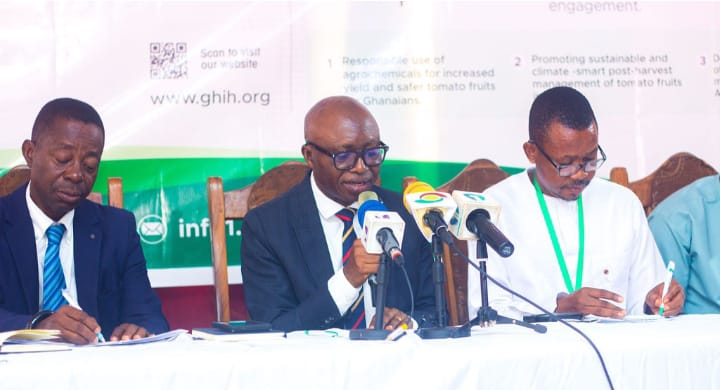
The Vice-Chancellor of the University of Energy and Natural Resources (UENR), Prof Elvis Asare-Bediako, has called for greater farmer participation in agricultural research and innovation.
He said farmers were often the first to experience the effects of climate variability, pest outbreaks, rising input costs and market fluctuations, yet they were sometimes the last to be consulted when solutions were being designed.
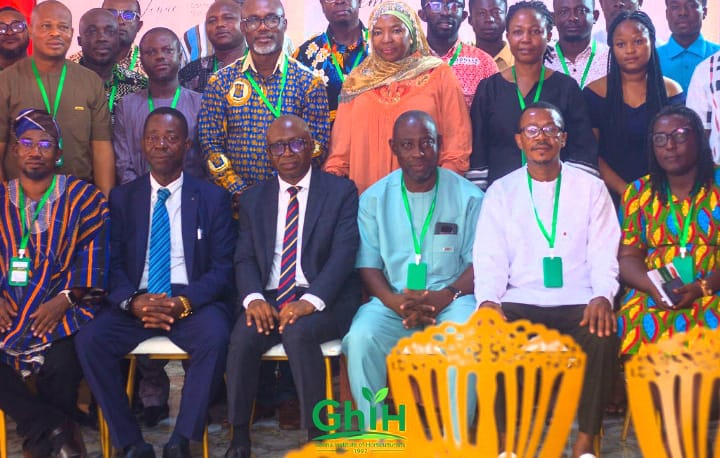
He made the remarks at the 26th Annual General Meeting and Scientific Conference of the Ghana Institute of Horticulturists (GhIH).
The 3-day conference in Sunyani is on the theme: “Building a Resilient Tomato Value Chain in Ghana: Need for Stronger Stakeholder Engagement.”
Prof Asare-Bediako said, “Farmer participation cannot be an afterthought. It must be part of the research and innovation process from the beginning."
He called for stronger farmer-researcher partnerships, with researchers spending more time in farmers’ fields and farmers participating in the identification of research priorities.
He also advocated for the testing of new technologies under real production conditions and stronger farmer organisations to give producers a collective voice.
Drawing on his background as a plant virologist and crop protection scientist, Prof Asare-Bediako said plant health must be central to efforts to build a resilient tomato value chain.
He called for stronger disease surveillance, early detection, diagnostics and integrated pest and disease management.
He said Ghana needed to improve the links between diagnostic laboratories, research institutions, extension officers and farmers to ensure that emerging threats were detected and addressed early.
“Our approach to crop protection must therefore move increasingly from reaction to prevention,” he said.
Prof Asare-Bediako also challenged universities and research institutions to do more to ensure that scientific findings translate into practical solutions for farmers.
He said one of the major challenges facing agricultural research was not necessarily a lack of knowledge, but the distance between knowledge and application.
“We have research findings. We have improved technologies. We have scientists with expertise. We have universities and research institutions. But how effectively are we moving these innovations from our laboratories and experimental fields to commercial farms?” he asked.
He called for multidisciplinary research involving plant scientists, soil scientists, agronomists, economists, food scientists, engineers, social scientists, computer scientists, data specialists, farmers and extension professionals.
The UENR VC also highlighted the need for greater investment beyond the farm gate.
He said tomato farmers could lose significant value even after producing good crops because of inadequate transportation, storage, packaging, marketing systems and processing capacity.
He called for stronger processing capacity, improved storage and transportation systems, better packaging and stronger quality standards.
According to him, increased processing could create additional markets for farmers, reduce pressure on the fresh market and generate opportunities for entrepreneurship, employment and industrial development.
Other areas he identified for stronger collaboration include disease-resistant varieties, climate-smart production, efficient irrigation, soil health and fertility management, digital agriculture, early-warning systems, post-harvest management, value addition, market intelligence and youth entrepreneurship.
Prof Asare-Bediako said the Ghana Institute of Horticulturists was strategically positioned to serve as a platform linking science, practice, policy and professional development.
He encouraged the Institute to strengthen its role as a national convener for horticultural knowledge, innovation and stakeholder engagement.
He said the Institute could facilitate dialogue between researchers and practitioners, contribute professional perspectives to policy discussions, strengthen networks between universities, research institutions, industry and farmers, and provide opportunities for young horticultural professionals.
He also urged stakeholders to build trust and sustain engagement beyond individual conferences and meetings.
“Engagement alone is not enough. We need meaningful engagement,” he said.
He said such engagement should result in research priorities, technologies, improved farmer incomes, stronger plant health, increased investment, reduced post-harvest losses, and job creation.
Latest Stories
-
Fusaini Yakubu Abanga leads NPP National Youth Organiser race with 45% in Global InfoAnalytics poll
3 minutes -
Suame Methodist JHS marks 120 years with a call for STEM innovation
12 minutes -
Global fashion coalition launches in the heart of Kantamanto Market
16 minutes -
‘No concrete commitments from government’ – Brong Ahafo teacher unions maintain strike
20 minutes -
Finance Minister demands greater returns from NLA after GH¢10 million dividend presentation
29 minutes -
National Customers’ Choice Awards set to celebrate Ghana’s best customer-centred brands
33 minutes -
ICEE Conference: Ghana must get governance right to solve transport problems – Ing. Ludwig Hesse
33 minutes -
Luv Fm journalists Clinton Yeboah, Nana Boakye Dankwah Yiadom selected for UK MEET emerging technology fellowship
37 minutes -
VRA warns payment delays, inter-utility debt threaten liquidity despite GH¢8.9bn revenue in 2025
39 minutes -
NPP congress: 7,163 delegates to elect national officers in Kumasi tomorrow
42 minutes -
BoG Governor, all MPC members voted to keep policy rate at 14%
48 minutes -
‘Real poll will be Saturday’s vote’ – Ahiagbah dismisses Global InfoAnalytics survey
57 minutes -
Importers petition GRA over alleged unauthorised removal of 28 containers from Tema Port
1 hour -
Creative Arts Agency Board seeks Lands Ministry’s support for welfare project
1 hour -
Mahama and Kyrgyzstan Foreign Minister discuss AU-UN cooperation – Ablakwa
2 hours