

Audio By Carbonatix
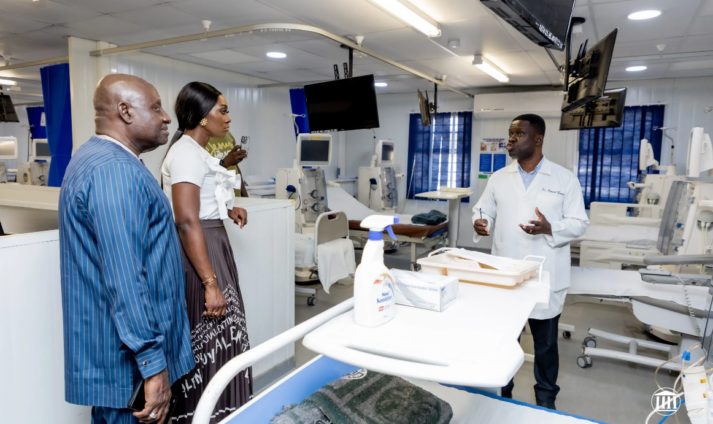
The Chief Executive Officer of the Korle Bu Teaching Hospital (KBTH), says there are about 700 to 1,000 people on dialysis treatment in the country.
Dr Opoku Ware Ampomah said out of the number, the Dialysis Unit of the KBTH had 350 patients, adding that, they run 2,000 sections of dialysis every month.
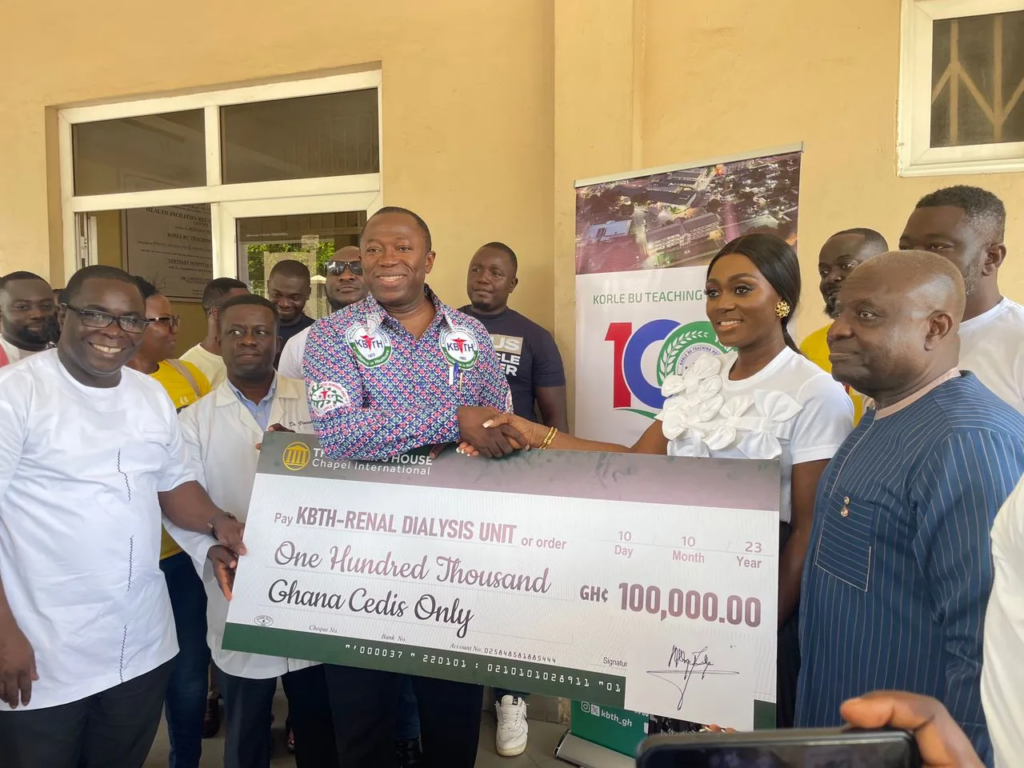
Dr Ampomah disclosed this when a team from The Maker’s House Chapel International made a GHS 100,000 donation to the Dialysis Unit of the Hospital.
The Church also donated GHS 50,000 to the Dialysis Unit of the 37 Military Hospital, making a total of GHS 150,000.
The donation was the Church’s way of reaching out to help address issues that confronted people and society.
This comes on the back of concerns about dialysis fees and how patients are finding it difficult to pay for their regular sessions.
Dr Ampomah said due to exchange rate fluctuations and the high cost of importing dialysis equipment, they were not able to break even in operating the Unit.
He said the GHS 300 fee charged for dialysis treatments was not sufficient to meet the cost involved.
He said the Hospital fell short of GHS 961,000 every month due to that challenge, adding that, they had so far incurred GHS 4million loss.
“We are always under recovery, so we are not able to make payments to suppliers. As I speak, 45 machines are being held by our suppliers.”
Dr Ampomah said the Hospital had not increased the fee for dialysis as being speculated, saying the decision to increase the fee was not their prerogative.
He said that decision was for the Fees and Charges Committee of Parliament.
Dr Louis Agyeman Siriboe, Head of Dialysis Unit at 37 Military Hospital, said their Unit recorded 10 new cases of kidney disease every week.
He said dialysis was supposed to be done three times a week, but due to the cost involved, most patients were having it once a week.
He urged the Government to put in place the necessary legal frameworks to enhance options for kidney transplants rather than patients being on dialysis, which was more stressful.
“We must begin looking at moving from dialysing patients to transplants. This would be a preferable option once we put in the legal framework,” he reiterated.
Latest Stories
-
Power restoration fault suspected in Kumasi Central Market fire
3 hours -
The 7-foot giant of Ngleshie Amanfro: Seven-foot Ghanaian Ephraim Saawa dreams of joining the national basketball team
4 hours -
Government promises support for Kumasi Central Market fire victims
4 hours -
Vibes The Movie: Big Ghun’s Ghanaian film earns five nominations at 2026 REFFA
5 hours -
MamaCare CEO warns unresolved conflicts among health workers could undermine maternal and neonatal care
5 hours -
Health professionals urged to translate medical knowledge into practice to save mothers
5 hours -
Conflicts among care providers linked to maternal, neonatal deaths – Expert
7 hours -
GIS marks 10th TIME conference, champions improved teaching practices
7 hours -
BRICS Or Balance? What Ghana’s bid really means
7 hours -
GPRTU wants full TRAFFITECH-GH implementation to start in 2027
8 hours -
Mahama announces plans to import electric wheelchairs for PWDs
8 hours -
KGL U17 Colts 2026: Western beat Prempeh Elite Academy to set up final final with Greater Accra Region
8 hours -
Late Solanke strike salvages 10-man Spurs draw at Man United
8 hours -
Gender Ministry to monitor welfare of Nana Akua Addo’s children amid domestic violence case
8 hours -
Benedict Okyere Yeboah: Ghana’s football problem goes beyond sacking a coach
8 hours