

Audio By Carbonatix
The director of the Auschwitz Memorial in Poland has offered to serve part of the 10-year jail sentence given to a 13-year-old Nigerian boy for blasphemy.
Dr Piotr Cywinski said he and another 119 volunteers from all over the world would each serve a month in prison.
He personally asked Nigerian President Muhammadu Buhari to pardon the boy.
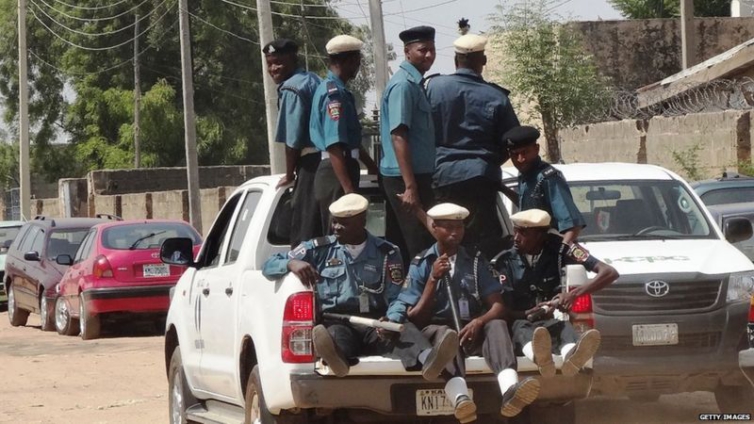
The boy was convicted by an Islamic court of making uncomplimentary remarks about God during an argument with a friend in Kano state in August.
The boy's lawyer later appealed against the sentence, saying it violated children's rights and Nigeria's constitution. He told the BBC that no date had been set for the appeal to be heard in court.
Kano is one of 12 Nigerian states practising the Sharia legal system alongside the country's secular laws.
Muslims form the majority in the north of the country.
The UN children's agency Unicef has called on the Nigerian authorities to urgently review the court's decision.
What did the Auschwitz Memorial's director say?
In a letter to President Buhari, Dr Cywinski wrote he was ready to share part of the boy's sentence.
"Regardless of what he said, he cannot be treated as fully aware and responsible, given his age.
"He should not be subjected to the loss of the entirety of his youth, be deprived of opportunities, and stigmatized physically, emotionally, and educationally for the rest of his life.
"However, if it turns out that the words of this child absolutely require 120 months of imprisonment, and even you are not able to change that, I suggest that in place of the child, 120 adult volunteers from all over the world, gathered by us - myself personally among them - should each serve a month in a Nigerian prison.
"In total, the price for the child's transgression will be the same, and we will all avoid the worst," Dr Cywinski wrote.
It is unusual for the Auschwitz Memorial to comment on such cases.
The Nigerian president has so far made no public comments on the issue.
The Auschwitz-Birkenau Memorial and Museum is situated on the site of the former Nazi concentration camp in Poland where at least 1.1 million people were systematically murdered. Almost one million were Jews.
How Nigeria's Sharia courts work
Twelve states in Nigeria's Muslim-dominated north operate the Sharia system of justice, but only Muslims can be tried in its courts.
The Sharia system, which also has its own Court of Appeal, handles both civil and criminal matters involving Muslims and its judgements can also be challenged in Nigeria's secular Courts of Appeal and the Supreme Court.
The Sharia judges, known as "alkalis", are learned in both Islamic and secular laws.
If a case involves a Muslim and a non-Muslim, the non-Muslim has the option of choosing where they want the case to be tried. The Sharia court can only hear the case if the non-Muslim gives written consent.
Sentences handed down by the courts include floggings, amputations and the death penalty.
Latest Stories
-
Church of Pentecost supports over 2,000 BECE candidates in Obuasi with career guidance seminar
13 minutes -
Brandon Asante and Coventry all but promoted to Premier League despite Sheffield Wednesday draw
35 minutes -
GPL 2025/26: Late Kwartemaa strike downs Hearts in Tema
41 minutes -
Ghana Faces Sierra Leone Moment as Prosecutorial Powers come under strain
51 minutes -
Don’t consume fish or seafood from Tema Shipyard until further notice – FDA warns
56 minutes -
Why volunteering might be Africa’s most underrated career accelerator
1 hour -
ActionAid Ghana raises concern over gender gaps in Feed Ghana Programme
1 hour -
Windstorm wreaks havoc in Gushegu, displacing nearly 2,000 residents and damaging schools
1 hour -
Friends of Bridget Bonnie Marks her 35th birthday with donation to Kasseh Model Health Centre
2 hours -
From Ekumfi Kokodo to the Pulpit Stage: Essi Donkor’s gospel journey takes shape
2 hours -
Landfilling waste management creates no value, it’s an economic waste
2 hours -
Photos: Speaker Bagbin Commissions MPs constituency office under parliamentary decentralisation programme
3 hours -
Black Stars technical advisor Winfried Schäfer sacked as GFA shakes up backroom staff
3 hours -
Wenchi water project almost complete, critical to gov’t agenda – GWL MD
3 hours -
Anti-LGBTQ+ bill not part of government’s legislative agenda – Inusah Fuseini
3 hours