

Audio By Carbonatix
Interest rates are expected to be held at 5% by the Bank of England on Thursday.
The decision at midday comes after it was revealed inflation, which measures the rate of UK consumer prices rising, remained at 2.2% last month.
The figure is just above the Bank's 2% target, but its governor Andrew Bailey has warned people not to expect a sharp fall in rates in the coming months.
Economists and investors are betting on rates to be left unchanged on Thursday and for the Bank to opt to cut them again in November instead.
Rob Wood, chief UK economist at economic research consultancy Pantheon Macroeconomics, said the inflation data released on Wednesday gave the Bank of England "little reason to rush to cut interest rates again" on Thursday.
"It still seems likely that they will decide to keep interest rates paused this month, and instead wait to cut rates again in November and December," added Susannah Streeter, head of money and markets, at investment firm Hargreaves Lansdown.
Interest rates dictate the cost of borrowing set by lenders for loans such as mortgages and credit cards - as well as the returns on savings.
While rates were cut for the first time since March 2020 last month, the cost of borrowing remains high, with homeowners on fixed-rate mortgages still facing the prospect of much higher repayments when deals expire over the next few years.
Mr Bailey has previously warned the Bank must "make sure inflation stays low and be careful not to cut interest rates too quickly or by too much".
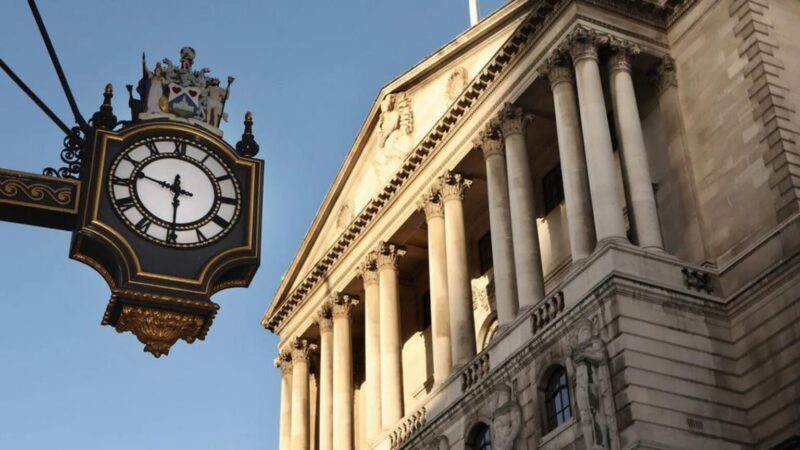
The decision to cut rates in August was tight. Five of the Bank’s nine-member Monetary Policy Committee (MPC), voted for a quarter-point cut.
Allan Monks, UK economist at investment bank JP Morgan, said it expected the Bank to hold rates.
"The MPC is minded to ease cautiously and we look for the next cut in November," he added.
"The Bank has been turning more dovish lately, but requires more favourable data surprises to easing more quickly."
Rates have climbed in recent years as the Bank has tried to slow the pace of consumer price rises.
Prices started rising quickly as demand for goods increased when Covid lockdown restrictions were lifted. But energy and food prices then soared following Russia's invasion of Ukraine. This led to inflation peaking at 11.1% in October 2022 - the highest rate in 40 years.
The theory behind increasing interest rates to tackle inflation is that by making borrowing more expensive, more people will cut back on spending and that leads to demand for goods falling and price rises easing.
But it is a balancing act as high interest rates can harm the economy as businesses hold off on investing in production and jobs.
Latest Stories
-
Be careful with cross-border lending, foreign currency exposures – BoG to financial institutions
43 minutes -
GPL 2026/27: Medeama go three clear as Hearts of Oak recover and Bechem stage stunning comeback
52 minutes -
Ntiamoah Foundation launches “BEYOND 20” anniversary campaign
1 hour -
Credit Risk Management Directive: BoG to begin implementation for banks, others from July 1, 2027
1 hour -
Ghana Brands Awards 2026: Leading brands, business trailblazers to shine on November 20
2 hours -
T-bills auction: Demand improves as government exceeds target by about 76%; interest rates soften
2 hours -
Ziope undertakes initiative to build a technologically inclined community, commissions self-help ICT lab
2 hours -
ECG announces power outage in parts of Tema, Central Region due to network fault, maintenance
3 hours -
When the Gospel Becomes a Weapon: The church, blackmail and the abuse of faith
3 hours -
JoyNews’ Jacqueline Ansomah Yeboah selected for UK Media Excellence for Emerging Technologies Fellowship
3 hours -
Mental Health Alliance urges government to operationalise Mental Health Fund
4 hours -
Ghana–Holy See agreement heads to Parliament after Cabinet approval
4 hours -
Luv FM Corporate Games 2026: Kumasi Central Prisons, Amanfiman Bank win big amid fun
4 hours -
WAFU B U17: Ghana top Group A after win over Togo
4 hours -
Ho Central Mosque reopens amid unresolved leadership dispute that led to closure
6 hours