

Audio By Carbonatix
The recent statement by the Chinese Ambassador to Ghana, H.E. Tong Defa, regarding the fight against illegal mining (galamsey) has sparked public conversation in some sections of the media. While the Ambassador's concern is noted, it has become clear that his message of collaboration was largely taken out of context, overshadowed by a narrative that focuses disproportionately on nationality rather than the complexity of the crime itself.
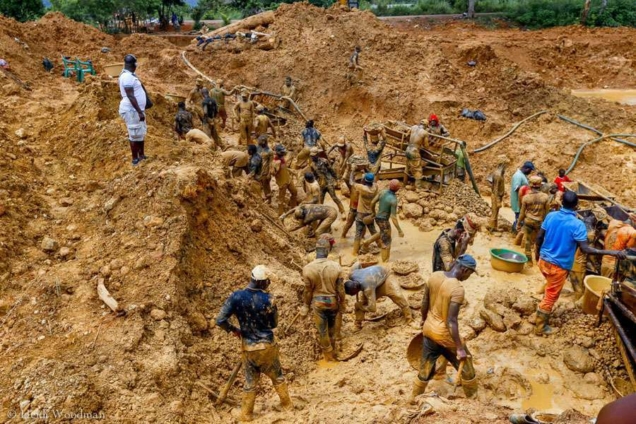
It is essential to acknowledge that ‘galamsey’ is a multifaceted issue involving a wide array of stakeholders, including both local and foreign actors.
Deconstructing the Narrative
Ghana's efforts to combat ‘galamsey’ are often hindered by the involvement of various nationals, yet the focus on Chinese citizens has remained singularly prominent. Speaking recently at a training workshop for editors and senior journalists, Ambassador Tong Defa observed that only a tiny segment of the Chinese population in Ghana is actually involved in illegal mining.
To put this in perspective, between 2016 and 2018, there were approximately 30,000 Chinese living in Ghana. While this figure fluctuates, it is fundamentally unfair to assume the entire community is involved in ‘galamsey’ when many are law-abiding individuals contributing positively to Ghana's development. The Ambassador’s assurance that the Embassy will not shield any national engaged in illegal activities is a statement of good faith and a clear indication that China is committed to working with Ghana to protect the environment.
The Distraction of Political Partisanship
Compounding the issue of international stereotyping is the internal challenge of political partisanship. The national discussion on illegal mining is frequently driven along party lines, which is often unhelpful to the cause. When the crisis is used as a tool for political point-scoring, the focus shifts from environmental preservation to electoral optics.
This partisan friction prevents a unified national front, allowing the practice to continue unabated while stakeholders trade blame. To truly succeed, the fight against galamsey must transcend political cycles and be treated as a matter of urgent national survival.
The Human and Environmental Cost
‘Galamsey’ is not merely a political or diplomatic talking point; it is a direct threat to public health, food security, and the very fabric of Ghanaian society. The consequences of inaction are catastrophic:
- Toxic Contamination: The use of chemicals like mercury contaminates water bodies and destroys crops.
- Public Health Crisis: Many in local communities have lost their livelihoods, and some have died from waterborne diseases or accidents in the mines.
- Generational Theft: The ongoing destruction is robbing the unborn generation of their inheritance and will have catastrophic long-term effects on human health.
A Path toward Accountability
To fight effectively, there is a pressing need for Ghanaians to stop facilitating and leading foreigners to ‘galamsey’ sites. The Ghana National Association of Small-Scale Miners estimates that about two million Ghanaians directly work in small-scale mining, highlighting the massive local scale of the industry.
A balanced approach is necessary—one that addresses the root causes and holds all perpetrators accountable, regardless of nationality. While the Minister for the Interior, Muntaka Mohammed Mubarak, recently disclosed the repatriation of 107 foreign nationals, the government must continue to prioritize enforcing existing laws and strengthening domestic institutions.
Conclusion
Ultimately, the fight against ‘galamsey’ is a Ghanaian issue that requires a Ghanaian solution. Stereotyping will not end the destruction. By working together and focusing on the issue rather than just one nationality or political affiliation, we can protect our environment, economy, and future. It is time for Ghanaians to take full ownership of this issue and work towards a comprehensive, collaborative solution.
Latest Stories
-
Glut! Farmers count losses as prices crash, customers happy
34 minutes -
GSA postpones auction of unserviceable vehicles
37 minutes -
Man charged with attempted murder after stabbing
40 minutes -
World Cup visa scandal: Senyo Hosi says issue goes beyond calls for Sports Minister’s resignation
42 minutes -
Yaw Ampofo Ankrah hasn’t taken or received any money to facilitate visas – Lawyer insists
60 minutes -
World Cup visa scandal: Senyo Hosi urges focus on constitutional accountability
60 minutes -
La Beach demolition: Senyo Hosi condemns lack of consultation
1 hour -
Russian glide bomb attack on Zaporizhzhia kills at least 15 people
1 hour -
Jinapor warns underperforming energy sector CEOs of consequences, says no protection for failure
1 hour -
Fire destroys head of tipper truck on Lower Volta Bridge
2 hours -
Palmer signs new Chelsea contract until 2034
2 hours -
World Cup visa scandal: Mahama will act on corruption allegations – Abass Nurudeen
2 hours -
Abass Nurudeen accuses Minority of ‘scandal scavenging’ over World Cup visa controversy
2 hours -
US Embassy recognised NSA, GFA and GTA as separate entities for visa applications – Sports Minister’s aide
2 hours -
Only 30% of Ghanaian teachers satisfied with their jobs – CAPCOE data reveals
2 hours