

Audio By Carbonatix
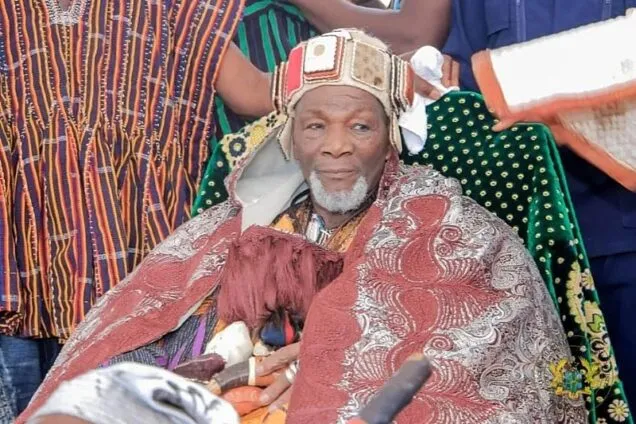
The passing of a Head of State or a traditional ruler often raises one fundamental question: who exercises authority until a successor is chosen? While modern constitutional democracies answer this through carefully drafted legal provisions, the ancient Kingdom of Dagbon resolved this challenge centuries ago through an elaborate customary governance system designed to prevent any vacuum in leadership.
Conversations with respected oral historians of Dagbon continue to reveal the remarkable sophistication of the kingdom’s indigenous political institutions. Far from being informal customs, these practices constitute a well-structured governance framework that has sustained one of Africa’s oldest surviving monarchies for more than five centuries.
A Kingdom Built on Order
The Kingdom of Dagbon, founded between the 13th and 15th centuries by northern warriors led by the legendary Tohazie, the “Red Hunter,” evolved into one of the most organised traditional states in West Africa. Under the leadership of Naa Gbewaa and later his grandson, Naa Nyagsi, the kingdom consolidated an enduring political structure with clearly defined institutions, succession arrangements and governance traditions that have survived generations.
Among the most remarkable features of this system is its ability to ensure continuity of authority immediately after the death of a Ya-Naa.
The First Step: Recognition of the King’s First Son
According to Dagbon custom, immediately after the burial of a Ya-Naa, the Zohe-Naa confers a traditional title upon the late King’s first son. Depending on the royal gate from which the deceased Ya-Naa hailed, he is installed either as Kampakuya-Na or Bolin-Lana.
This installation is often misunderstood as the appointment of a Regent. It is not.
Rather, it is a customary recognition that enables the King’s first son to participate legitimately in his father’s funeral rites. The title grants him recognition before the Ya-Naa’s cabinet and the kingmakers, collectively known in Dagbani as the Yogu-Kpamba, and authorises him to view the body of his late father and participate in consultations concerning the funeral arrangements in accordance with Dagbon tradition.
Following the installation, he proceeds to the palace to see the remains of the deceased Ya-Naa. Court drummers immediately begin performing traditional appellations in honour of the late King, his ancestors and the newly installed prince. These recitations are more than ceremonial praise; they prepare him emotionally, spiritually and psychologically for the immense responsibility that accompanies the death of his father. The burial rites then proceed at the royal mausoleum, Katini, under the direction of the kingmakers.
A Kingdom in Mourning
After the funeral is formally announced, the entire traditional hierarchy enters a period of mourning. Divisional and paramount chiefs remove their traditional hats and replace them with towels tied around their heads, a distinctive symbol of mourning observed throughout Dagbon. This remains the accepted dress code until the Regent is formally installed.
The Installation of the Regent
Although the Kampakuya-Na or Bolin-Lana performs important ceremonial responsibilities, he does not immediately inherit the full customary authority of the Ya-Naa.
That authority is transferred only after the Kuga-Naa, the Chief Kingmaker of Dagbon, formally enskins him as Regent of Dagbon.
From that moment, the Regent exercises the full customary authority previously vested in the late Ya-Naa. He oversees the affairs of the kingdom, performs all necessary traditional functions and safeguards the institution until the final funeral rites are completed and a new Ya-Naa is selected in accordance with Dagbon’s established succession system.
His ceremonial attire also changes. He adopts a specially folded circular towel as his official headgear, which similarly becomes the mourning symbol worn by chiefs across Dagbon throughout the regency period.
This carefully sequenced process has ensured uninterrupted governance within Dagbon for centuries and demonstrates the kingdom’s deliberate institutional approach to political transition.
Lessons for Constitutional Governance
The principles underpinning Dagbon’s customary governance bear a striking resemblance to the philosophy of Ghana’s 1992 Constitution.
The Constitution provides clear procedures for presidential succession and guarantees continuity of executive authority whenever the presidency becomes vacant or during transitions between administrations. Institutions are empowered to ensure that the affairs of the state continue without interruption until a President is duly sworn into office.
Dagbon’s traditional governance operates on a comparable principle: leadership must never be left vacant.
While the institutions, sources of authority and legal foundations differ, both systems recognise that continuity of leadership is indispensable to peace, stability and orderly governance.
The comparison demonstrates that African indigenous governance systems developed sophisticated mechanisms for institutional continuity long before the advent of modern constitutional democracies.
An Enduring Heritage
For more than 500 years, the Kingdom of Dagbon has preserved an elaborate governance architecture that combines tradition, legitimacy, and institutional stability.
Its succession arrangements, regency system, and funeral protocols are not merely cultural ceremonies; they are governance mechanisms carefully designed to maintain order during one of the most sensitive moments in the life of the kingdom.
As Ghana continues to celebrate both its constitutional democracy and its rich traditional institutions, Dagbon’s experience offers an important reminder: indigenous African political systems have long embodied enduring principles of leadership, accountability and continuity that remain relevant to contemporary governance.
Rather than viewing customary governance and constitutional governance as competing traditions, there is value in recognising how both seek to preserve the same enduring ideals, peace, legitimacy, stability and the uninterrupted exercise of authority in the service of society
Latest Stories
-
Government must clarify fate of 29,000 teachers awaiting promotion – NAGRAT
5 minutes -
Paramount takes over Warner Bros in $110bn Hollywood merger
34 minutes -
Human resource practitioners asked to embrace digital revolution for efficiency in service delivery
39 minutes -
AMA intensifies enforcement to reclaim BRT bus shelters from traders
43 minutes -
TGMA controversy hasn’t affected my relationship with Diana Hamilton – Piesie Esther
48 minutes -
Cliff Cheqona to take TP Masterclass to Lagos and Abuja in 2027
51 minutes -
Bond market: Turnover rises 77% to GH¢2.76bn
51 minutes -
Be lovers of the environment – Archbishop Kwofie calls for stronger fight against environmental injustice
55 minutes -
BoG declares FX compliance “non-negotiable” as it moves to tighten rules
58 minutes -
Government to prioritise creation of decent jobs – Finance Minister
1 hour -
Ghana’s ocean is not land under water: Why the Fisheries Commission is right to demand a proper assessment of offshore gold exploration
1 hour -
Teacher unions maintain strike as FWSC, GES negotiations yield no deal
1 hour -
Paramount takes over Warner Bros in $110bn Hollywood merger
1 hour -
Photos: Mahama Ayariga engages World Bank on sustainable cities development
1 hour -
Foreign Affairs Minister warns embassies over long queues, ‘inhumane’ conditions for visa applicants
1 hour