

Audio By Carbonatix
Maternal mortality is unacceptably high. Ghana’s new-born and maternal mortality is 308 to 100,000 live births compared to the WHO standard of 70 to 100,000 live births.
Globally, about 287,000 women died during and following pregnancy and childbirth in 2020. Almost 95% of all these deaths occurred in low and lower middle-income countries.
Shockingly, most could have been prevented.
The World Health Organization estimates that about 21 million girls aged 15–19 years in developing regions become pregnant with 12 million of them giving birth. Research shows that adolescent mothers (aged 10–19 years) face higher risks of eclampsia, puerperal endometritis and systemic infections than women aged 20–24 years.
Babies of adolescent mothers also face higher risks of low birth weight, preterm birth and severe neonatal condition. Preventing pregnancy among adolescents is therefore key to achieving the Sustainable Development Goals (SDGs) related to maternal and new-born health.
Ghana is not immune to this crisis. Between 2016 and 2020, Ghana recorded 542,131 pregnancies among young teenagers aged 15 – 19 years. Pregnancies at such a young age have lifelong consequences for the mother and child.
It is undisputable that today’s adolescents are the drivers for the future economic and social development of Ghana. But if we stand aloof and watch thousands of our adolescent become pregnant – and some even lose their lives - then we cannot guarantee a sustainable and prosperous future for our beloved country.
This is why Youth Rise International (YoRI) is addressing new-born and maternal mortality in a bid to reduce Ghana’s current rate of 308 deaths in each 100,000 live births.
Much has already been done. Successive governments have established radical health promotion policies and programmes in Ghana since the 1990s. Key among these is the Community-based Health Promotion Services (CHPS). Through this innovative health strategy, most rural and hard-to-reach communities now have a CHPS compound - a mini-health center which operates 24/7 and gives easy access to healthcare. These centres are the first entry point for pregnant women including adolescent or teenage mothers to receive ante-natal care and are a life-line for the community.
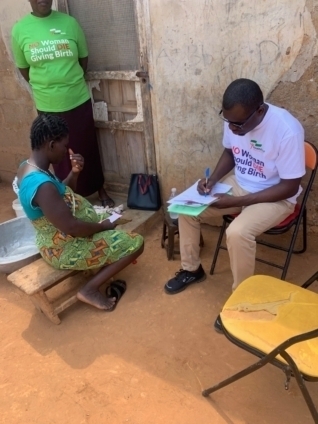
Since 2022, for example, Youth Rise International – in collaboration with the District Health Directorate and the District Assembly of the Ekumfi District in the Central Region of Ghana – reached out to over 10 000 people to raise awareness. Through this we have been able to provide direct quality healthcare help to 90 high risk pregnant women -- all geared towards achieving zero home delivery and zero newborn and maternal mortality.
Today, we have directly worked with over 5000 high risk pregnant women across Central Region and embarked on national advocacy to promote such interventions. Our community discussions have consistently raised the trend of high-risk pregnancy among adolescents as key. Many report that such young mothers often encounter systemic discrimination in the healthcare system with unprofessional and unethical attitudes among some healthcare staff. When the health system combines both adult and adolescent girls, these younger mothers often face discrimination in pre-and post-natal care.
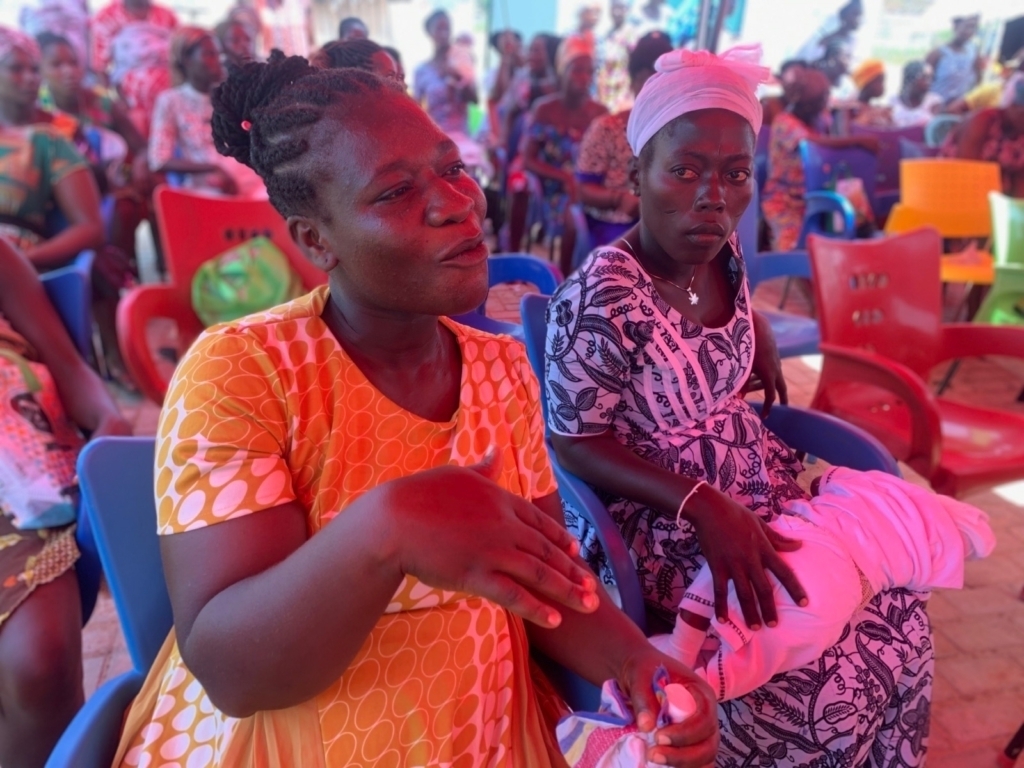
The young mothers do not find the CHPS welcoming – instead they avoid these services and turn to unapproved and unauthorized herbal medicines. This worsens the already vulnerable and high-risk situation they find themselves as adolescent or teenage mothers - especially those from very deprived and rural grassroots communities.
We need a teen-friendly and trauma-informed health system that supports our vulnerable mothers.
WHO research shows that “care by skilled health professionals before, during and after childbirth can save the lives of women and new-borns”.
But consider the story of 17-year-old teen mother Grace. A recent beneficiary of our on-going zero newborn and maternal mortality project in the Central Region of Ghana. Grace already has a one-year-old child and is currently seven months pregnant.
Grace told our team how, during her first pregnancy, her ante-natal visits were marked with series of rebukes as well as insensitive and traumatizing interrogations from adult pregnant women and healthcare professionals at the health center she visited.
Even though she had heard about family planning and birth control through the radio, she was afraid to ask for this support at the clinic. A second unplanned pregnancy was the result. This time, she felt too traumatized to even attend the ante-natal clinic – putting herself and her child at risk.
Access to health is a right. The government of Ghana – having ratified the UN Convention on the Rights of the Child in 1990 – also has an obligation to promote and ensure the health, protection and well-being of adolescents.
We call on the Ministry of Health (MoH) and The Ghana Health Service (GHS) to retrain health workers across Ghana on the patient charter -- focusing specifically on non-discrimination, inclusion and trauma-informed care. We need to ensure that health workers serve teen or adolescent mothers with high levels of professionalism and ethical standards. This must then be supported with teen-friendly and trauma-informed care clinics or service delivery days that cater for young women.
In this way, teen or adolescent mothers will not be hindered by ostracism, stigma, derogatory and non-dignifying comments and unwholesome interrogations from adult clients. We must create a welcoming environment so that they will feel motivated to health facilities and increase their chances of a healthy birth. We owe it to our young mothers and children. We owe it to Ghana.
The author, David K. Awusi, is the Executive Director of Youth Rise International (YoRI) a Ghanaian organization which forms part of the People Vaccine Alliance (PVA Africa).
Latest Stories
-
Hawa Koomson pledges experienced and mature leadership of NPP women’s wing
15 minutes -
Young woman found dead at Kasoa Peace Town
47 minutes -
Playback: The Law examined lawful arrest in Ghana
1 hour -
Mahama urges African governments to treat healthcare as an investment, not budget cost
2 hours -
Bawumia congratulates John Boadu and new NPP executives, pledges support ahead of 2028
2 hours -
‘No talent should be left out’ – Bawumia pledges inclusive NPP campaign for 2028
2 hours -
Prof. Mike Oquaye recounts how he blocked Special Prosecutor’s attempt to arrest Bawku Central MP
2 hours -
Make health sovereignty a priority for Africa – Mahama
2 hours -
Dorimon Naa, Wa West DCE lead massive clean-up exercise; threaten sanctions against recalcitrant residents
3 hours -
Photos from Adom FM Y2K Jam
3 hours -
Praye Tiatia steals the show at Adom FM Y2K Jam [Watch]
3 hours -
Boakye Agyarko congratulates John Boadu, pledges support for NPP leadership
3 hours -
Antwi HiMight thrills fans with Antwi ne Antwi hits at Adom FM’s Y2K Jam [Video]
3 hours -
Amb. Edward Boateng congratulates Boadu, Kodua on election wins
4 hours -
John Boadu pledges to rebuild NPP from grassroots and restore ‘winning machinery’
4 hours