

Audio By Carbonatix
On 25th May 2026, as Ghana joined the rest of the continent in commemorating Africa Day, Government officially launched the E-Visa system as part of a broader effort to position Ghana as open and attractive to business, tourism and investment. The initiative introduces a technology-driven platform intended to modernize visa administration, improve border management and simplify travel into Ghana, while making the country more competitive in an increasingly interconnected global environment. Government further announced that holders of African passports travelling to Ghana through the new platform would not be required to pay visa fees.
The timing of this launch carries a certain symbolism. Africa Day has always represented more than a celebration of history. It is an annual reminder of a long-standing aspiration that has occupied the thinking of African leaders from the era of our first President, Dr. Kwame Nkrumah, to present day. Across different generations and through changing political landscapes, the aspiration has remained that Africa should gradually evolve into a continent where cooperation and economic opportunity is not constrained by inherited borders.
For many years, obtaining visas to Ghana has often involved procedures that have not always reflected the speed and convenience expected in an increasingly digital world. Prospective visitors from countries without Ghanaian missions abroad have frequently had to contend with courier arrangements, long processing periods and administrative hurdles that introduce unnecessary friction into travel decisions.
In today's global economy, countries compete on more than tax policies, infrastructure and market size. They increasingly compete through efficiency and accessibility. The experience offered to an investor, entrepreneur or visitor often begins long before arrival at an airport. It begins at the first interaction with a country's systems and institutions.
While the initiative did not originate under the Mahama Administration, the move nonetheless deserves commendation for advancing and implementing a long-standing national policy objective.
The E-Visa Journey Did Not Begin Overnight
It would be a disservice to treat this launch as though it emerged overnight. Significant public policy rarely does. Major reforms often evolve through years of technical work, institutional planning and inter-agency collaboration. The development of Ghana's E-Visa initiative followed that pattern.
The foundations were laid during the Akufo-Addo administration. In February 2020, the Akufo-Addo Government entered into a Technical Support Agreement with Orell Füssli Security Printing Limited of Switzerland and TGN Digital Security Limited to facilitate the deployment of machine-readable visa technology and the broader infrastructure required for an electronic visa system. In February 2023, Cabinet directed the Ministries of Foreign Affairs and Interior to jointly develop the policy framework and implementation guidelines for Ghana’s Electronic Visa Administration.
Subsequent years involved technical testing, stakeholder consultations and policy development carried out by multiple state institutions, including the Ghana Immigration Service, National Security, the Ghana Tourism Authority, Ghana Airports Company Limited and the Ministry of Finance. Cabinet directives followed, implementation frameworks were developed, and operational readiness steadily advanced. By late 2024, executive approval had been granted for the Electronic Visa Administration and Policy framework.
The record, therefore, is clear. The launch we are now witnessing is the product of sustained effort across administrations, and it is important to state that plainly. The E-Visa reform is a national achievement, and the history of how it came to be ought to be told in full.
Two Different Concepts: E-Visa and Visa-Free Travel
Public commentary has sometimes used the terms "free e-visa" and "visa-free travel" interchangeably. They are not the same, and the distinction matters.
An electronic visa is, principally an administrative innovation. It changes the process through which permission to enter a country is obtained. Rather than requiring a traveler to visit an embassy or complete extensive manual procedures, the process is conducted online through digital systems. The requirement for prior approval still subsists, but obtaining that approval becomes easier and more efficient. For that reason, even where African passport holders are not required to pay visa fees under the current arrangement, their travel to Ghana would still involve obtaining prior approval and therefore would not constitute visa-free travel.
Visa-free travel operates on an altogether different basis. Under such arrangements, eligible travelers require no prior authorization before departure. They are, in effect, pre-approved by virtue of their nationality, subject only to the usual immigration and border controls at the point of entry.
Both represent progress along the same continuum. But they are not equivalent steps, and treating them as such can obscure how much further there is still to go. As captured in the Executive Approval dated 18 December 2024, the Akufo-Addo administration granted visa-free travel for holders of all African passports, which represented the more far-reaching approach towards advancing African integration.
The African vision of Continental Integration
Africa's integration journey has gradually moved beyond the language of aspirations and declarations into questions of practical implementation. The larger vision has always been about creating a more connected Africa, where economic opportunities are expanded through the easier movement of people, ideas, services and capital across borders.
For decades, African economies often traded more with the rest of the world than with one another, despite their geographic proximity and shared economic interests. As discussions around continental integration evolved, there was growing recognition that removing tariffs alone would not be enough to change that reality. The movement of goods and the movement of people have always been closely connected. A trader seeking new markets, an entrepreneur looking for investment opportunities, or a professional providing services across borders must first be able to travel.
This understanding informed the adoption, in 2018, of the African Union Protocol on Free Movement of Persons, Right of Residence and Right of Establishment, which envisages a progressive removal of barriers to mobility across the continent. The Protocol identifies the abolition of visa requirements as an important early phase toward deeper continental integration.
This broader vision also informed the earlier policy direction adopted under the Akufo-Addo administration to extend visa-free access to holders of African passports. It formed part of a wider strategic vision that aligned with the aspirations of Agenda 2063, the objectives underpinning the African Continental Free Trade Area and Ghana's position as host nation of the AfCFTA Secretariat. That initiative formed part of a longer strategic outlook aligned with continental integration objectives and Ghana's role as host nation of the AfCFTA Secretariat.
Lessons from Europe and the Architecture of Free Movement
Africa's conversation on mobility and integration is not entirely new. Other regions have travelled similar paths, often gradually and with considerable political difficulty.
Perhaps the most prominent example is the European Union.
Today, movement across much of Europe appears almost ordinary. A citizen of France may travel into Germany, Spain, Italy or the Netherlands without obtaining visas or passing through routine border checks. Businesses recruit talent across multiple countries with relative ease. Students study abroad and workers relocate with minimal administrative barriers.
Yet this reality emerged through a long process of institution-building. The origins may be traced to early efforts at European economic cooperation following the Second World War. Over time, the understanding developed that a common market could not function effectively if the movement of people remained heavily restricted.
The 1985 Schengen Agreement represented a significant turning point by establishing the gradual abolition of internal border controls among participating states. The subsequent Schengen Convention of 1990 developed the legal and operational mechanisms necessary to implement the framework. Later, the Maastricht Treaty of 1992 formally established European citizenship and reinforced the principle that citizens of member states should enjoy rights of movement and residence throughout the Union
Importantly, Europe pursued free movement while addressing potential concerns regarding security and state sovereignty. The elimination of internal borders occurred alongside stronger external border systems, coordinated immigration policies, common databases and intelligence-sharing mechanisms such as the Schengen Information System.
These are lessons that Ghana and other member states of the African Union can draw on as we work towards achieving the free movement of people across our continent.
Ghana's Place in Africa's Integration Journey
Ghana must continue to lead the continental conversation on African integration. We have historically played a defining role in shaping Africa’s integration agenda.
During Ghana's Golden Jubilee celebrations in 2007, then President John Agyekum Kufuor, serving as Chairperson of the African Union, hosted the Extraordinary African Union Summit in Accra and convened what became known as the Grand Debate on the future of African integration. This significantly accelerated momentum towards the single market agenda contemplated under the Abuja Treaty Establishing the African Economic Community, which came into effect in 1994.
As Ghana prepares to celebrate her Platinum Jubilee next year, and with President Mahama expected to assume the Chairmanship of the African Union, there is a valuable opportunity for the country to reinforce its longstanding Pan-African credentials and provide renewed leadership on questions of continental integration.
Government should therefore accelerate efforts towards ratifying and implementing the key African Union treaties, protocols and frameworks necessary to accelerate African integration. These include:
- The AU Protocol on Free Movement of Persons;
- The AfCFTA Protocols on Investment, Competition Policy and Intellectual Property Rights;
- The AfCFTA Digital Trade Protocol; and
- The Protocol on Women and Youth in Trade.
There is also an opportunity for Ghana to champion broader reforms such as the implementation of aspects of the Abuja Treaty and the establishment of a supranational court of justice as provided for in the Protocols relating to the African Court of Justice and Human rights including the Malabo Protocol.
Equally important is the question of financial connectivity across the continent. Mobile money transactions across Africa were estimated at approximately US$1.4 trillion in 2025, even in the absence of a seamless continental payment framework. Improved interoperability across payment systems has the potential to significantly strengthen intra-African commerce, particularly for small and medium-sized enterprises, women and young entrepreneurs whose businesses increasingly depend on digital transactions.
Conclusion
As Ghana approaches its Platinum Jubilee, an opportunity presents itself once again to reflect on the role the country wishes to play in Africa's next phase of development. Throughout our history, Ghana has often sought to stand at the forefront of conversations shaping the continent's future, from the ideals of Pan-Africanism to more recent efforts at advancing economic cooperation and integration.
The introduction of the E-Visa platform deserves recognition as a positive institutional reform. At the same time, technology should not cause us to lose sight of broader policy ambitions. The larger aspiration has always been to build a continent where Africans are able to engage one another more freely, trade more extensively with one another and create opportunities that transcend national boundaries.
The future of African integration will ultimately be determined not only by the treaties that are signed or the institutions that are created, but by the practical choices individual countries make regarding openness, mobility and cooperation.
Ghana has historically led that conversation. We should continue to do so.
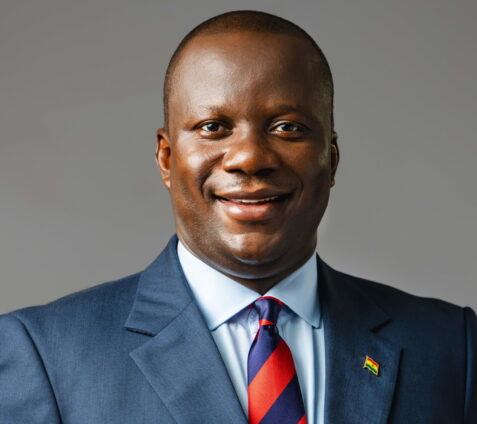
The writer is the Member of Parliament for Damongo Constituency and the Ranking Member on the Parliamentary Committee on Foreign Affairs.
Latest Stories
-
Mahama’s proposed airline looks to South America, Caribbean as Ghana confronts mounting drug trafficking cases
5 minutes -
5% progress on Suame Interchange Phase One inadequate – Roads Minister tasks contractor to speed up work
7 minutes -
Photos: Vice President joins GAAS Awards to celebrate outstanding women leaders
8 minutes -
OSP vs Ken Ofori-Atta, SML and others: Court gives OSP four more weeks to serve Ofori-Atta with summons
10 minutes -
High Commission sends caution to Ghanaians in South Africa ahead of planned protests
13 minutes -
Okai Mintah outlines vision for NDC Youth Wing as he engages MMDCEs
18 minutes -
Mahama Ayariga leads renewed push for stronger local governance through partnerships
22 minutes -
NDC youth organiser aspirant Okai Mintah consults MMDCEs ahead of elections
23 minutes -
PHOTOS: Ayikuma Methodist Basic School wins National Juniors Challenge
26 minutes -
Silence has entered our homes : Salomey Awiti Bafoh and the chilling effect of free expression in Ghana
26 minutes -
UG Pro-VC calls for stronger research funding to curb brain drain
28 minutes -
Woman in critical condition after shooting at funeral grounds in Yeji
30 minutes -
Breast Cancer awareness must lead to action – Deputy Health Minister
33 minutes -
UK identified as leading destination for Ghana’s illicit cannabis exports – Report
35 minutes -
Drug money allegedly finances Ghana’s political parties and real estate – Global Organised Crime Index
40 minutes