

Audio By Carbonatix
The Economic Community of West African States (ECOWAS) must adopt a supranational government system if it intends to achieve its objectives.
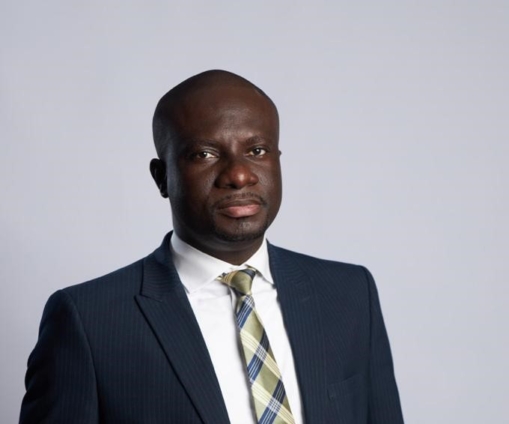
This is according to a Lecturer at the Law Faculty of the Ghana Institute of Management and Public Administration (GIMPA).
Speaking on Joy News’ The Law, Mr. George Baffour Asare-Afriyie, said ECOWAS member states must begin serious consideration of ceding some of their powers to the sub-regional body in order to reach the objectives as outlined in the ECOWAS treaty.
He noted that while there has been a semblance of attempts to achieve supranationalism – for instance, in the issuance of the ECOWAS passport and ECOWAS card popularly called the Ghana card – there is much more work to be done.
Touting the advantages of embracing supranationalism, he said it creates peace and stability among member countries.
“Supranational governments can help to prevent conflicts and even promote cooperation among member states, to be specific on economic and military matters. It is believed that the major factor that has prevented conflicts in the EU zone is because of this concept because they have a common foreign and defence policy which is enforced by all central governments,” he said.
He added that supranational governments also stimulate GDP growth and can create more jobs that may lead to higher wages and pensions.
“But you know, it is very unlikely when it comes to the national government because most of these national governments are interested in their political points from their constituents which may even cause them to overspend,” he said.
Mr. Asare-Afriyie said supranational governments also creates large internal markets for member states.
“Supranational organisations can create internal markets and domestic demand. This is because free markets compel states to buy from states at even lower costs as opposed to the tariffs that are imposed on goods from outside the supranational government,” he said.
He added that the supranational government’s ability to ensure free movement of goods and services, labour and capital makes it an enticing option.
“We have this free movement in the ECOWAS treaty both the original and the revised one but we haven’t achieved it properly. We haven’t achieved it because in my opinion most people want to protect their security, their national security as against thinking of protecting or coming together to work as a team.
“For example, if we utilise this free movement that has been enshrined in the ECOWAS treaty which has been revised, which is still in it, it can create free movement of labour, it can create free movement of goods, it can even create free movement of services, and it can even create free movement of capital because sometimes the cost of borrowing in Ghana may be higher than going to another country to do so. I hear that in the French countries the interest rate is better than those of us here,” he said.
And finally, a supranational state, Mr. Asare-Afriyie said gives member states collective influence when it comes to global affairs, “because the voice of many states has more force as opposed to fractured voices of many. And we know what pertains here.”
Latest Stories
-
Global InfoAnalytics poll puts John Boadu, Justin Kodua and Titus Glover ahead in NPP executive race
57 minutes -
Ghana to establish skills development university with $50m from German support package
1 hour -
Baffour Awuah under EOCO investigation over alleged financial loss and money laundering – Deputy AG
1 hour -
How healthy is Ghana’s health sector?
1 hour -
HACSA Tech4Girls graduates 80 young women with digital and technology skills
1 hour -
Arrest of Manhyia South MP should involve Parliament, not police station – Kpebu
2 hours -
Two Nigerians sentenced to 189 months in US prison over $2.4m cyber fraud
2 hours -
Cristiano Ronaldo leaves Portugal’s training camp after rift with Head Coach
2 hours -
Ghana Energy Awards opens nominations for landmark 10th anniversary edition
2 hours -
Aayalolo contra-flow: Are we treating the symptom instead of the disease?
2 hours -
GTEC orders Colleges of Education to begin 2026/2027 admissions despite fees approval delay
2 hours -
Legal reforms must solve real problems, improve justice – Bagbin
2 hours -
Ofori-Sarpong named Alumni President of the Year, honoured for PRESEC dormitory project
3 hours -
Germany commits $132m to Ghana for skills development and training university – Pelpuo
3 hours -
‘Influence should go beyond visibility’ – Taadi Banyinba GH launches The TB Impact
3 hours