

Audio By Carbonatix
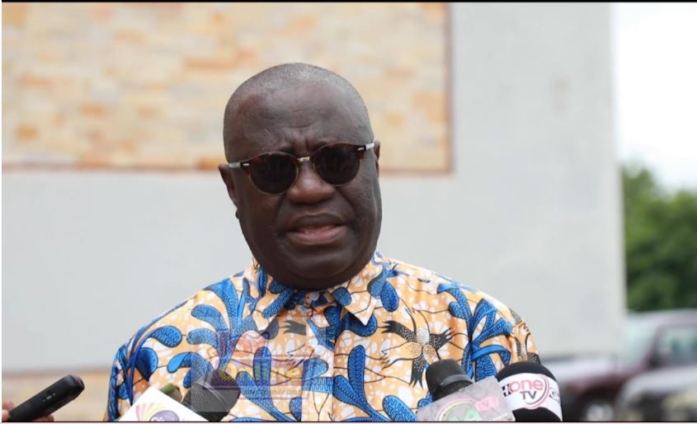
The Director of the Faculty of Academic Affairs and Research at the Kofi Annan International Peacekeeping Training Centre (KAIPTC) says the ECOWAS standby force was instituted to respond to civil wars and not to be engaged in eras of constitutional changes within its member states as it seeks to do presently in the wake of the coup in Niger.
Professor Kwesi Aning says there is no conflict or civil war in Niger, therefore the bloc should rather consider using "a graduated set of responses" to resolve the situation.
"The standby force idea was also to respond first and foremost to civil wars and not to constitutional changes or internal political misunderstandings where there is massive bye-in as to what is happening. I mean there's no conflict in Niger per se.
"There rather ought to be a graduated set of responses as an internal crisis escalates," he said on JoyNews' Newsfile on Saturday.
The expert explained that the bloc does not seem to have exhausted all options in its laid down procedures. The West African bloc has jumped steps, according to Prof. Aning. "What we've seen is an automated response from ECOWAS, from zero to hundred,"
Military option should be the last resort, he stressed.
ECOWAS has reportedly given the green light to its standby force to prepare for what it calls an intervention in Niger. According to reports, heads of forces of member states are convening in Accra to hatch an intervention plan.
This follows a one-week ultimatum given to the military junta in Niger to return the country to a constitutional order following its coup.
On the back of this, Prof. Aning explained that the bloc has even defaulted when it comes to its processes in moblising forces for interventions.
"If you look at the mechanism Article 28, 1, it specifies the processes for force generation. That has not been followed. Quite a number of these decision-making processes and procedures have been hopped over and then we have taken the decision of last resort," he explained.
He indicated that international organisations function best when there is compliance with what they have voluntarily signed on to and when there is a sense of "bindingness" relating to the values, principles and decision-making processes.
Latest Stories
-
Drug bust case: Only Customs officers, MPS officials in scanning room – NACOC
26 minutes -
I don’t mind being insulted; I have a crocodile skin – President Mahama
38 minutes -
Samson’s Take: Verify the badge – and verify the story
50 minutes -
President Mahama explains why Ghana must rethink regulation of TikTok, other new media platforms
1 hour -
Rule of law must be protected – GBA condemns EOCO action against Baffour Awuah
2 hours -
950,000 barrels of Sankofa crude head to TOR as GNPC deepens domestic refining
3 hours -
Scales of deception removed – Annoh-Dompreh attacks new cocoa price
3 hours -
Young Positivist Writes : My Experience with GCLP
4 hours -
Strong Day 1 turnout sets tone for Day 2 of Republic Bank-JoyNews Habitat Fair Clinic
5 hours -
Ghana Army warns new soldiers against social media misuse, uniform abuse
5 hours -
AMA calls for science-led action to tackle environmental health risks in Accra
5 hours -
NPP Canada Organizer BigMo urges Diaspora to support Kodua Frimpong
6 hours -
He entered at eight; he is now 16: Ghana’s children growing up in prayer camps
9 hours -
‘Development must not always begin from Accra’ — Anwelle Foundation launched in Jirapa
9 hours -
PKO trio eye victories at Odwira Festival
11 hours