

Audio By Carbonatix
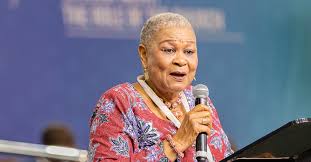
Rev. Dr. Joyce Aryee, former Chief Executive Officer of the Ghana Chamber of Mines, has emphasised the importance of ethical leadership, inclusive development, and stronger community collaboration within Ghana’s extractive industry.
“I think that there is a certain partnership that mining companies ought to have with their communities. So what’s the dual mandate of mining? The statistics tell us that mining contributes over eight percent to Ghana’s GDP, which is approximately 6.8 billion Ghana cedis in quarter two of 2025, and supports thousands of jobs, even with new technologies,” she mentioned.
“I’ll say that mining is more than minerals. It’s central to Ghana’s economy as well as the whole community. But ethical leadership and inclusive development is very essential, and so we need to balance economic growth with social and environmental responsibility,” she added.
She was speaking on the topic “The Human Face of Mining: Leadership, Ethics, and Community Relations in Ghana’s Extractive Sector" during a mentorship session held on Wednesday, 26th November, as part of the Africa Media Extractives Fellowship training in Accra.
Rev. Dr. Aryee, however, highlighted the importance of aligning mining operations with the protection of land rights and local livelihoods, observing that mining activities often conflict with other land uses and can disrupt communities.
She also reflected on her guidance to mining companies, urging them to pursue a legacy that leaves a positive and lasting impact.
“When I was working, I used to tell the mining companies, nothing will be better than for somebody in the community to say, if this mining company had not been here, these facilities, these jobs, these livelihood programmes, better education — all these things would not have come,” she said.
She emphasised that mining companies have a responsibility to ensure that communities are left in a better condition than they were before mining activities began.
“It is not just leaving money for something that can go into the business, but knowing that there is an obligation to make sure that whatever you touch becomes better than before you touched it. That is the mentality that we must have,” she added.
“I have often asked, why does Ghana want to mine? What for? Because if the only reason why we mine is so we make money, we’ve lost it. Because mining has damaging consequences. And as I said, there will always be a hole. But we know what holes can be used for,” she noted.
She also underscored that national mining policies and laws must reflect a clear, long-term vision for the sector, saying, “So for all that happens, a country must decide why it wants to mine, what it wants to do with mining as an industry. That is the best way to go. So whatever laws you put in place must have that in perspective."
Latest Stories
-
Make loyalty to NPP a permanent culture, not an election-season tactic – Joseph Cudjoe
7 minutes -
NPP delegates want reform without destroying party’s reputation – Joseph Cudjoe
9 minutes -
Salomey Awiti Baffoe granted GH¢100,000 bail over alleged false news publication
13 minutes -
NPP is for all social classes, not just the middle class – Mike Oquaye
18 minutes -
Freezy Mɑcbones wins WBO Africɑ Light Heɑvyweight title in Lɑgos, Nigeria
21 minutes -
John Boadu is ‘an exceptionally gifted political figure’ – Prof Mike Oquaye
37 minutes -
NDC must study NPP congress closely for strategic lessons – Mustapha Gbande
44 minutes -
NDC has built strong structures to face any electoral challenge – Mustapha Gbande
54 minutes -
John Boadu can appeal across Ghana’s social groups – Prof Mike Oquaye
1 hour -
‘Electing Kojo Bamba is backward politics’ – Mustapha Gbande
1 hour -
Government must order payment of promoted teachers’ salaries – GNAT
1 hour -
Meet Sethina Edem Sunu, the healthcare professional eyeing the NDC UK & Ireland deputy organiser role
1 hour -
The myth of ‘sophisticated customer experience’ in the digital age
2 hours -
What happened to lands reserved for sanitary sites? -WasteCare CEO calls for audit
2 hours -
Manasseh Writes: The shift in the NPP
2 hours