

Audio By Carbonatix
Ghana’s 2024 elections have once again demonstrated the country’s strong democratic spirit, with peaceful voting and the active participation of millions. However, delays in announcing official results continue to create anxiety and raise questions about the efficiency of the process. More than 40 hours (as of the time of writing) after polls closed on December 7, the Electoral Commission (EC) had not certified a single regional result out of Ghana’s 16 regions.
This delay persists despite the transparency shown by the EC, which has included frequent media updates, real-time media access to the national collation centre, and efforts to counter mis/disinformation. While these steps deserve praise, they have not been enough to calm the growing frustration and tension.
Interestingly, both the ruling New Patriotic Party (NPP) and the opposition National Democratic Congress (NDC) were able to independently collate their results well before the EC’s official announcement. This demonstrates that timely collation and transmission of results are indeed achievable. The question, therefore, is why the EC, with its superior resources and mandate, is unable to match this speed.
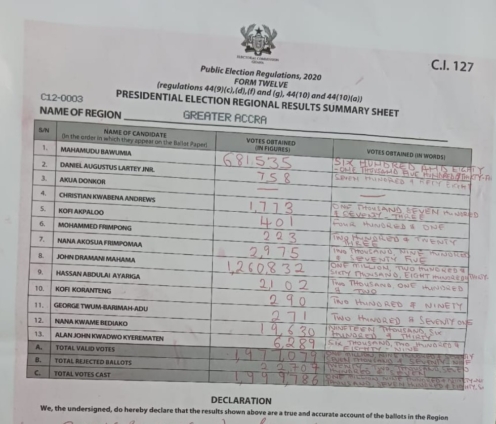
The EC, as of December 2024, employs a dual system to transmit election results. Pink sheets – official documents recording results at polling stations – are transported physically to collation centres, where they are aggregated at the constituency level and then compiled at the regional level before being electronically transmitted through a secure system to the national collation centre at the EC’s headquarters. This dual approach is designed to ensure accuracy and provide a reliable backup for verification.
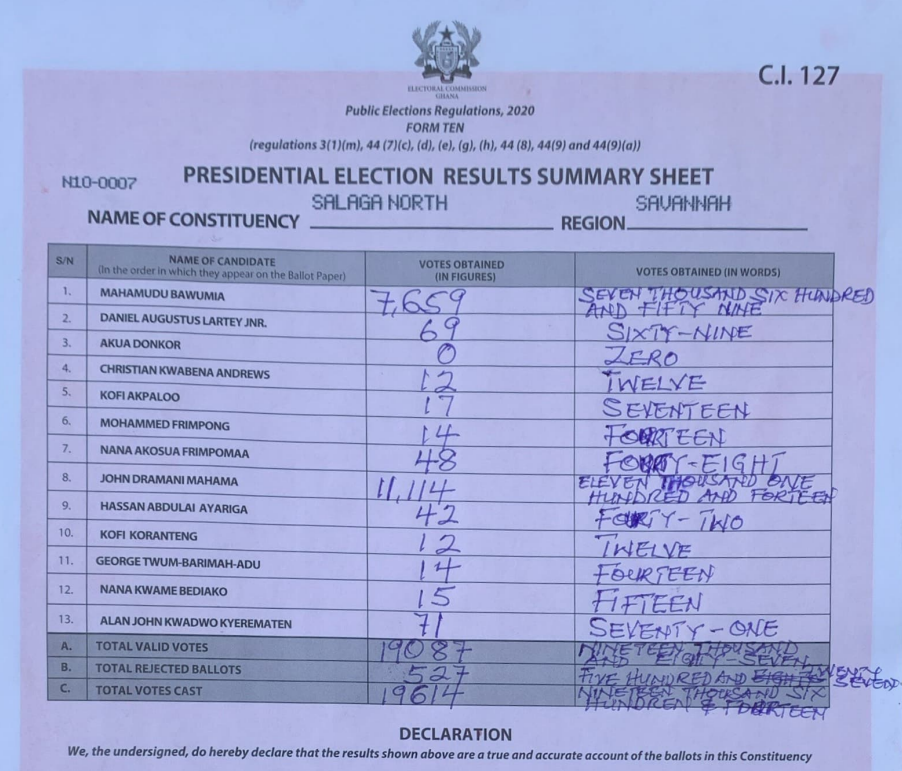
While this system is thorough, it is also slow. The physical transportation of pink sheets faces delays due to logistical challenges, chaotic scenes at collation centres, and the actions of some citizens who flood these centres claiming to be vigilant. These gatherings often lead to confusion, delays, and even violence. For example, in the 2020 elections, violence at the Techiman South collation centre tragically resulted in deaths when security forces fired shots to disperse crowds.
In this election, leadership played a crucial role in maintaining peace. Dr. Mahamudu Bawumia, the NPP candidate and sitting Vice President, conceded defeat just 16 hours after polls closed, congratulating the opposition NDC’s John Dramani Mahama. This quick and gracious concession helped calm tensions and showed political maturity. Without this decisive act of leadership, the atmosphere in the country could have been far more volatile.
In the current election, the EC has had to repeatedly plead for patience, especially after the concession speech by Dr. Bawumia, as they wait for faxed results from the regions. This outdated method of transmission feels inadequate in a world where secure digital systems can provide instant updates. If political parties can collect, verify, and tabulate results efficiently, then the EC should be able to do so even faster.
The delays in announcing results are not just an inconvenience; they pose a real threat to Ghana’s stability and democracy. When results take too long, rumours and mis/disinformation fill the void, creating tension and mistrust. Large gatherings at collation centres increase the risk of violence, as seen in the current and past elections.
The ability of political parties to independently and efficiently collate results proves that the current system’s inefficiencies can be overcome. Modernizing the electoral process would address these challenges by making it faster, more efficient, and safer.
One of the most effective steps would be digitizing the pink sheets, which are currently transported physically to collation centres. Polling station officials could be equipped with secure devices to scan and upload these sheets directly to a central server. This would allow results to be transmitted instantly while maintaining their accuracy and credibility.
In addition, a real-time public updates system could be introduced. By creating a secure online platform, the EC could enable citizens to monitor results as they are transmitted from polling stations to regional and national collation centres. This transparency would reduce anxiety and curtail the spread of mis/disinformation while reinforcing public trust in the electoral process.
Another important step is improving oversight by leveraging digital tools. Party agents and independent observers could have real-time access to the transmitted results, allowing them to verify data and flag discrepancies as they arise. This would enhance accountability and ensure that any issues are addressed promptly.
The fact that both major parties could tabulate their results within hours demonstrates that the EC can achieve the same speed with better resources. Implementing these changes would not only accelerate the collation and announcement of results but also help prevent the chaotic and sometimes violent scenes that occur at collation centres. By reducing the need for large crowds to gather, the risk of tension and conflict would also be significantly diminished.
Implementing these changes requires a commitment to training and public education. Electoral officials must be trained to use the new technology effectively, and citizens must be educated on how the updated process works to ensure widespread acceptance and trust.
By adopting modern systems and prioritizing efficiency without compromising credibility, Ghana can continue to lead the way in democratic excellence. It’s time for the EC to embrace change and ensure that the voice of the people is reflected swiftly, safely, and credibly.
The writer is a development communication and communication policy expert. He is the Head of Institutional Development, Monitoring, Evaluation, and Learning at the Media Foundation for West Africa.
Latest Stories
-
Church of Pentecost supports over 2,000 BECE candidates in Obuasi with career guidance seminar
59 minutes -
Brandon Asante and Coventry all but promoted to Premier League despite Sheffield Wednesday draw
1 hour -
GPL 2025/26: Late Kwartemaa strike downs Hearts in Tema
1 hour -
Ghana Faces Sierra Leone Moment as Prosecutorial Powers come under strain
2 hours -
Don’t consume fish or seafood from Tema Shipyard until further notice – FDA warns
2 hours -
Why volunteering might be Africa’s most underrated career accelerator
2 hours -
ActionAid Ghana raises concern over gender gaps in Feed Ghana Programme
2 hours -
Windstorm wreaks havoc in Gushegu, displacing nearly 2,000 residents and damaging schools
2 hours -
Friends of Bridget Bonnie Marks her 35th birthday with donation to Kasseh Model Health Centre
3 hours -
From Ekumfi Kokodo to the Pulpit Stage: Essi Donkor’s gospel journey takes shape
3 hours -
Landfilling waste management creates no value, it’s an economic waste
3 hours -
Photos: Speaker Bagbin Commissions MPs constituency office under parliamentary decentralisation programme
3 hours -
Black Stars technical advisor Winfried Schäfer sacked as GFA shakes up backroom staff
3 hours -
Wenchi water project almost complete, critical to gov’t agenda – GWL MD
4 hours -
Anti-LGBTQ+ bill not part of government’s legislative agenda – Inusah Fuseini
4 hours