

Audio By Carbonatix
Rt. Honourable Speaker,
Honourable Members of Parliament, Honourable Ministers of State, Senior Government Officials, Members of the Diplomatic Corps, Distinguished Ladies and Gentlemen,
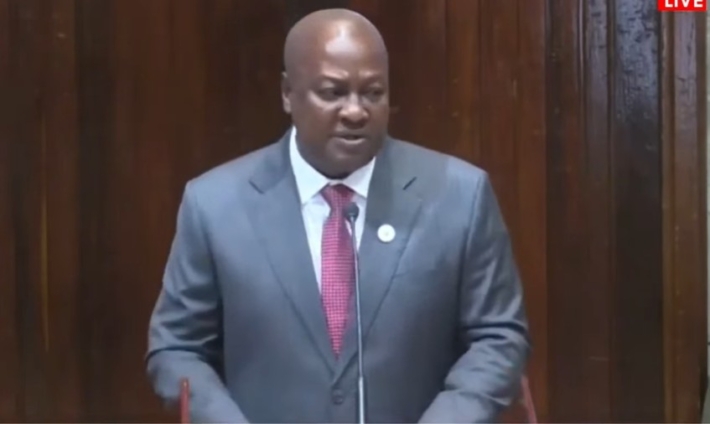
I am deeply honoured to address this august House and to convey warm fraternal greetings from the Government and people of the Republic of Ghana.
I wish, at the outset, to express my profound appreciation for the gracious hospitality extended to me and my delegation since our arrival in the beautiful city of Lusaka.
This visit reaffirms the enduring bonds of friendship and solidarity between Ghana and Zambia—bonds forged during the historic struggle for Africa’s political emancipation under the visionary leadership of our founding fathers, Osagyefo Dr Kwame Nkrumah and Dr Kenneth David Kaunda. Their shared Pan-African conviction, sacrifice, and courage laid the foundations on which our two nations, and indeed our continent, continue to build.
Ghana’s historic support for Zambia’s liberation struggle is well documented, and generations of Zambian freedom fighters were shaped by Pan-African ideals fostered at institutions such as the Kwame Nkrumah Ideological Institute in Winneba. Today, our friendship remains grounded in mutual respect, shared democratic values, and a common aspiration for peace, development, and African dignity.
Rt. Honourable Speaker,
The responsibility of our generation is clear: to translate historic solidarity and political goodwill into concrete economic and social dividends for our peoples. Our forebears won us independence and nationhood. Now we must win the fight for economic transformation and prosperity for our people.
We must confront the battle for the economic emancipation of our countries at a time when global geopolitics is undergoing tectonic shifts. Today, global humanitarian assistance is shrinking. Official development assistance is declining, defence spending is rising, and traditional multilateral systems are under strain.
Africa, therefore, faces a different pandemic—the pandemic of unfulfilled potential. Millions of young people remain unemployed; health systems are fragile; and economies extract wealth without building capacity.
Madam Speaker,
Africa must confront this changing reality with transparency and pragmatism. Only days ago, I had the opportunity to address global leaders in Davos, where I spoke about the Accra Reset Initiative and the urgent need for Africa to redefine its development trajectory.
Too many African countries remain trapped in what I describe as triple dependency:
⦁ Dependency on external actors for security choices;
⦁ Dependency on donors for health and education systems; and
⦁ Dependency on suppliers of critical minerals while capturing little or no value.
This condition undermines genuine sovereignty. History teaches us, however, that a crisis can sharpen resolve. Africa must take its destiny into its own hands.
The Accra Reset does not seek to disrupt global partnerships. The Accra Reset advocates the forging of new partnerships to transform global systems that have been rigged against Africa and much of the global south for a long time. We must reset the narrative through unity of action, self-reliance, and the leveraging of our comparative advantages for industrial growth and economic transformation.
Madam Speaker,
We demand a redesign of outdated governance systems, including greater representation in global institutions such as the UN Security Council. We are calling for a rejigging of the global financial system that keeps Africa in poverty and debt. While we must work collectively to achieve these objectives, much depends on how we act locally. Leadership is fundamental to achieving the Accra Reset’s goals.
In Ghana, we are taking action to change our narrative. Since my return to office one year ago, my administration has been guided by a clear, pragmatic Reset Agenda focused on economic recovery, macroeconomic stability, job creation, and inclusive growth.
This approach is anchored in fiscal discipline, productive investment, good governance, and strengthened regional cooperation. We have chosen execution over excuses. We have reduced the size of government to 58 ministers and deputy ministers, including regional ministers. We are digitalising public services to fight corruption. We are investing in skills for the future— digital, green, and industrial skills.
We have restructured debt to invest in people, not just to service loans. This is what “Resetting Ghana” means, and it is delivering results. I am pleased to note that Ghana has made tangible progress. Inflation has declined sharply from over 23.4% at the end of 2024 to 3.8% in January 2026. Currency stability has been restored, with the Ghanaian cedi appreciating by 32% and ranking among the five best-performing currencies in 2025. We have successfully renegotiated our debt obligations on terms that safeguard our national sovereignty and ensure sustainability, and we are steadily exiting the IMF’s Extended Credit Facility with dignity as partners, not as supplicants.
These reforms are not merely national achievements; they contribute to regional confidence and integration. In this regard, Zambia is a natural partner. The complementarities between our economies—notably in mining, agriculture, energy, and manufacturing—present compelling opportunities for joint ventures, value-chain development, and expanded bilateral trade.
Rt. Hon. Speaker,
To achieve economic transformation, Africa must not be ashamed to leverage its comparative advantage in natural resources. Africa must exercise greater sovereignty over its natural resources if it is to create prosperity for its people.
The era of parceling out large-scale concessions to speculators who then flip them for huge profits must end. We have the know-how; the technology and capital are available. Indigenous companies must be encouraged to participate in the extractive sector. We must support our indigenous private sector to capture the commanding heights of our economies.
In Ghana, mining and the extractive sector play a significant role in our economy. Much like Zambia and other African countries, we are a source of critical minerals like gold, bauxite, and manganese, yet very little value is added to them locally. My country is changing that narrative. Ghana established the Gold Board in April last year to take control of and regulate gold exports. The Gold Board was given sole authority to export gold out of Ghana.
Since the board's establishment, gold exports from the artisanal and small-scale mining sector have increased from 63 tons to 104 tons over the past 10 months. This has earned Ghana over
$10 billion in forex inflow over the period.
We are taking steps to domesticate the value addition of our minerals. The Board has recently signed an agreement with a local gold refinery to refine about 1 ton of gold per week, rather than exporting raw Dore gold. We aim to commence local processing of our manganese and bauxite as well, instead of exporting the raw ores. We have also replaced the flat-rate royalty system for minerals with a sliding scale from 5% to 12%, depending on the international market price of the mineral.
Rt. Hon Speaker,
In Dubai this week, I attended the launch of the Global African Investment Summit. This initiative, led by Akin Adesina, former President of the African Development Bank, and a few collaborators, seeks to find new ways to leverage the continent’s natural resource endowment to raise more affordable financing to support Africa's economic transformation. This is an exciting initiative and has the potential to unlock enormous financial resources for Africa’s development.
As the African Union (AU) champion of African financial institutions, I am leading advocacy for the repatriation and investment of part of Africa’s huge foreign reserves in African Financial Institutions. Most of these foreign reserves are by colonial construct held in Western financial institutions and, in most cases, generate no interest. If 30% of these reserves were repatriated and invested in our own financial institutions, it would create an immense pool of wealth that could drive rapid infrastructural expansion and economic growth.
No African country can survive in isolation. We must build regional prosperity platforms— shared manufacturing zones, integrated energy grids, and digital infrastructure. We must negotiate with one voice on minerals, trade, and climate finance. Unity must be our strategy, not just our slogan.
Madam Speaker,
A critical factor in changing Africa’s story is governance and leadership. Africa needs and deserves transparent and accountable leadership. The institutions and laws to fight corruption must be allowed to operate without fear or favour. Abuse of public trust must be punished. We must protect public resources and use them efficiently for the good of our people.
As President Obama said during a visit to Ghana, “Africa does not need strongmen, it needs strong institutions.” We must build our democratic institutions to be independent and efficient. Parliament and the judiciary must work independently in the public interest. Leaders must respect the oath they swear to respect the Constitution.
In our sub-region of West Africa, democracy is backsliding with a return to military dictatorships. Ghana, however, is on a mission to prove that democracy works. Our people can achieve prosperity and opportunity under a constitutional democracy.
Rt. Hon. Speaker
I commend the efforts of the Government and people of Zambia to stabilise your macroeconomic environment. The improved performance of the Zambian Kwacha and the ongoing reform agenda send positive signals to investors and regional partners alike. Ghana looks forward to deepening trade, investment, and financial cooperation with Zambia to reinforce resilience and shared prosperity.
Ghana follows Zambia’s democratic journey with keen interest and confidence. As Zambia prepares for general elections in August 2026, we express our trust in the strength of your democratic institutions and the commitment of the Zambian people to peaceful, free, and fair elections.
It is in this spirit that Ghana and Zambia have revitalised the Permanent Joint Commission for Cooperation, providing a structured, results-oriented framework for collaboration across priority sectors, including trade and investment, energy, tourism, mining, agriculture, education, science and technology, youth development, and defence cooperation.
This afternoon, we have signed 10 Memorandums of Understanding as the framework for our cooperation. Prominent among these is the MOU to allow visa-free travel for all categories of passport holders between Ghana and Zambia. This is an important step towards the free movement of our people on the African continent.
Peace and security remain indispensable foundations for sustainable development. Ghana values our cooperation with Zambia in defence training, intelligence exchange, and peacekeeping, and we remain committed to strengthening collective security across our continent.
Madam Speaker
Equally important is the quest for justice, restoration, and dignity. The African Union’s 2025 theme—Justice for Africans and People of African Descent through Reparations—is both a moral imperative and a forward-looking call to action. As the African Union Champion for Reparations, Ghana will shortly sponsor a United Nations resolution on slavery, and we would be honoured to count Zambia among its co-sponsors.
Rt. Honourable Speaker,
I am also addressing you this afternoon in my capacity as the African Union Champion for Gender and Development. Ghana has moved beyond symbolism to action. We have elected our first female Vice President and operationalised the Affirmative Action (Gender Equity) Act, mandating a minimum of 30 per cent female representation in public appointments.
Our Reset Agenda includes establishing a Women’s Development Bank to unlock financing for female-led enterprises. But this is a continental struggle. I urge us to advance together toward the Decade of African Women’s Financial and Economic Inclusion. When we invest in women, we accelerate national development.
Madam Speaker,
The future is African. The African Continental Free Trade Area offers an unprecedented opportunity to boost intra-African trade, promote value addition, and accelerate industrialisation. Ghana remains committed to working closely with Zambia to reduce trade barriers, harmonise standards, and stimulate private-sector partnerships.
Our people are the true custodians of this partnership. The presence of Ghanaians in Zambia and Zambians in Ghana enriches both societies. Africa’s demographic dividend, projected to account for a quarter of the world’s population by 2050, demands investment in skills, innovation, and representation in global governance.
Rt. Honourable Speaker, Honourable Members,
I thank you sincerely for the honour of this invitation. Ghana remains steadfast in its commitment to strengthening cooperation with Zambia, guided by implementation, mutual respect, and shared destiny.
Zikomo.
May God bless the Republic of Zambia. May God bless the Republic of Ghana. And may Africa continue to rise.
Latest Stories
-
At least 30 feared dead in crush at Haitian tourist site
1 hour -
Four arrested over murder of Scottish businessman in Kenya
1 hour -
New Mainoo deal closer, says Man Utd boss Carrick
1 hour -
Sinner beats Alcaraz to return to world top spot
2 hours -
An inappropriate joke nearly ended his career. Now he’s back with more humour
2 hours -
GPL 2025/26: Dreams FC stage stunning comeback to hammer Eleven Wonders
3 hours -
Livestream: The Probe examines Kumasi’s looming water crisis
3 hours -
MTN Ghana gears up to lead Africa’s AI revolution
3 hours -
Philanthropist Alhaji FuZak donates Da’wah bus to Ambariya Sunni community
3 hours -
GUTA calls for suspension of Publican AI system over trade disruptions
3 hours -
TTAG raises alarm over proposed recruitment of 7,000 teachers, demands national posting roadmap
4 hours -
Civilians feared killed after reports of air strike on Nigerian market
4 hours -
Bishop Simon Kofi Appiah installed as new Jasikan Diocese Bishop
4 hours -
Trump’s Strait of Hormuz blockade threat raises risks and leaves predicaments unchanged
4 hours -
US Court backs extradition of former MASLOC CEO Sedina Tamakloe-Attionu to Ghana
4 hours