

Audio By Carbonatix
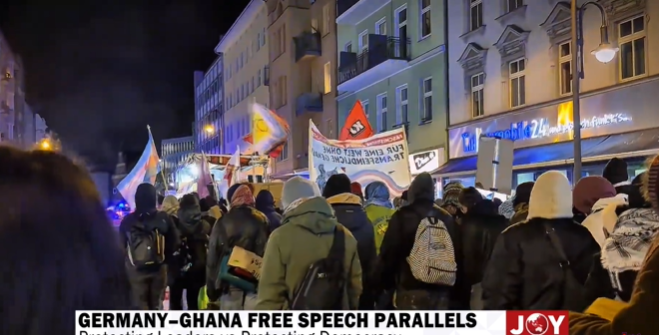
At a meeting with legal scholars in Berlin, JoyNews’ Jacqueline Ansomah Yeboah explores how Germany balances free speech, hate speech, and political accountability and what lessons Ghana can draw from Section 188 of Germany’s Criminal Code.
Germany is widely regarded as one of Europe’s strongest democracies, yet even here, defining the limits of free speech remains a constant struggle. During a session at the Freie Universität Berlin, Professor of public law, Torben Ellerbrok, examined how far citizens can go in criticising political leaders and where the law steps in.
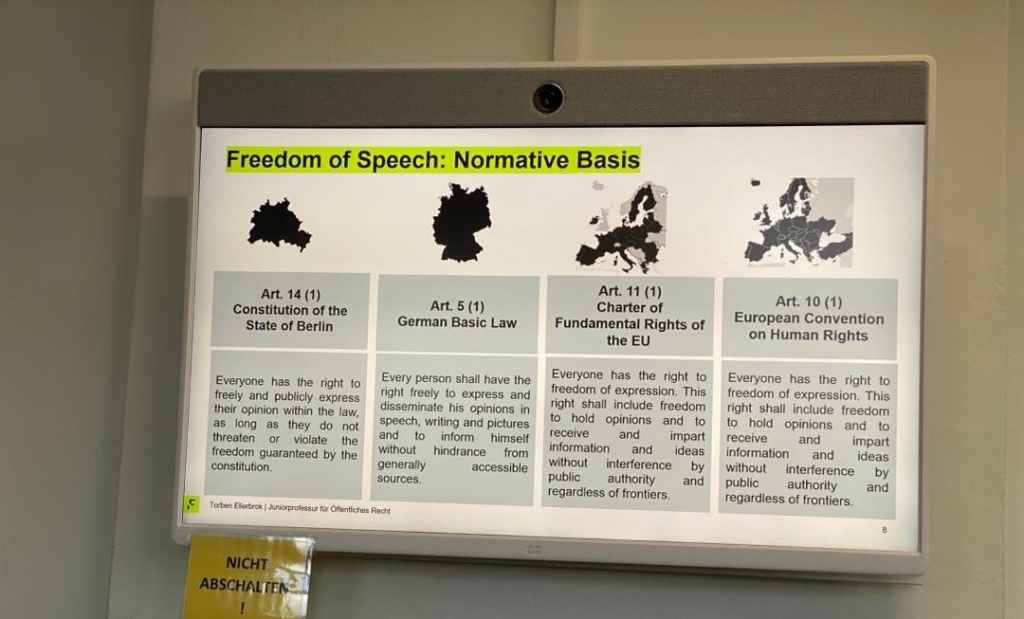
A key part of that debate is Section 188 of the German Criminal Code, which makes it a criminal offence to publicly insult a political figure if the attack could obstruct their work. The penalty: a fine or up to three years in prison.
To understand its implications, JoyNews engaged Professor Torben Ellerbrok, a leading expert in Public Law.
He acknowledges the complexity: “Freedom of speech must be guaranteed for everyone. Political leaders have to be criticised, that’s essential to democracy. But they are human as well. Criminal law can help, but we must focus on protecting free speech first,” he said.
Prof Ellerbrok noted that Germany still struggles to draw a clear boundary between harsh democratic criticism and hate speech. In his words, “The line is thin and it hasn’t been fully drawn.”
Could Section 188 Work in Ghana?
Ghana’s political culture is vibrant, emotionally charged and often polarised. The idea of criminalising insults against political leaders raises difficult questions.
In response to JoyNews’ question on whether a law like Section 188 could work in Ghana, Prof Ellerbrok warned that such laws risk being misused if the boundaries are unclear.

He explained that democracies should prevent hate speech “not aggressively, but in clear situations where legal action is justified.” Anything beyond that, he said, risks criminalising public frustration a crucial part of democratic accountability.
A Growing Global Challenge
Germany’s debate is not happening in isolation. Across Europe, the rise of online abuse, misinformation and political hostility is pressuring the governments to rethink how they regulate speech, especially toward public officials.
But Professor Ellerbrok’s caution is clear: protecting leaders must never come at the expense of citizens’ right to challenge power.
The Lesson for Ghana
For Ghana, a young but resilient democracy, the German experience offers a warning and a guide:
• Hate speech must be addressed, but definitions must be clear.
• Protection of leaders must not become protection of the political class.
• Free speech, even when uncomfortable, remains fundamental.
• Any legal intervention must strengthen, not weaken, democratic accountability.
As Ghana continues to confront abuses, polarisation and rising digital misinformation, the debate Germany is currently wrestling with may soon become ours as well.
Latest Stories
-
Man City suffer as PSG masterclass sets up Champions League win
1 hour -
Customer Service Africa CEO urges business leaders to observe staff and customer interactions
1 hour -
On night of mayhem for Liverpool, Barcola arrives in style
1 hour -
Muzic Mensah finds healing and renewed love in new single ‘WayƐ Late’
2 hours -
FIFA to offer extra £2.6bn for football development
2 hours -
Government backing is no EPA permit – Authority warns GoldBod, ministries
2 hours -
Real Madrid produce stunning late fightback to down Roma
2 hours -
EPA orders immediate halt to unpermitted reclamation and dredging nationwide
2 hours -
Afenyo-Markin’s lawsuit against Sammy Gyamfi takes focus away from development – Kpebu
2 hours -
FWSC urges media to guard against misinformation in proposed IPEC transition
2 hours -
MoMo Fest 2026: Shatta Wale to Rock Accra Stadium on October 17
2 hours -
GTEC’s letter directing public universities to reopen by October 16 is unprofessional – GAUA
3 hours -
Suspect in viral video assaulting wife jailed for 3 months
3 hours -
GAUA insists strike will end only after Fair Wages addresses market premium issue
3 hours -
Kpemka seeks compensation as he sues BOST over alleged unlawful termination
3 hours