

Audio By Carbonatix
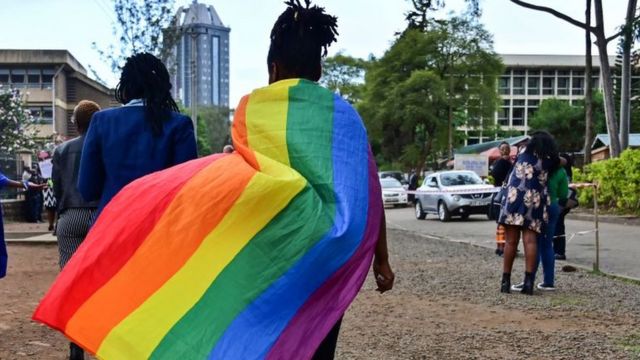
A Senior Programmes Officer, Human Rights and Social Inclusion at the Centre for Democratic Development (CDD-Ghana), Michael Augustus Akagbor, has questioned Ghana’s negotiating power on the international stage as the contemplates the passage of a new anti-gay bill.
Speaking on JoyNews’ PM Express on Tuesday, he explained the need for Ghana to assess its position and influence on the global level before making certain decisions.
His comments comes after the US Ambassador to Ghana, Virginia Palmer, said Ghana would face severe economic challenges should the bill banning lesbian, gay, bisexual, transgender, queer (LGBTQ+) activities be passed.
However, proponents of the Promotion of Proper Human Sexual Rights and Ghanaian Family Values Bill highlighted the hypocrisy on the part of the United States of America, noting that the USA still trades with Saudi Arabia despite their stringent laws against the practice of LGBTQ+.
In response, Mr Akagbor stated that there is a stark contrast between Ghana and global giants like Saudi Arabia.
Citing an example, he said, “Saudi Arabia could decide today to say, ‘we are going to cut back on how much oil we produce’ and the whole world will feel the pinch.
“Can we do same in Ghana?” he quizzed.
The Programmes Officer further cautioned against misleading comparisons, drawing attention to the economic impact that Uganda suffered after going ahead to pass one of the strictest anti-gay laws in recent times.
"Last year, we had $800 million from AGOA [African Growth and Opportunity Act], we have projected $800 million for next year and 2025. So we tend to lose $1.6 billion of the AGOA transaction and that will be a huge money to lose," he said.
He highlighted the differences between Ghana’s practice of democracy and Saudi Arabia’s theocratic system.
This distinction, according to him, is crucial especially when evaluating how each nation manages itself and engages in international discourse.
The MP for Ningo-Prampram, Sam George who is a major advocate of the anti-LGBTQ bill maintained that Ghana would lose nothing should the USA decide to cut business after the passage of the bill into law.
According to him, the US benefited more from trade relations with Ghana therefore any such legislation to end trade was to their disadvantage.
Latest Stories
-
Former ‘American Idol’ contestant sentenced to life without parole for wife’s murder
59 minutes -
Education Ministry commends Ghanaian teachers on World Teachers’ Day 2026
1 hour -
NPP can reconcile with aggrieved members who want to return – Nana Akomea
2 hours -
Tamale Child Deaths: Vehicle owner arrested as IGP deploys homicide team
2 hours -
From ShattaFest to MoMo Fest: Entertainment takes centre stage in youth engagement
2 hours -
Nigerian military aircraft crashes, killing 32
2 hours -
MTN encourages Ghanaians to use MoMo for saving, investing and financial planning
2 hours -
Absa Bank Ghana names Stephen Ato Frimpong as Board Chair
2 hours -
Pickford ‘almost caused crash’ with careless driving
2 hours -
Author and former politician Jeffrey Archer dies aged 86
2 hours -
No education reform can succeed without teachers – Education Ministry
2 hours -
Gauff condemns racist abuse after China Open win
3 hours -
Medvedev disqualified for hitting spectator with ball
3 hours -
Oliseh scores twice in late comeback win for France
3 hours -
Pentagon stops using Anthropic AI tools after blacklisting company, BBC told
3 hours