

Audio By Carbonatix
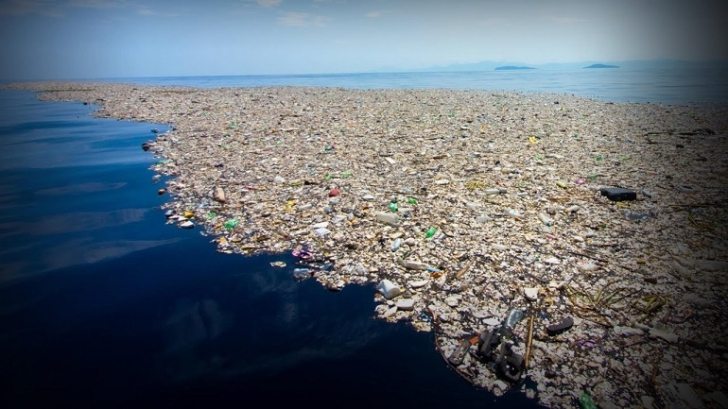
Leading research institutes have sounded a clarion call for a cohesive national strategy to tackle Ghana’s escalating plastic pollution crisis, which is severely damaging marine ecosystems and livelihoods.
The Centre for Environmental Management and Sustainable Energy (CEMSE) and the Institute of Statistical, Social and Economic Research (ISSER) hosted a pivotal stakeholder engagement on September 3, 2025, at the University of Ghana, Legon, under the theme “Understanding the Challenges and Policy Dynamics on Plastic Pollution and Marine Litter Management in Ghana.”
In an exclusive interview on the sidelines of the engagement, the Executive Director of CEMSE, Benjamin Nsiah, outlined the alarming situation and the intended path forward.
“In recent times, we realized that plastic pollution is becoming very hazardous to our environment, especially our marine ecosystem, and this is causing certain disadvantages to livelihoods and also causing certain havoc within the environmental space, especially flooding and other areas,” he stated.
Mr. Nsiah lamented the lack of substantial discourse on the issue “within the policy level, within the advocacy level, and also within the environment space or civil society space.”
He revealed that the engagement was a first step to “identify the major challenges within the space and also prefer appropriate solutions to this particular problem once and for all.”
A key outcome of the dialogue will be a comprehensive report to be presented to the Ministry of Environment, Science, and Technology and the Ministry of Energy and Green Transition by October.
“We are doing so because we think that we can also, in the future, convert this waste into energy. And that also informs using one stone to kill two birds,” Mr. Nsiah explained, highlighting the potential for job creation in the waste collection value chain and promoting sustainable cities.
A central policy proposal involves using fiscal measures to change consumer behaviour. “We think that plastic is very cheap in Ghana. And because it's cheap, everyone gets it at zero cost, and so people just give it anyhow,” he noted. “So we can use a fiscal policy to also address… if you make plastic very expensive, it can become a single-use thing whereby at any time we don't even get it free… it will change behavior.”
Echoing the need for a strategic approach, he emphasised the necessity of a clear roadmap over an outright ban.
“It is important to not just talk about banning, but to talk about a way of ensuring that if that material is in the system, it is controlled so that it does not cause any pollution,” the expert advised.
Mr. Nsiah advocated for a phased transition: “So gradually we phase out plastic so it should be a phasing-out process… give a time frame to phase it out and bring in biodegradable, you know, materials into the system… And I think when we use such language, it gives more confidence, which means it's a process that we are going to go through to get there.”
Professor Simon Bawakyillenuo, Head of the Social Division at ISSER, provided a stark assessment of the current state of Ghana’s waters.
“Statistically, we really don't have enough information yet. We can see anecdotally that the water bodies are no longer like what we need,” he said. “Fishermen are actually now catching… plastics in their nets, rather than fish? And they are not only that, but they also have very low fish stocks. And so it's really something that is an alarming situation.”
Prof. Bawakyillenuo also called for policy consistency across political administrations, criticising the reversal of effective policies for political gain.
“For me, governance is in continuum… what the citizens of Ghana actually need is the very good sort of policies and laws that are in place by one regime and another one can continue with,” he argued. “You don't need to reverse it to score a point, but just continue and make sure that you can even show the evidence of how you have sustained that policy.”
The consensus among stakeholders is that Ghana requires a multi-faceted strategy combining economic incentives, command-and-control measures, and a clear, phased roadmap to replace conventional plastics with biodegradable alternatives, all while developing the capacity to convert existing waste into energy.
The findings from the engagement are expected to critically inform the nation’s approach to overcoming this environmental emergency.
Latest Stories
-
Anti-LGBTQ Bill: NDC’s arrogance is worrying – Hassan Tampuli
9 minutes -
Let’s give OSP time to mature, not to scrap it – Hassan Tampuli
13 minutes -
Nigeria convicts 386 Islamist militants in mass trials
18 minutes -
Djibouti president wins election with 97.8% of vote, state media says
23 minutes -
We don’t have mandate to deduct tax from rent allowance of security services personnel – Interior Ministry clarifies
37 minutes -
Ablakwa receives Presidential Special Envoy on Reparations to advance global agenda
55 minutes -
Christina Koch becomes first woman to travel around the moon on Artemis II
1 hour -
Epstein survivors’ calls to meet King Charles and Queen harder to ignore as US visit approaches
1 hour -
UN Secretary-General names Ghana’s Anita Kiki Gbeho as South Sudan envoy
1 hour -
Mali withdraws recognition of Sahrawi Republic, backs Morocco’s autonomy plan
1 hour -
Gov’t distributes over 8,500 laptops to One Million Coders project
1 hour -
Julius Debrah, ‘man to beat’ as NDC’s James Agbey dismisses Musah Dankwah’s polls
1 hour -
GPRTU in Savannah Region to protest alleged eviction in Damongo
2 hours -
Re: Reinsurance does not replace process — A response to the SIGA–SIC defence
2 hours -
Gender Ministry supports Harriet Amuzu in ongoing abuse case
2 hours