

Audio By Carbonatix
Ghana will join the international community on March 3 to commemorate World Wildlife Day (WWD) 2026 under the theme “Medicinal and Aromatic Plants: Conserving Health, Heritage and Livelihoods.”
In a press release issued by the Forestry Commission, the Commission highlighted the critical role medicinal and aromatic plants (MAPs) play in traditional medicine, healthcare delivery, biodiversity conservation and local economic development.
Foundation of Global Healthcare
Citing the World Health Organization, the Commission noted that medicinal and aromatic plants form the foundation of many healthcare systems worldwide.
Numerous active pharmaceutical compounds are derived from natural plant sources, underlining the continued reliance of modern medicine on botanical resources.
Beyond their therapeutic value, MAPs contribute significantly to ecosystem stability. They help to stabilise soils, sustain pollinators such as bees and hummingbirds, and promote biodiversity — functions that are increasingly vital in the face of climate change and environmental degradation.
Ghana’s Rich Resource Base
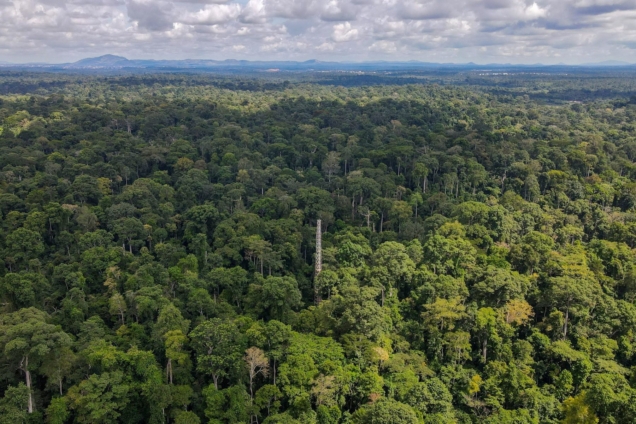
Ghana’s forests and savannah landscapes are particularly rich in valuable medicinal and aromatic plants. These species are widely used in food preparation, cosmetics and traditional medicine to treat a broad range of ailments.
For many forest-fringe communities, MAPs are not only central to cultural heritage and indigenous knowledge systems but also represent an important source of livelihood.
The Forestry Commission emphasised that these plants remain indispensable to human health and ecological balance.
However, the sustainability of these resources is under mounting threat. Over-harvesting, habitat destruction, illegal trade, bush burning, illegal logging and illegal mining — commonly known as “galamsey” — are placing intense pressure on plant populations.
Without deliberate conservation and replenishment efforts, several medicinal plant species risk depletion, with potential consequences for biodiversity, healthcare systems and economic stability.
Strengthening Conservation and Governance
The Wildlife Division of the Forestry Commission, mandated to ensure the sustainable management and development of Ghana’s wildlife and habitats, currently manages a wildlife estate comprising seven national parks, six resource reserves, two wildlife sanctuaries, one strict nature reserve, five coastal wetlands and two zoological gardens.
Through public education, promotion of ecotourism, law enforcement, research and livelihood support initiatives, the Division has been working to ensure that ecosystems remain viable and that plant and animal species — including medicinal and aromatic plants — continue to thrive.
The Division is also drafting a Legislative Instrument to support the effective implementation of the Wildlife Resources Management Act 2023 (Act 1115).
The instrument is expected to clarify procedures relating to protected area management, wildlife trade regulation, governance structures, licensing and permitting processes, and to strengthen the Community Resource Management Area (CREMA) system.
In line with its revised mission statement — “To Protect, Sustainably Manage and Develop Ghana’s Forest and Wildlife Resources” — the Commission has intensified efforts to combat illegal mining, illegal logging and other destructive practices.
Rapid Response Teams and Resource Guards are being equipped with improved logistics, tools and training to enhance enforcement capacity.
Forest restoration programmes are also underway, including plantation development under the Modified Taungya System (MTS) and enrichment planting schemes aimed at rehabilitating degraded landscapes.


Call for Compliance and Investment
As part of the WWD 2026 commemoration, the Forestry Commission has urged all individuals and companies involved in the use, sale, export and import of medicinal and aromatic plants, as well as the production of herbal and traditional medicines, to operate strictly within national laws and international conventions — particularly the Convention on International Trade in Endangered Species of Wild Fauna and Flora (CITES).
The Commission further encouraged private sector investment in the cultivation of MAP plantations to reduce pressure on natural reserves while delivering socio-economic benefits to local communities.
National Durbar at Kakum National Park
The national celebration durbar for WWD 2026 will be held in the Central Region at Abrafo, with a special focus on Kakum National Park — the most visited protected area in Ghana.
The park is famed for its iconic 333-metre canopy walkway suspended between 27 and 40 metres above ground and boasts a rich diversity of medicinal and aromatic plant species within its forest ecosystem.
The event will feature a quiz competition among local senior high schools, exhibitions and awards, underscoring the importance of environmental education and youth engagement in conservation.
A Renewed Call to Action
World Wildlife Day 2026, the Commission stated, represents a renewed national call to conserve Ghana’s invaluable natural heritage to ensure that medicinal and aromatic plants continue to sustain health, heritage and livelihoods for present and future generations.
The Forestry Commission has called on traditional healers and herbalists, traditional authorities, municipal and district assemblies, civil society organisations, non-governmental organisations, the media, hunters and the general public to collaborate in safeguarding Ghana’s plant and animal species.
Latest Stories
-
Anti-LGBTQ Bill: NDC’s arrogance is worrying – Hassan Tampuli
4 minutes -
Let’s give OSP time to mature, not to scrap it – Hassan Tampuli
8 minutes -
Nigeria convicts 386 Islamist militants in mass trials
13 minutes -
Djibouti president wins election with 97.8% of vote, state media says
18 minutes -
We don’t have mandate to deduct tax from rent allowance of security services personnel – Interior Ministry clarifies
32 minutes -
Ablakwa receives Presidential Special Envoy on Reparations to advance global agenda
50 minutes -
Christina Koch becomes first woman to travel around the moon on Artemis II
1 hour -
Epstein survivors’ calls to meet King Charles and Queen harder to ignore as US visit approaches
1 hour -
UN Secretary-General names Ghana’s Anita Kiki Gbeho as South Sudan envoy
1 hour -
Mali withdraws recognition of Sahrawi Republic, backs Morocco’s autonomy plan
1 hour -
Gov’t distributes over 8,500 laptops to One Million Coders project
1 hour -
Julius Debrah, ‘man to beat’ as NDC’s James Agbey dismisses Musah Dankwah’s polls
1 hour -
GPRTU in Savannah Region to protest alleged eviction in Damongo
2 hours -
Re: Reinsurance does not replace process — A response to the SIGA–SIC defence
2 hours -
Gender Ministry supports Harriet Amuzu in ongoing abuse case
2 hours