

Audio By Carbonatix
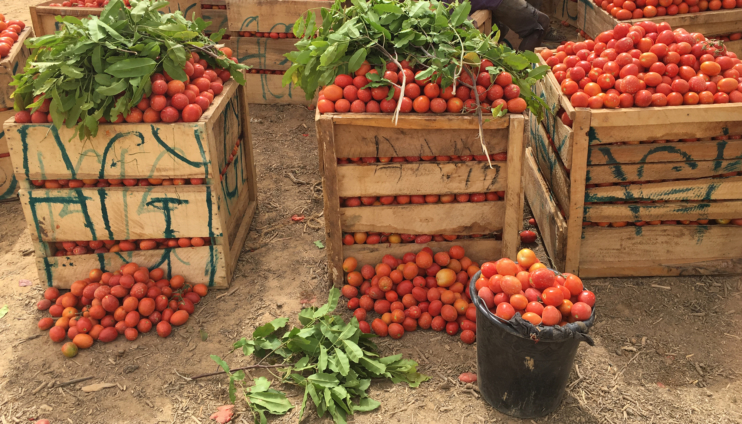
Despite years of investment in greenhouse technology and controlled-environment agriculture, Ghana remains unable to achieve self-sufficiency in tomato production, the Peasant Farmers Association of Ghana (PFAG) has said.
The Executive Director of PFAG, Bismark Owusu Nortey, expressed concern that the country’s greenhouse projects have yet to translate into sustainable, year-round tomato production.
Speaking on Joy FM’s Midday News on Monday, February 23, he said structural bottlenecks continue to limit farmers’ ability to produce consistently and at scale.
“It’s unfortunate that over the years of investment in greenhouse facilities for tomatoes, we are still not able to be self-sufficient in the production of that crop,” he said.
His comments come amid rising tomato prices across several markets in Accra following last week’s deadly attack on Ghanaian traders in neighbouring Burkina Faso. Market women say the disruption in cross-border supply has triggered shortages, pushing prices upward and leaving many consumers struggling to cope with the increasing cost.
Mr. Nortey identified the absence of industrial tomato processing factories as a major gap in the agricultural value chain. Without processing plants to absorb excess produce during peak seasons, farmers lack incentives to invest in continuous production.
“We do not have industrial tomato processing factories where we can create a system for farmers to produce all year round to feed those industries,” he explained.
He noted that the lack of processing capacity not only leads to waste during bumper harvests but also discourages farmers from expanding operations beyond seasonal farming.
According to him, achieving self-sufficiency requires more than greenhouse infrastructure. It demands coordinated investment in irrigation systems, storage facilities, seed development, and agro-processing industries.
He stressed that until these interconnected challenges are addressed, Ghana will continue to depend on imports during lean seasons — a situation that exposes the country to external market shocks and price volatility.
Mr. Nortey called for a comprehensive agricultural strategy that links production, storage, and processing to ensure sustainable growth and food security.
Latest Stories
-
Church of Pentecost supports over 2,000 BECE candidates in Obuasi with career guidance seminar
8 minutes -
Brandon Asante and Coventry all but promoted to Premier League despite Sheffield Wednesday draw
30 minutes -
GPL 2025/26: Late Kwartemaa strike downs Hearts in Tema
36 minutes -
Ghana Faces Sierra Leone Moment as Prosecutorial Powers come under strain
46 minutes -
Don’t consume fish or seafood from Tema Shipyard until further notice – FDA warns
50 minutes -
Why volunteering might be Africa’s most underrated career accelerator
57 minutes -
ActionAid Ghana raises concern over gender gaps in Feed Ghana Programme
59 minutes -
Windstorm wreaks havoc in Gushegu, displacing nearly 2,000 residents and damaging schools
1 hour -
Friends of Bridget Bonnie Marks her 35th birthday with donation to Kasseh Model Health Centre
2 hours -
From Ekumfi Kokodo to the Pulpit Stage: Essi Donkor’s gospel journey takes shape
2 hours -
Landfilling waste management creates no value, it’s an economic waste
2 hours -
Photos: Speaker Bagbin Commissions MPs constituency office under parliamentary decentralisation programme
3 hours -
Black Stars technical advisor Winfried Schäfer sacked as GFA shakes up backroom staff
3 hours -
Wenchi water project almost complete, critical to gov’t agenda – GWL MD
3 hours -
Anti-LGBTQ+ bill not part of government’s legislative agenda – Inusah Fuseini
3 hours