

Audio By Carbonatix
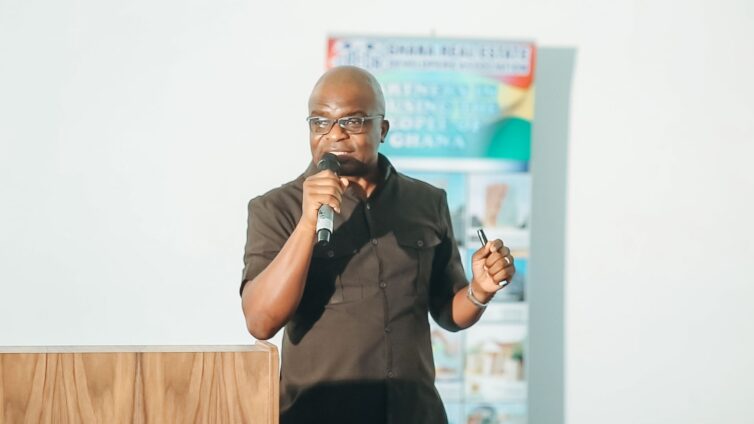
Peter Nii Charway, a Senior Manager at Deloitte Ghana, has asserted that Ghana’s improving economic outlook is presenting fresh opportunities for small and medium enterprises (SMEs) to expand, formalise, and attract investment, following a period of significant macroeconomic challenges.
Speaking during a UK-Ghana Chamber of Commerce (UKGCC) and Deloitte Ghana webinar on “Ghana’s Economic Reset: What it means for Investors and SMEs,” Mr. Charway noted that inflation in Ghana, after peaking at over 50% in 2022, plummeted to approximately 3.3% as of February 2026. Simultaneously, the Ghana Cedi, which faced extreme volatility in 2022, emerged as one of the world's strongest performing currencies in 2025.
According to Mr. Charway, this recovery is being driven by a mix of fiscal consolidation, monetary tightening, debt restructuring reforms supported by the International Monetary Fund, and robust gross international reserves reaching $13.8 billion.
“These developments are critical in restoring investor confidence and creating a more predictable environment for businesses,” he remarked.
For SMEs, the improving conditions present both opportunity and urgency especially in the agriculture, manufacturing, and service sectors of the economy.
He, therefore, urged SMEs to improve financial discipline, maintain proper records, and align their operations with these sectors to benefit from the improved conditions.
“Formalisation and good governance are no longer optional. They are critical for accessing funding and scaling operations,” he noted.
Cedric McAddy, Head of Micro and Small Enterprises at GCB Bank PLC, reiterated the call for formalisation, noting that data-driven transparency allows banks to better understand risk and price credit more appropriately.
Emerging issues and needed shifts
SMEs in Ghana face a diverse of issues ranging from regulatory and policy bottlenecks to weak fundamentals.
Mr. McAddy highlighted that although macroeconomic indicators are improving, access to affordable finance remains a major constraint for SMEs.
Interest rates are still relatively high despite expected declines, and banks continue to price SMEs as high-risk due to weak financial records, lack of collateral, and inconsistent cash flows.
He identified traditional lending models as part of the problem, noting that a shift is needed towards cashflow-based lending, digital transaction assessments, and flexible repayment structures.
Amma Gyampo, CEO of Ghana Venture Capital & Private Equity Association (GVCA), also identified weak business models, limited scalability, and lack of integration into value chains as impediments that inhibit SMEs from reaching their potential.
Furthermore, Madam Gyampo, together with Dr. George Obodum Kusi Asafo-Agyei, Director of Monitoring and Evaluation at the Ghana Investment Promotion Centre (GIPC), noted that about 75% of remittances go into consumption, with less than 20% being directed to SMEs or capital markets.
Panellists called for a shift towards productive, scalable businesses else Ghana risks remaining a consumption-driven (T-Bill) economy.
Cheryl Otoo, Senior Manager at Deloitte Ghana, added that many SMEs are simply unaware of available policies, incentives, and support systems, leading to the underutilisation of opportunities and poor strategic decision-making.
Ms. Otoo urged SMEs to seek advisory support and engage directly with institutions like the Ghana Investment Promotion Centre (GIPC) to position themselves within these growth-ripe sectors.
Positioning for growth in the 24-Hour Economy
According to the panel, Ghana’s economic reset, which leans heavily on the 24-Hour economy policy as a tool to drive productivity, is not enough to position SMEs for growth.
They urged SMEs to align their operations with government priority areas, and called for enterprise quality, financial system adaption, policy effectiveness, and efficiency in capital allocation to reap the most out of Ghana’s economic recovery.
Beyond structural issues facing SMEs, the webinar, moderated by Deloitte Ghana’s George Annang, also explored additional themes including the importance of early business-bank relationships, government’s sector prioritisation strategy, and diaspora engagement as an untapped investment channel.
Latest Stories
-
Trade Minister applauds GUTA as a pillar of economic growth; Prez Mahama honoured
47 minutes -
President’s brother’s takeover of Damang Mines is ‘untidy’ – Alhassan Tampuli
53 minutes -
It’s not true that gov’t decided not to renew the lease for Gold Fields – Bobby Banson
57 minutes -
Ghana to boost tomato production with 60-hectare irrigated farms and processing initiatives
1 hour -
E&P’s takeover process of Damang Mines was very clean – Inusah Fuseini
1 hour -
Damang takeover: There is not going to be any job loss; it is a lease change – Bobby Banson
2 hours -
Gold Fields didn’t stop mining at Damang mines; such claims are untrue – Bobby Banson
2 hours -
Engineers and Planners currently operate only in Ghana – Bright Simons
2 hours -
Lands Minister has no legal basis to restrict lease to Ghanaian firms – Bright Simons
2 hours -
Gov’t’s refusal to renew Gold Fields’ lease was simply untenable – Bright Simons
2 hours -
SOS Children’s Villages Ghana deepens partnership with Gender Ministry
3 hours -
Gender Ministry celebrates Christina Koch, reaffirms commitment to empowering girls
3 hours -
Live stream: Newsfile digs into E&P’s takeover of Damang Mines, OSP powers and Anti-LGBTQ Bill
3 hours -
Moody’s maintains Ghana’s rating at Caa1, revises outlook to positive
4 hours -
Zambia elevates tourism education to national priority as President Hichilema backs continental summit
4 hours