

Audio By Carbonatix
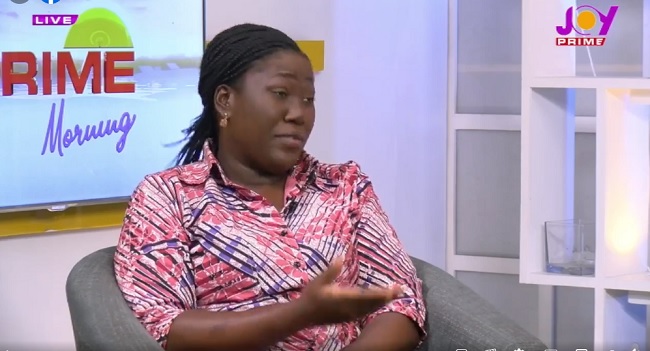
The Conservator of Monuments and site manager of the Ghana Museums and Monuments Board (GMMB), Natalyn Oye Addo, has stated that there's the need for Ghanaians to write their own stories on slavery.
According to her, it will help people gain a better understanding of the slave trade in modern Ghana.
Speaking on Joy Prime’s Prime Morning on Monday, Madam Natalyn Addo said the documentation of slavery in Ghana by foreigners has made it difficult to teach the current generation because the majority of parents do not properly understand the entire concept of slavery.
"Very few people know that there were slave camps, and these slave camps had direct routes linking them to the castles, and then what went on beyond the shores of Ghana?."
"These must all connect for us to get the full view of what the trade was really about. Now, because most of the writing has been done by foreigners, if you’re not reading a history book, then it’s likely you haven’t come across it. Very few people have visited the fort. But the perspective of what we hear from our forefathers through the music and the songs that even the fishermen sing sometimes, and through oral narratives, those ones were not written, and so we can’t pick up a book and say we’re reading our fathers’ point of view on the slave trade," Madam Natalyn Addo explained.
For this reason, she thinks there is a need for historians and other knowledgeable individuals to pen down an original copy of slavery based on the perspective of the very older people in the country.
This will enable parents to teach their children in order to sustain Ghana's history and heritage as generations progress.
"It is for this reason that we’re saying that the value of these forts and castles is outstanding because they have influenced world history for over four centuries... Now it’s time for us to review the literature and look at how they saw whatever they wrote and if that’s the same way we see it."
To help birth the initiative, an exhibition will be held between August 11 and 13 at the Museum of Science and Technology with insightful speakers to engage and lecture individuals on the complex history of slavery in contemporary Ghana.
Latest Stories
-
When the gold engine stutters: What Ghana’s Cedi and reserves are telling us about the new economic architecture
7 minutes -
Two reportedly die after being trapped in mining pit at Juaboso
18 minutes -
Petrosol cleans up Wa Municipal Hospital, to donate medical equipment
19 minutes -
KiDi brings the hits to London in sold-out UK headline concert
46 minutes -
The last goodbye of Ghanaian shot dead in the US
1 hour -
MCC opens door to Ghana again as MiDA revives development partnership
1 hour -
CSIR moves to turn scientific research into jobs, national growth
1 hour -
More patrons troop in as 3rd Republic Bank-JoyNews Habitat Fair clinic enters final day stretch
2 hours -
German, Russian foreign ministers hold rare talks amid rising tensions
2 hours -
Gov’t to develop policy for Ghanaian Sign Language in education
2 hours -
Accra Academy defend ODADEƐ ’90 5-a-side title
2 hours -
Ghana risks EU gas market access over methane emissions – Expert warns
3 hours -
Salt Pond’s $200m warning: Why Ghana cannot afford to exclude Fisheries Commission from future decommissioning
3 hours -
Venezuela frees 39 political prisoners after post-Maduro talks
3 hours -
GoldBod financing model faces test as cedi, reserves come under pressure – Gideon Boako
3 hours