

Audio By Carbonatix
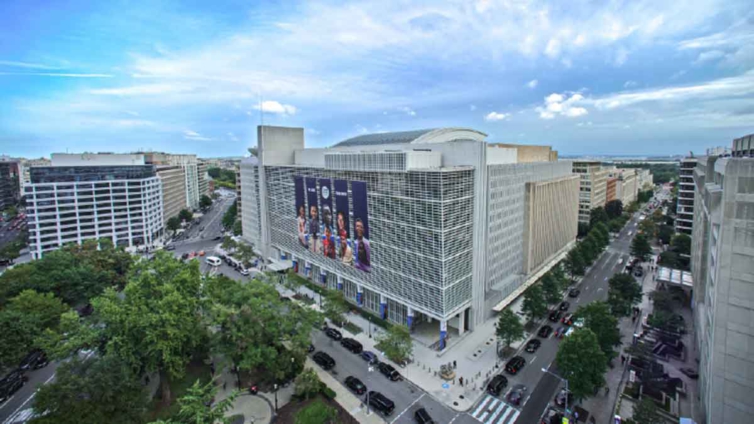
A new World Bank report has revealed that Ghana had accumulated significant government arrears prior to Covid-19 pandemic.
This is far higher than the projected arrears post Covid-19.
The report dubbed “Finance for an Equitable Recovery" indicates that the percentage of the country’s arrears was estimated at almost 5% of the country’s Gross Domestic Product.
This ranked the nation 16th in sub-Saharan Africa with the highest government arrears.
It confirms concerns by some economists and analysts that the country’s fiscal situation was deteriorating prior to Covid-19. This was also heightened by the rising debt.
The report however urged governments including Ghana to mobilize new revenue to pay off debts incurred for the crisis response and preserve their ability to support the Covid-19 recovery, adding, the potential return to economic growth during the recovery will help.
“However, governments must also pursue complementary, longer-term structural policies to increase their revenue base. Most emerging economies, for example, lack the institutional capacity to tax incomes and instead rely primarily on taxing consumption”.
Scaling back the stimulus
The report said resource-constrained governments in the short term face the challenge of scaling back fiscal support to households and firms without dampening the recovery.
“In many countries, direct payments to households and firms have served as the main pillar of the crisis response and were designed to protect the livelihoods of economically disadvantaged groups—such as workers in the informal sector and those in unskilled occupations—and the survival of businesses in the sectors most severely affected by the crisis”.
However, it said, few countries have the resources to maintain these policies in the longer term, and in many cases countries will need to phase out support before economic activity has fully recovered.
Managing risks to financial stability
It also called for continued access to credit for households and businesses, saying, many households and businesses are at acute risk of losing access to formal credit as a result of the COVID-19 crisis.
“Such a loss could dampen the recovery because access to credit is an important insurance mechanism that strengthens the ability of households and firms to weather economic risks that might arise during an extended recovery”, it added.
Latest Stories
-
NAFCO builds GH¢100m food buffer as Ghana moves to strengthen food security
4 minutes -
Oil heads higher as US-Iran peace talks in stalemate
23 minutes -
GAF sets Sept. 28–30 for Documentation, Body Selection Exercise
32 minutes -
I resigned five months ago – BoG Governor Asiama explains GoldBod Board exit
48 minutes -
Trump says men arrested at UK air base used by US were looking to do ‘big damage’
1 hour -
Trump confirms meeting with Anthropic’s Amodei, repeats dismissal of AI fears
1 hour -
China pushes back against US on Iran and Cuba in UN speech
1 hour -
OpenAI, Anthropic CEOs called to appear at Australian AI probe
2 hours -
WHO says Congo Ebola outbreak spreads to two new health zones
4 hours -
Nigeria come from benhind to win in AFCON 2027 qualifier
4 hours -
South African white genocide does not exist, new ambassador to US tells BBC
5 hours -
T-bills auction: Government exceeds target marginally; yield on 91-day bill remains unchanged
5 hours -
Pope says ‘scourge’ of abuse must be rooted out as he visits Lourdes
5 hours -
GPL 2026/27: 10-man Aduana hand Kotoko defeat in Kumasi
5 hours -
News media must stay relevant or ‘society will struggle’, says World News Day boss
5 hours