

Audio By Carbonatix
The government is working to upgrade ageing 2G and 3G mobile infrastructure in rural communities to 4G-capable networks as part of efforts to bridge Ghana’s digital divide, Communications, Digital Technology and Innovations Minister Samuel Nartey George has said.
He said access to a mobile signal was no longer enough, as services such as mobile money, digital agriculture, e-learning and telemedicine increasingly depended on reliable broadband connectivity.
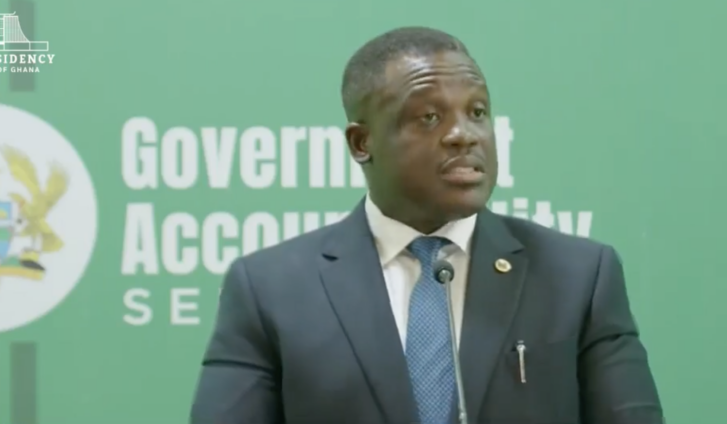
Speaking on Monday, September 7, at the Government Accountability Series at the Jubilee House in Accra, Mr George said many rural and remote communities were still served by legacy networks that could support voice calls and text messages but were inadequate for modern digital services.
“A farmer in a 2G-only community can call the market to ask about prices; she cannot, on that same connection, list her produce on a digital marketplace, receive a real-time weather advisory, or draw down a mobile banking loan,” he said.
Mr George said the Ministry was therefore working with the National Communications Authority (NCA), the Ghana Investment Fund for Electronic Communications (GIFEC) and mobile network operators to upgrade ageing masts and provide the fibre and microwave backhaul needed to deliver reliable broadband services.
He said operators had also been directed to ensure that new rural sites were built 4G-ready, while the retirement of legacy-only equipment would be accelerated in areas where traffic and terrain allowed.
‘Rural Ghana should not wait a generation’
Mr George said the government’s approach was focused not only on extending network coverage but also on ensuring that existing infrastructure in underserved communities was upgraded to support modern digital services.
He said a constituency-level mapping exercise being used to guide new network deployments was helping identify communities where technological upgrades to existing infrastructure were needed, rather than simply adding new coverage.
“Rural Ghana should not be made to wait a generation behind the rest of the country for tools that are transforming how citizens learn, trade, farm, bank and access healthcare,” he stressed.
The Minister said the measures were part of broader efforts to ensure that rural communities could participate fully in Ghana’s digital economy and benefit from technology-driven opportunities.
Latest Stories
-
KGL Foundation commits $200,000 to support juvenile football for the next two years
57 seconds -
UNDP invites Mahama Ayariga to Northern Peace Conference in Tamale
6 minutes -
Afoko can give NPP ‘new identity’ ahead of 2028 to overcome NDC – Political scientist, Dr Amakye-Boateng
20 minutes -
2 injured amid gunshots during raid at Nawara Mining office at Nsuapemso
25 minutes -
St Augustine’s College retains 2026 National Investment Quiz title
29 minutes -
KNUST Nursing and Midwifery School staff recognised at 2026 Health Ministry Excellence Awards
37 minutes -
JoyNews’ Esther Esi Nkrumah selected for UK Media Excellence for Emerging Technology Fellowship
42 minutes -
Five NDC youth organisers in Western Region pay courtesy call on Armah-Kofi Buah
55 minutes -
NACOC demands tighter port controls to prevent Tema Harbour drug trafficking
57 minutes -
Ghana’s startup ecosystem must build sustainability into innovation – Ghana Hubs Network
1 hour -
Friday’s beachfront demolition was carried out at Labadi Beach Hotel’s request, not for flood mitigation – Stan Dogbe
1 hour -
LA 2028: Mukarama returns to Black Queens squad for Olympic Games qualifiers
1 hour -
Fusaini Yakubu Abanga leads NPP National Youth Organiser race with 45% in Global InfoAnalytics poll
1 hour -
Suame Methodist JHS marks 120 years with a call for STEM innovation
2 hours -
Global fashion coalition launches in the heart of Kantamanto Market
2 hours