

Audio By Carbonatix
Ghana is making steady progress towards introducing nuclear power into its energy mix, with support from the International Atomic Energy Agency (IAEA) focused on strengthening the country’s institutional readiness, technical capacity and regulatory systems.
The development reflects growing momentum across Africa as countries seek reliable, low-carbon energy sources to support industrialisation, strengthen energy security and meet rising electricity demand.
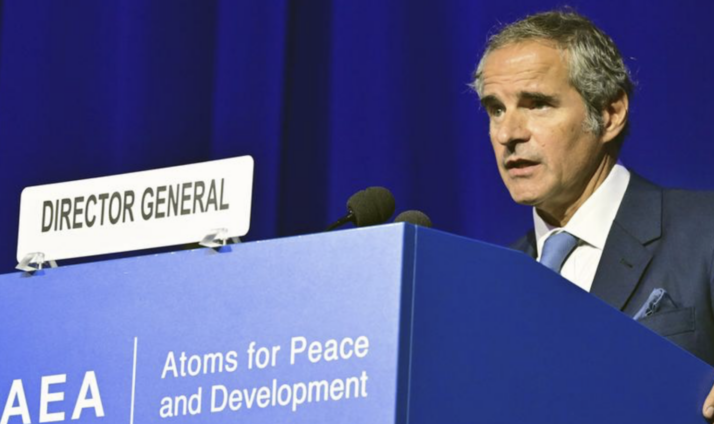
Mr Rafael Mariano Grossi, the Director General of the IAEA, told the Ghana News Agency in Vienna that African countries were increasingly placing nuclear energy at the centre of long-term development planning, with Ghana among the nations maintaining sustained engagement with the Agency.
He cited recent discussions with African leaders and energy ministers on expanding energy options across the continent, adding:”In the case of Ghana, for example, you have been working for quite a while with the Agency.”
Mr Grossi explained that support from the IAEA varied depending on each country’s stage of preparedness for nuclear deployment.
For countries at the early stages, the Director General said IAEA’S assistance focused on technical advisory services, institutional development and capacity building to establish the foundations for a safe, secureand sustainable nuclear programme.
He noted that African countries entered the nuclear journey from different starting points.
“Some have research reactors, for example, and in the continent there are many nuclear research reactors. So you have people who are already quite expert in the functioning of a reactor, people who are experts in radiation protection and so on,” he said.
“Kenya is one story, Ghana is another story, Egypt another. We always look at what is more convenient for that country, taking into consideration the characteristics of the country.”
He said one of the Agency’s key roles was helping countries to make informed choices on technology selection and procurement.
“We advise countries in the bidding process because we are neutral; we do not have any commercial interest in this. Nuclear is a marriage for life,” he said.
“Nuclear power plants operate for close to 100 years. It means several generations will be benefiting from it and working around it. So it is a very consequential decision.”
A major area of IAEA support, he added, was assisting countries to establish independent national nuclear regulators to uphold international standards on safety and security.
Mr Grossi said for countries to further advanced in their nuclear journey, the Agency applied its Milestones Programme-a structured framework that guided governments through successive stages of nuclear infrastructure development based on lessons from decades of global nuclear operations.
Demand for IAEA support in Africa, he said, had intensified and was increasingly translating into concrete projects.
He pointed to the construction of four nuclear power plants in Egypt and renewed expansion plans in South Africa as evidence of a shifting energy landscape on the continent.
The Director General expressed confidence that nuclear energy would play a more prominent role in Africa’s future energy mix.
Regarding Ghana, Mr Grossi said the renewed international recognition of the country’s engagement with the IAEA could strengthen ongoing national discussions on energy diversification, electricity reliabilityand long-term planning to support economic growth.
Ghana planned to construct a 1,000-megawatt nuclear power plant as a base load to secure the nation’s energy future and drive industrialisation, Mr Julius Debrah, the Chief of Staff, said at a recent energy conference.
He disclosed that the Government was in the process of signing a bilateral agreement and engaging local and international partners to construct small modular reactors to boost the transformational agenda.
Ghana has intensified efforts to advance its nuclear power agenda, targeting the completion of Phase Two of the programme and the commencement of preparatory activities for construction within the first term of the current project leadership.
Phase Two of the nuclear power programme focuses on critical groundwork, including site studies, public communication, institutional strengthening and vendor negotiations.
Successful completion of this phase will clear the path for Phase Three, the construction stage, under the IAEA Milestones Approach.
Latest Stories
-
Bawumia urges NPP aspirants to accept results, reunite party after elections
6 minutes -
Double fibre cut disrupts Telecel services, 72,754 subscribers affected
22 minutes -
Bawumia demands probe into financiers behind Ghana-linked cocaine shipments
25 minutes -
Spain beat Czech Republic to maintain winning run
40 minutes -
Ronaldo ‘greatest symbol’ of Portugal – Fernandes
51 minutes -
NPP election: We thank NDC for making the attempt; we never expected them to show up – Karbo says after boycott
57 minutes -
Tennessee prison chief to resign after Christa Pike’s failed execution
1 hour -
Free SHS suffering under NDC gov’t- Dr Bawumia
2 hours -
NSA cannot manage all Ghana’s sports facilities alone – Ampofo Ankrah
2 hours -
MoH announces mop-up recruitment for health professionals
2 hours -
Turn Saltpond history into economic opportunity – Stakeholders
2 hours -
Ampofo Ankrah opens up on ‘constant and unrelenting’ pressure at NSA
2 hours -
I expect to win NPP Vice Chairman race – Nana B
2 hours -
NDC’s failed 24-Hour Economy has become 24-Hour demolition – Dr. Bawumia
2 hours -
Stampede at NPP conference leaves three injured in Kumasi
2 hours