


Audio By Carbonatix
The Minority in Parliament is calling for a drastic government intervention to cushion local manufacturers and exporters in the wake of the ongoing international trade war that has seen a 10% tariff imposition on Ghanaian products to the United States market in response to Ghana's 17% average tariff on USA imports.
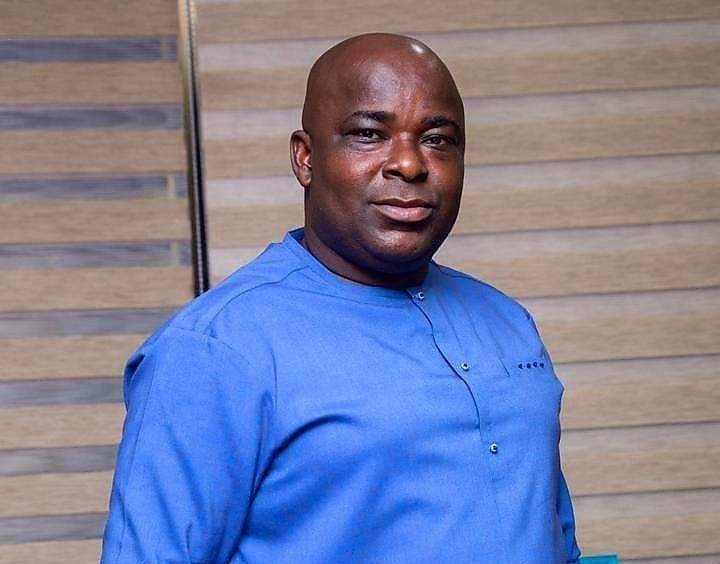
Ranking Member on Parliament's Committee on Trade, Industry and Tourism, Michael Okyere Baafi disclosed that the 10% tariff imposition by the Trump administration on Ghana will affect Ghanaian manufacturers and exporters who enjoyed duty-free exportation on some Ghanaian products on the U.S. market.
In a press statement, the Minority called for trade diversification measures focusing on the AfCFTA and an enhanced diplomatic engagement with the United States government to review or abolish the 10% trade tariff.
Mr Okyere Baafi indicated that, even though it is not clear whether this policy affects Ghana’s participation in the AGOA, its implementation seems to be implicit in its execution.
Currently, Ghana is among the 35 Sub-Saharan African countries that benefit from preferential access to the United States market under the African Growth and Opportunity Act (AGOA), which grants about 6,700 products duty-free status.
Under the arrangement, United States importers of products that are made in Ghana can import these goods duty-free, resulting in enhanced price competitiveness.
These preferences are currently available until the end of September 2025, unless the AGOA legislation is extended or replaced by another arrangement beyond that date.
According to Mr Okyere Baafi, qualifying products under AGOA including textiles and clothing, motor vehicles and parts, many agricultural products (including nuts and yams), leather products, chemicals, wine, travel luggage, machinery and equipment, and many more are likely to be affected by the 10% tariff imposed by the American government.
The New Juaben South legislator hinted that the apparel industry, which employs over 5,000 young people, is particularly vulnerable under this current regime.
"It is important to note that the NPP government placed emphasis and prioritised the implementation of the AfCFTA as a response to some of these trade shocks.
Diversifying our product range to pay critical attention to the export of manufactured products to other African Countries was a major Policy of the NPP government. It is important to note that with the implementation of the 1D1F, Ghana increased the exports of products like iron rods, ceramic tiles and plastics to the ECOWAS Region."
"Unfortunately, we have not seen a clear policy direction on exports by the NDC government. How they respond to this sweeping tariff by the U.S. is very critical to our exporters, especially those in the apparel industry that employ over 5,000 young people."
He added that the NPP government launched and began the implementation of the National AfCFTA Policy Framework and Action Plan, which has seen various SMEs penetrating the AfCFTA market.
The Minority holds the view that the government’s budget as presented by the Minister responsible for finance has played down the importance of the implementation of AfCFTA based on its budget allocation.
He said, the current government has no response to the current tariff slap.
The Minority is therefore recommending to the government to prioritise the implementation of the African Continental Free Trade Area (AfCFTA) to diversify export markets and reduce reliance on the U.S. and, in effect, expand exports of manufactured products to other African countries.
They want the government to take advantage of trade diversion based on retaliatory measures that would be implemented by major trading partners, and also develop specialized programmes and policies to support exporters affected by the tariffs.
The Minority further calls for financial assistance, training, and market intelligence to help exporters adapt to the new trade environment while advocating for the extension or replacement of AGOA to maintain preferential access to the U.S. market.
They also want the government to encourage commodity diversification and reduce reliance on traditional products.
Adding that value in addition to raw materials can increase export earnings, competitiveness and improved local consumption, they argued.
They also called on the government to invest in infrastructure development to reduce transportation costs and improve access to markets.
"The government should provide a clear policy direction on exports and how it plans to respond to the U.S. tariffs. They must feel free to consult for a sustainable strategy for the Ghanaian trade and industry sector," Okyere Baafi
Latest Stories
-
US, Iran fail to reach peace agreement after marathon talks in Pakistan
4 minutes -
ECG kicks off Phase Two of transformer upgrades at Lashibi; brief outages expected
38 minutes -
Port crises loom as 11,000 drivers threaten four-day strike
1 hour -
A source of excellence across generations – Vice President Opoku-Agyemang lauds Mfantsipim
2 hours -
(Photos) Mfantsipim School launches historic 150th anniversary
3 hours -
Knights and Ladies of Marshall group backs Catholic Bishops’ stance on anti-LGBTQ+
4 hours -
Bright Simons writes: All the Filla in the Ibrahim Mahama/E&P – Gold Fields Saga
4 hours -
Monetise Idiocy In Ghana
4 hours -
The Ghanaian prophet and the mysterious death of his scottish wife Charmain Speirs
5 hours -
Nearly 400 sentenced in Nigeria for links to militant Islamists
5 hours -
Ghana’s recovery supported by gold strength despite global oil price pressures – Standard Bank Research
5 hours -
Methodist Church hails Mfantsipim@150; calls for “fresh consecration” to excellence
6 hours -
‘Excellence is our inheritance’ – Nana Sam Brew-Butler hails Mfantsipim’s 150-year reign in leadership
6 hours -
Kwaku Azar writes: A-G vs OSP
6 hours -
Mfantsipim–Adisadel rivalry built excellence, not division – Sam Jonah
6 hours