

Audio By Carbonatix
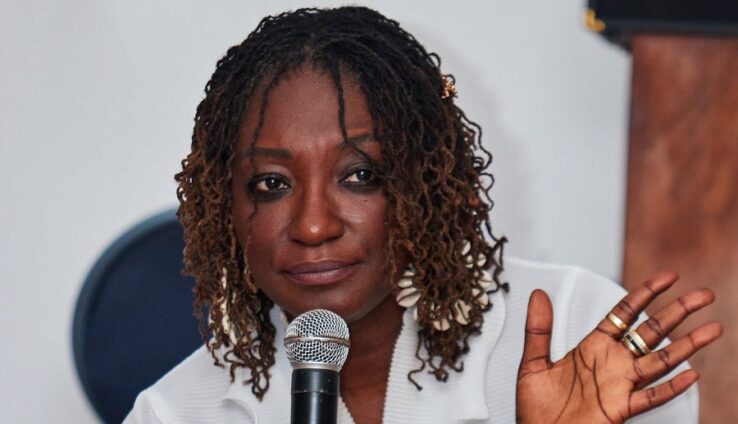
Filmmaker and former Executive Secretary of Ghana’s National Film Authority, Juliet Yaa Asantewaa Asante, has written about Ghana’s apparent failure to leverage the global spotlight of the 2026 FIFA World Cup to promote tourism, arts and culture.
She did this in a sarcastic Facebook post that has sparked conversations about nation branding and tourism promotion.
In the lengthy post, Juliet painted a picture of an ideal Ghana that strategically used its qualification for the World Cup to showcase its culture, tourism, creative industries and investment opportunities to a global audience.
“There was this country called Ghana,” she began, before describing how the country supposedly mobilised government agencies, the tourism sector, creatives and entrepreneurs to maximise the tournament’s visibility.
According to her fictional account, Ghana turned its participation into a coordinated national branding exercise, using football as a platform to promote everything from music, film and fashion to food, investment and exports.
“The target was to use the spotlight. The target was to use a moment on the world stage to showcase a country,” she wrote.
Juliet imagined a scenario where every aspect of Ghana’s World Cup presence was deliberately crafted to tell a national story. She highlighted cultural symbols such as Ananse and the Black Star, and envisioned players arriving at the tournament draped in kente from different regions of the country, adorned with Ghanaian-made accessories and products.
“The Ministry of Tourism was put at the center of the effort. Music, film, fashion, art, food and the entire creative sector came together under a coordinated national agenda,” she stated.
She added that Ghana could have used the tournament to spotlight local filmmakers, musicians, entrepreneurs and investors while promoting products such as cocoa and shea butter.
“The world watched. And Ghana gave them something to see,” she wrote.
The post comes days after brand and communications expert Jesse Agyepong and tourism curator Francis Doku expressed similar concerns on Joy FM’s Showbiz A-Z. The two argued that Ghana had missed an opportunity to use the Black Star Experience Secretariat as a vehicle to promote tourism, arts, culture and the country’s image during the global football spectacle.
Throughout her post, the former NFA Executive Secretary repeatedly stressed the importance of converting international attention into tangible opportunities for national development.
“We understood that when the spotlight of the world lands on you, you don’t waste it. You use it. You amplify it. You convert it. You turn attention into opportunity. You turn visibility into value,” she wrote.
However, the celebrated filmmaker ended the narrative with a twist, revealing that the entire scenario existed only in her imagination.
“That happened in a country called Ghana.
And then I woke up.
And realized it was all a dream.
And even AI was messing with me in my dream and couldn’t even get the faces of the team right,” she wrote making reference to an AI generated photo of the Blackstar experience Stars arriving at the tournament in jumper, kente cloth and sneakers.
Latest Stories
-
Interest payments to average a high 20% of government revenue over next 4 years
9 minutes -
Strategy of accumulating foreign reserves, gold carries high fiscal cost – S&P Global
24 minutes -
Weak institutional arrangements, high debt servicing constrain Ghana’s rating – S&P
30 minutes -
Bond market: Turnover declined by 28% to GH¢1.56bn
1 hour -
Volta Region National Public Speaking contest advances drug prevention conversation
1 hour -
New health training facility at Ampoma-Jema to address admission shortfalls, but Minister flags missing amenities
1 hour -
Black Challenge unveiled with sights set on Amputee World Cup glory
2 hours -
Pay striking teachers before expressway spending, Dr Kingsley Agyemang tells government
3 hours -
Customs intercepts assault rifle, two pistols and 610 rounds of ammunition at Tema Port
3 hours -
PKO boxers secure wins at Odwira Festival
3 hours -
South Tongu Records Rise in Teenage Pregnancy
3 hours -
Cabinet threw out US health compact faster than anything I’ve seen – Mahama
3 hours -
MoFA urges Finance Ministry to reverse World Bank food programme withdrawal over GH¢643m commitments
3 hours -
NAGRAT demands signed timelines before calling off strike
4 hours -
National Investment Quiz: West Africa SHS, St. Louis SHS advance to semi-finals
4 hours