

Audio By Carbonatix
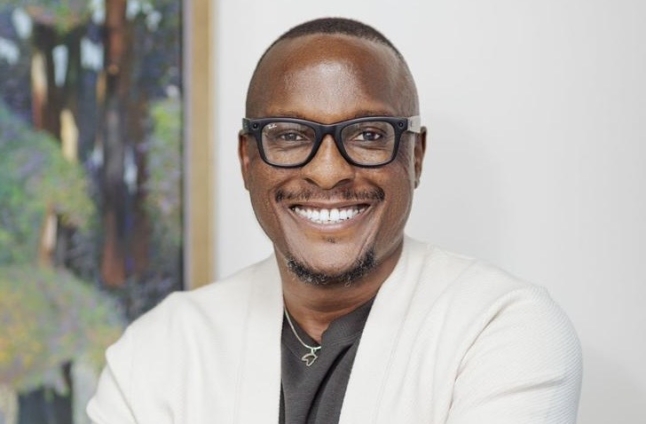
When Ugandan entertainment entrepreneur Julius Kyazze began building Swangz Avenue in Kampala nearly two decades ago, the ambition was local and practical: make music that travelled, stage events that paid, and build media platforms that spoke directly to young audiences. Expansion came later - cautiously, market by market - and always rooted in what worked on the ground.
Today, that incremental approach has evolved into something more deliberate. With the launch of Live54+, a pan-African creative holding company, Kyazze is extending his footprint westward into Ghana and other African markets, betting that the continent’s creative economy is finally ready for coordination at scale rather than isolated national success .
Live54+ brings together Kyazze’s portfolio — including Swangz Avenue, Buzz Group Africa, The Quollective and the NRG and Play radio networks — under a single holding structure. Operational coordination is based in Nairobi, supported by offices in Dubai and Mauritius, while active markets span Uganda, Kenya, Tanzania, Rwanda, Burundi and Ghana .
For Ghana, the move is less about arrival and more about alignment.
A Westward Shift in Creative Strategy
African creative businesses have traditionally grown inward, focused on dominating home markets before cautiously testing neighbouring countries. What Live54+ represents is a shift from geographic expansion to structural expansion — building systems that allow creativity, audiences and brand budgets to move across borders with fewer frictions.
Ghana’s inclusion reflects its changing role in Africa’s cultural economy. Long recognised for its music, festivals and global diaspora connections, the country has increasingly become a reference point for how African culture travels internationally. What has lagged behind is the institutional infrastructure that turns influence into consistent commercial value.
Kyazze’s strategy appears to recognise that gap.
Rather than launching standalone subsidiaries, Live54+ positions itself as a coordinating layer — allowing local creative businesses to remain culturally grounded while plugging into regional brand campaigns, shared production capacity and cross-market distribution.
Why Ghana Matters in the Mix
Ghana’s appeal lies not in size alone. Compared to East Africa’s largest advertising markets, Ghana offers something different: cultural credibility, political stability and strong links to international audiences, particularly in Europe and North America.
For pan-African advertisers, Ghana often serves as both a testing ground and a signal market — campaigns that resonate in Accra tend to travel well across West Africa and beyond. That makes the country strategically valuable for a group aiming to service multinational brands seeking continental coherence.
Industry executives say this is where Live54+’s model diverges from traditional agency networks. Rather than imposing a centralised creative vision, the group leans on founder-led businesses with deep local insight, coordinated through shared systems.
“Brands no longer want six different agencies for six African countries,” said one regional marketing executive familiar with multi-market campaigns. “They want consistency without losing local relevance. That’s the tension Live54+ is trying to solve.”
Infrastructure Over Hype
Africa’s creative economy is often described in terms of energy, youth and potential. Less discussed are the structural weaknesses that prevent it from scaling — fragmented regulation, inconsistent monetisation of intellectual property, limited access to patient capital and weak cross-border coordination.
Live54+ positions itself as a response to those constraints. By integrating radio distribution, experiential marketing, content production and talent management, the group creates multiple revenue points from a single campaign — an approach common in mature creative markets but still emerging across much of Africa .
For Ghanaian creatives, this could translate into access to larger regional briefs, more predictable revenue streams and pathways beyond one-off projects. The trade-off, as always, will be whether such structures enhance creative independence or quietly centralise control.
Competition Is Already Here
The challenge for Live54+ is that Ghana is no blank slate. Global agency networks, international broadcasters and established regional players already operate in the market. What Kyazze’s group offers instead is an African-owned alternative — one built from businesses that grew organically within African consumer realities.
Whether that advantage holds will depend on execution. African expansion stories are littered with examples of founder-led companies that struggled to institutionalise without losing agility or cultural connection.
Kyazze’s two decades in Uganda’s entertainment industry — spanning music, radio and large-scale events — provide operational credibility. But Ghana’s market dynamics, regulatory environment and competitive landscape will test whether experience in East Africa translates smoothly westward.
A Continental Moment
The launch of Live54+ coincides with the slow but consequential rollout of the African Continental Free Trade Area (AfCFTA), headquartered in Accra. While creative services are not yet fully harmonised under AfCFTA protocols, momentum around services trade and intellectual property suggests long-term tailwinds for cross-border creative collaboration.
For Ghana, that creates an opportunity to move beyond being a cultural exporter to becoming a coordination hub — a place where African creativity is not just produced, but organised, financed and distributed.
Beyond One Entrepreneur
Ultimately, Live54+ is about more than one Ugandan entrepreneur expanding westward. It reflects a broader question facing Africa’s creative economy: can African-owned businesses build continental infrastructure before global players fully dominate the space?
If Kyazze’s model works, it may offer a template for how African creativity scales — not through hype or sporadic breakthroughs, but through systems that allow ideas, talent and capital to circulate more freely across borders.
For Ghana, being part of that experiment places the country squarely within a shifting creative map — one where influence is no longer enough, and structure may determine who captures value in Africa’s next cultural phase.
Latest Stories
-
Fire guts auto parts warehouse at Bubuashie, one fire officer injured
4 minutes -
I owe my victory to coach Ofori Asare – Allotey after winning WBA Africa Gold Super Flyweight belt
8 minutes -
Church of Pentecost supports over 2,000 BECE candidates in Obuasi with career guidance seminar
2 hours -
Brandon Asante and Coventry all but promoted to Premier League despite Sheffield Wednesday draw
2 hours -
GPL 2025/26: Late Kwartemaa strike downs Hearts in Tema
2 hours -
Ghana Faces Sierra Leone Moment as Prosecutorial Powers come under strain
2 hours -
Don’t consume fish or seafood from Tema Shipyard until further notice – FDA warns
2 hours -
Why volunteering might be Africa’s most underrated career accelerator
3 hours -
ActionAid Ghana raises concern over gender gaps in Feed Ghana Programme
3 hours -
Windstorm wreaks havoc in Gushegu, displacing nearly 2,000 residents and damaging schools
3 hours -
Friends of Bridget Bonnie Marks her 35th birthday with donation to Kasseh Model Health Centre
3 hours -
From Ekumfi Kokodo to the Pulpit Stage: Essi Donkor’s gospel journey takes shape
4 hours -
Landfilling waste management creates no value, it’s an economic waste
4 hours -
Photos: Speaker Bagbin Commissions MPs constituency office under parliamentary decentralisation programme
4 hours -
Black Stars technical advisor Winfried Schäfer sacked as GFA shakes up backroom staff
4 hours