


Audio By Carbonatix
Researchers at the Kwame Nkrumah University of Science and Technology have confirmed the deep-rooted implications of climate change in limiting the ability of households to meet their dietary needs through the consumption of nutritious food.
The 2024 Food and Agriculture Organization (FAO) report indicates that from 2014 to 2023, the number of severely food-insecure people in Ghana nearly doubled, rising from 1.5 million to 2.8 million.
This new development, settling severe ties of food security with climate change, establishes the looming danger of climate change on food consumption, including the nutritional standing of food consumers.
The Food and Agriculture Organization (FAO) in 2024 adjudged Ghana as one of the country’s most vulnerable to the reeling impact of climate change, with severe implications on food security.
In 2022, an astounding 63 percent of Ghana’s population, thus 21.1 million people, could not afford a healthy diet.
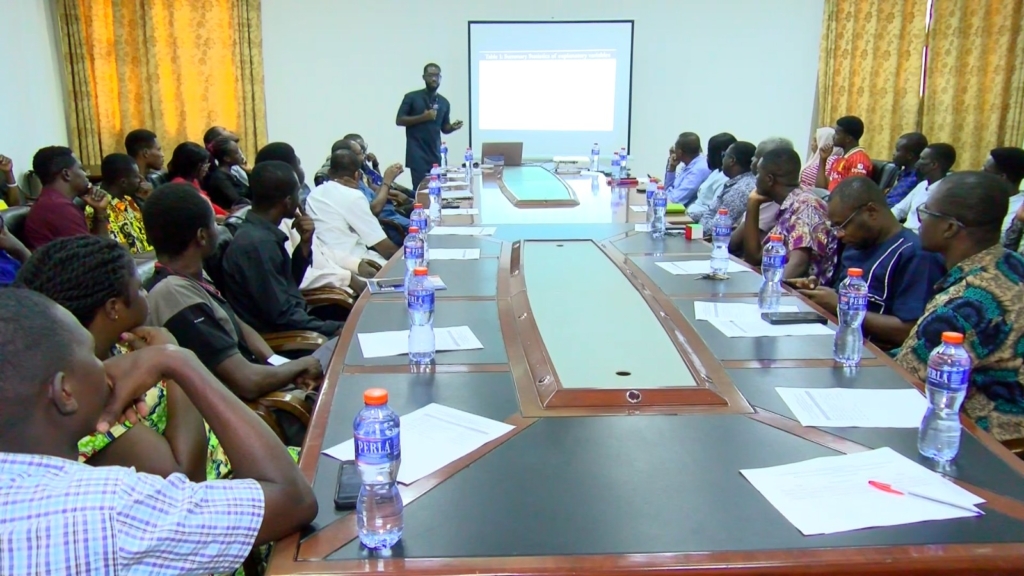
These alarming statistics became a focal point in a recent Research Dissemination Seminar at the Kwame Nkrumah University of Science and Technology (KNUST) titled “Food Consumption and Adaptation to Climate Change: Evidence from Ghana”.

The research led by a lecturer at the Department of Economics, Dr. Frank Adusah-Poku, analyzed Ghana specific data, aimed to measure and determine climate change’s impact on food consumption for both farm and non-farm households.
The study focused on both short-term and long-term weather shocks, measured by temperature and rainfall shifts and their impacts on food consumption, food access, availability, nutritional quality of diet, and overall household food security.
Principal Investigator Dr. Frank Adusah-Poku disclosed that climate change, as a persisting driver of food insecurity, is pushing households away from consuming diversified foods.
“Temperatures beyond the average do not only affect production yield but also the expenditure on nutritional quality foods. Climate change makes it difficult for farm households, in particular, to purchase high-quality and diversified foods due to the negative impact of climate change on their incomes. More rainfalls, however, are able to allow farming households to increase not only their expenditure on foods but also their expenditures on high quality and diversified foods,” he said.
The research answered the extent to which climate change effects vary across heterogeneous groups. These groups are households that depend more on the market for their food consumption versus those that depend more on their own production, northern versus southern regions, poor versus non-poor households. The study found that climate change affects all farm households in similar ways, but to varying degrees.
Dr. Adusah-Poku dispels the common assumption that northern farm households bear the heaviest burden, clarifying that the impact of climate change is universal, impacting all regions, both producers and consumers.
“What we found is that climate change affects everybody. The magnitude of the effects might not be the same but similar for all farm households, irrespective of location, economic status, or whether they depend more on the market or not. High temperatures reduce farm incomes of farm households. Farm households mostly spend out of their farm incomes, with a few who might depend on remittances or off-farm incomes. The bigger their farm incomes, the bigger their spending on foods,” he said.
A prominent segment of the study tackled how household (farm) income serves as a potential mechanism in mediating the effect of climate change on food consumption and food security.

Building on these mechanisms, the researchers evaluated farmers’ off farm adaptation strategies to cope with climate shocks.
Senior Lecturer at the Department of Agricultural Economics, Agribusiness and Extension, Dr. Bright Owusu Asante, stressed on income diversification as a critical buffer for maintaining food security and dietary quality.
While encouraging policy makers to support farmer’s income diversification, he says boosting farmers’ incomes could enable them to purchase diverse, nutritious foods they can no longer produce due to climate impacts.
“The mechanism of the research is very important focusing on income and its implication on how farmers manage climate change. For instance if the income of farmers are improved, then the food groups they are unable to produce, they will be able to purchase them to enhance their dietary diversity, which is an aspect of food security.
“Income is a key mechanism within this research. The take home message is for farmers to be able to seek and improve other income sources so they can able to cope with food consumption and secretory perspectives. Climate change has come to stay. And it’s important for policies to be effected to support farmers,” he said.
The research dissemination seminar provided a platform for stakeholders to discuss policy implications and consider future and further research, including a pilot study on non-farm diversification as a potential buffer against climate-related losses.
Latest Stories
-
Church of Pentecost supports over 2,000 BECE candidates in Obuasi with career guidance seminar
59 minutes -
Brandon Asante and Coventry all but promoted to Premier League despite Sheffield Wednesday draw
1 hour -
GPL 2025/26: Late Kwartemaa strike downs Hearts in Tema
1 hour -
Ghana Faces Sierra Leone Moment as Prosecutorial Powers come under strain
2 hours -
Don’t consume fish or seafood from Tema Shipyard until further notice – FDA warns
2 hours -
Why volunteering might be Africa’s most underrated career accelerator
2 hours -
ActionAid Ghana raises concern over gender gaps in Feed Ghana Programme
2 hours -
Windstorm wreaks havoc in Gushegu, displacing nearly 2,000 residents and damaging schools
2 hours -
Friends of Bridget Bonnie Marks her 35th birthday with donation to Kasseh Model Health Centre
3 hours -
From Ekumfi Kokodo to the Pulpit Stage: Essi Donkor’s gospel journey takes shape
3 hours -
Landfilling waste management creates no value, it’s an economic waste
3 hours -
Photos: Speaker Bagbin Commissions MPs constituency office under parliamentary decentralisation programme
3 hours -
Black Stars technical advisor Winfried Schäfer sacked as GFA shakes up backroom staff
3 hours -
Wenchi water project almost complete, critical to gov’t agenda – GWL MD
4 hours -
Anti-LGBTQ+ bill not part of government’s legislative agenda – Inusah Fuseini
4 hours